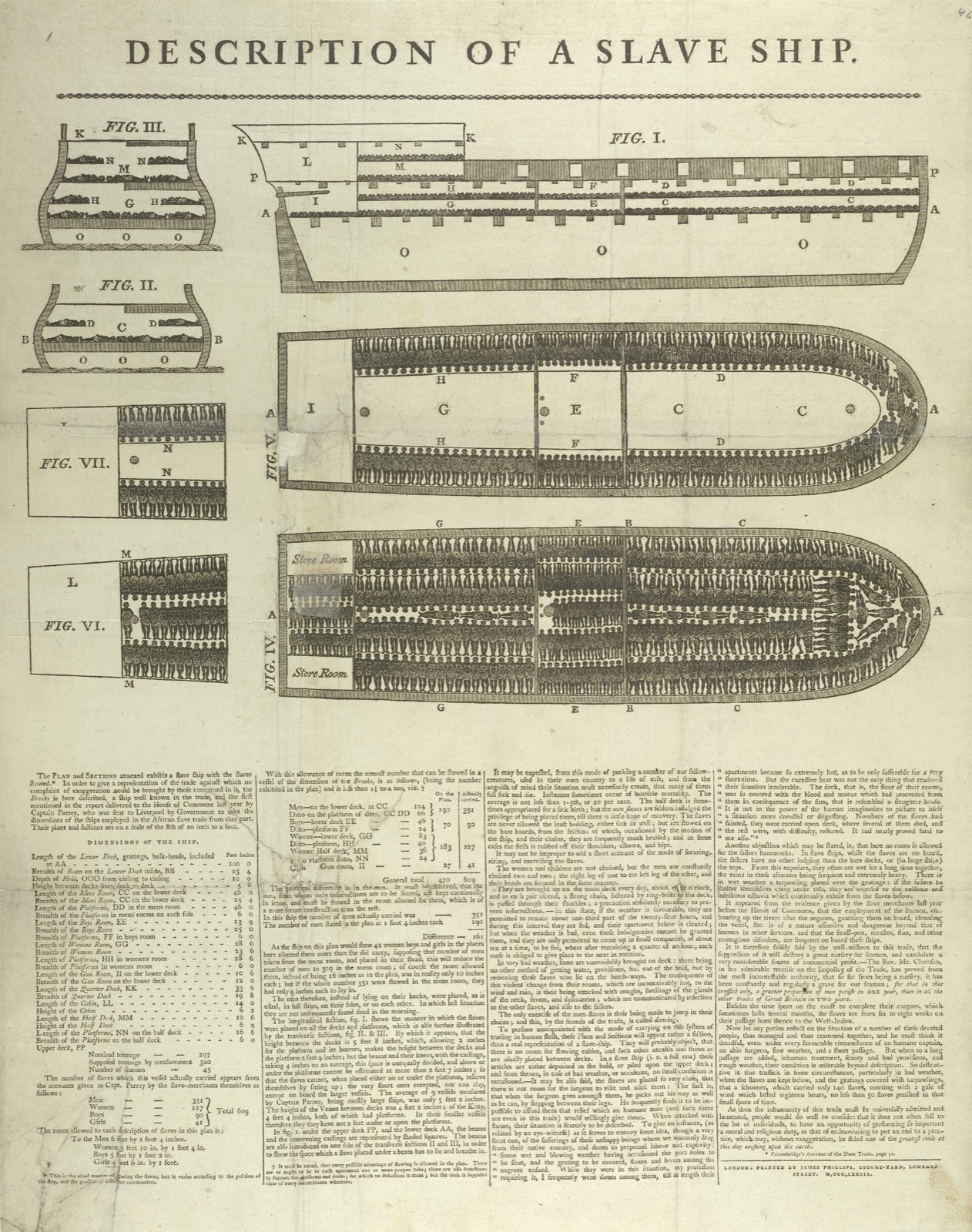
Diagram of the British slave ship Brookes, published in 1788. Public domain, British Library.
In 1842 Congress raised taxes on imported goods after years of scheduled cuts.
A household buying cloth, iron tools, or sugar paid more when the import tax sat inside the price.
A workshop that used imported iron paid more for it, while a local mill that competed with imports gained a shield.
Factory owners and wool growers who had lobbied for protection got the higher wall they wanted.
The Compromise Tariff of 1833 had pushed duties downward on a schedule.
The Tariff of 1842, signed by John Tyler after he broke with Whig leaders over a national bank, raised rates and brought back many specific duties.
It lasted until the Walker Tariff of 1846 lowered them again.
Tariff of 1842, 5 Stat. 548; F. W. Taussig, The Tariff History of the United States