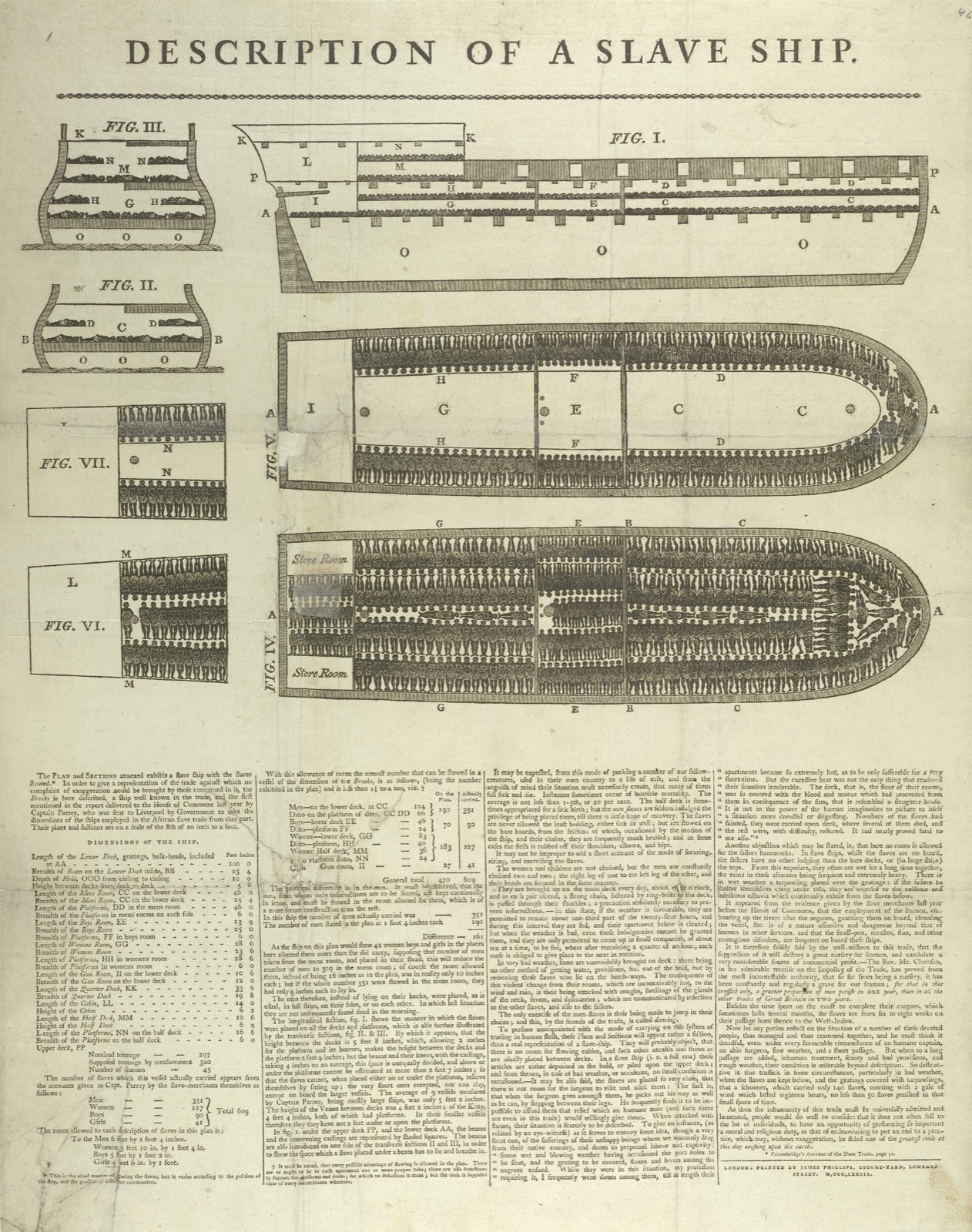
Diagram of the British slave ship Brookes, published in 1788. Public domain, British Library.
Polk’s tariff cut many import taxes and tried to collect a simpler share of each cargo’s value.
Cheaper imported cloth and iron, when the cut held, left a poor family a little more buying power.
A small manufacturer lost some of the shelter the 1842 tariff had given and had to meet foreign prices.
Importers and exporting planters liked a lower duty, because it kept overseas markets open and made incoming goods cheaper.
The Walker Tariff of 1846, named for Treasury Secretary Robert J.
Walker, leaned on ad valorem duties and let merchants store goods in warehouse before paying.
It was a revenue tariff, lower than the one of 1842, and it held until late in the 1850s.
The same year Congress put federal cash back into an independent treasury, apart from state banks.
Walker Tariff, 9 Stat. 42 (1846); Taussig, The Tariff History of the United States