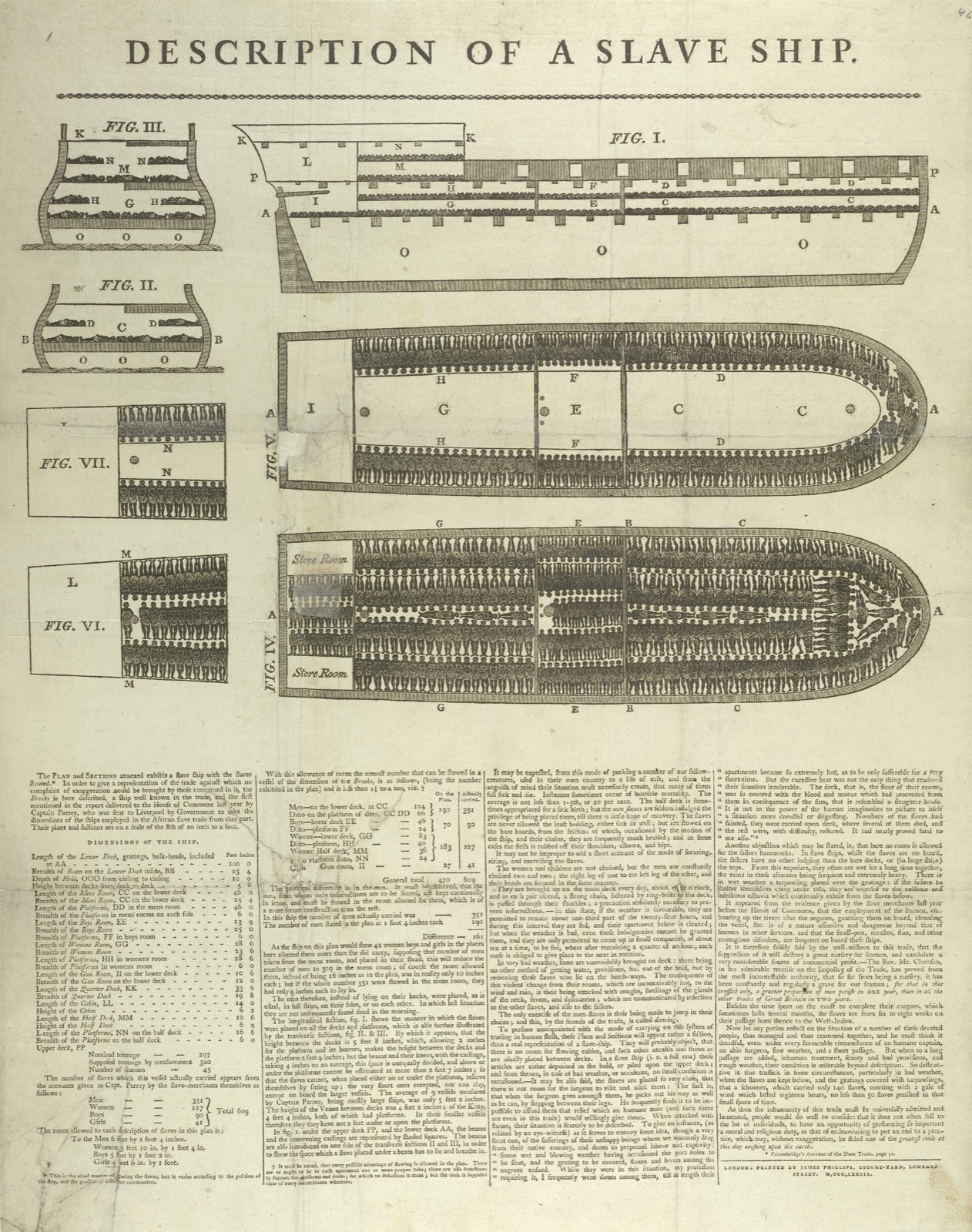
Diagram of the British slave ship Brookes, published in 1788. Public domain, British Library.
Gold found in California in 1848 pulled a rush of people west and poured new metal into the money supply.
A poor man with a pan might hit a pocket or, more often, spend his stake on food and tools at miners’ prices.
A shopkeeper, boardinghouse keeper, or farmer who fed the camps often made steadier money than the man in the river.
Merchants, ship lines, and anyone with capital to hire a crew took a larger share than the lone panner.
James Marshall found gold at Sutter’s mill on the American River in January 1848, and the rush followed in 1849.
California gold enlarged the supply of coin and sped settlement of a new state.
California’s foreign-miners license soon taxed Mexican, Chilean, and later Chinese miners and pushed many of them off the better claims.
Malcolm J. Rohrbough, Days of Gold (1997); California Act for the better regulation of the Mines, 1850