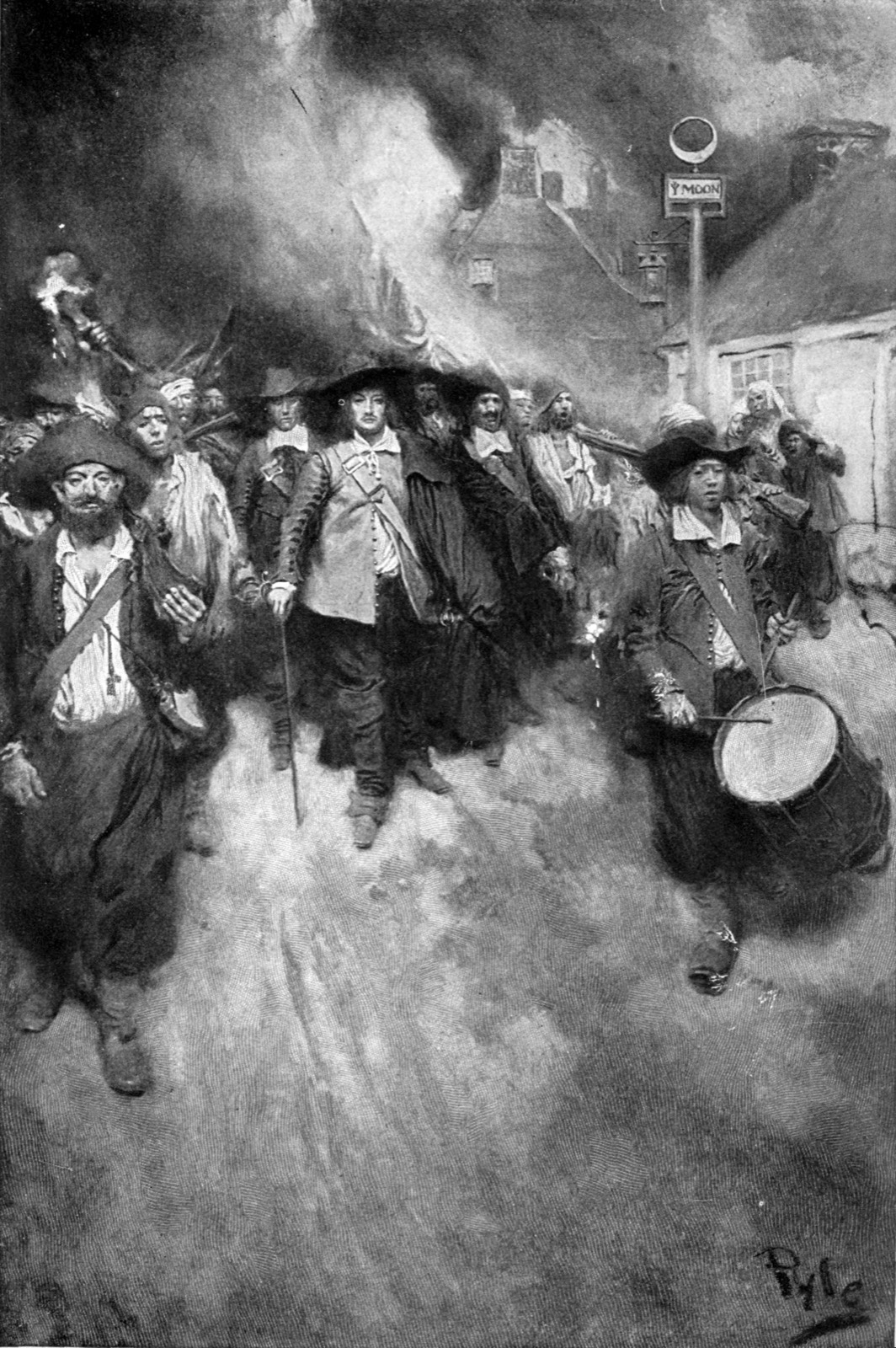
Howard Pyle, The Burning of Jamestown, an early-twentieth-century illustration, not an eyewitness view. Public domain.
The Compromise of 1850 let California in as a free state and made it easier to seize people accused of being fugitive slaves.
A poor household could be ordered to help a hunt, and a Black family, free or fugitive, could not count on a jury.
A northern household that had stayed out of the fight now faced a federal law that treated a neighbor as recoverable property.
Slaveholders gained a stronger federal machine for reclaiming people who had escaped, which is what their votes were buying.
The Compromise admitted California free, organized Utah and New Mexico without a ban on slavery, ended the slave trade in the District of Columbia, and paid Texas ten million dollars to drop wider boundary claims.
The Fugitive Slave Act of 1850 denied the accused a jury trial and paid commissioners more when they sent a person south than when they did not.
Slavery itself stayed legal in the capital.
Compromise of 1850; Fugitive Slave Act, 9 Stat. 462; Holman Hamilton, Prologue to Conflict (1964)