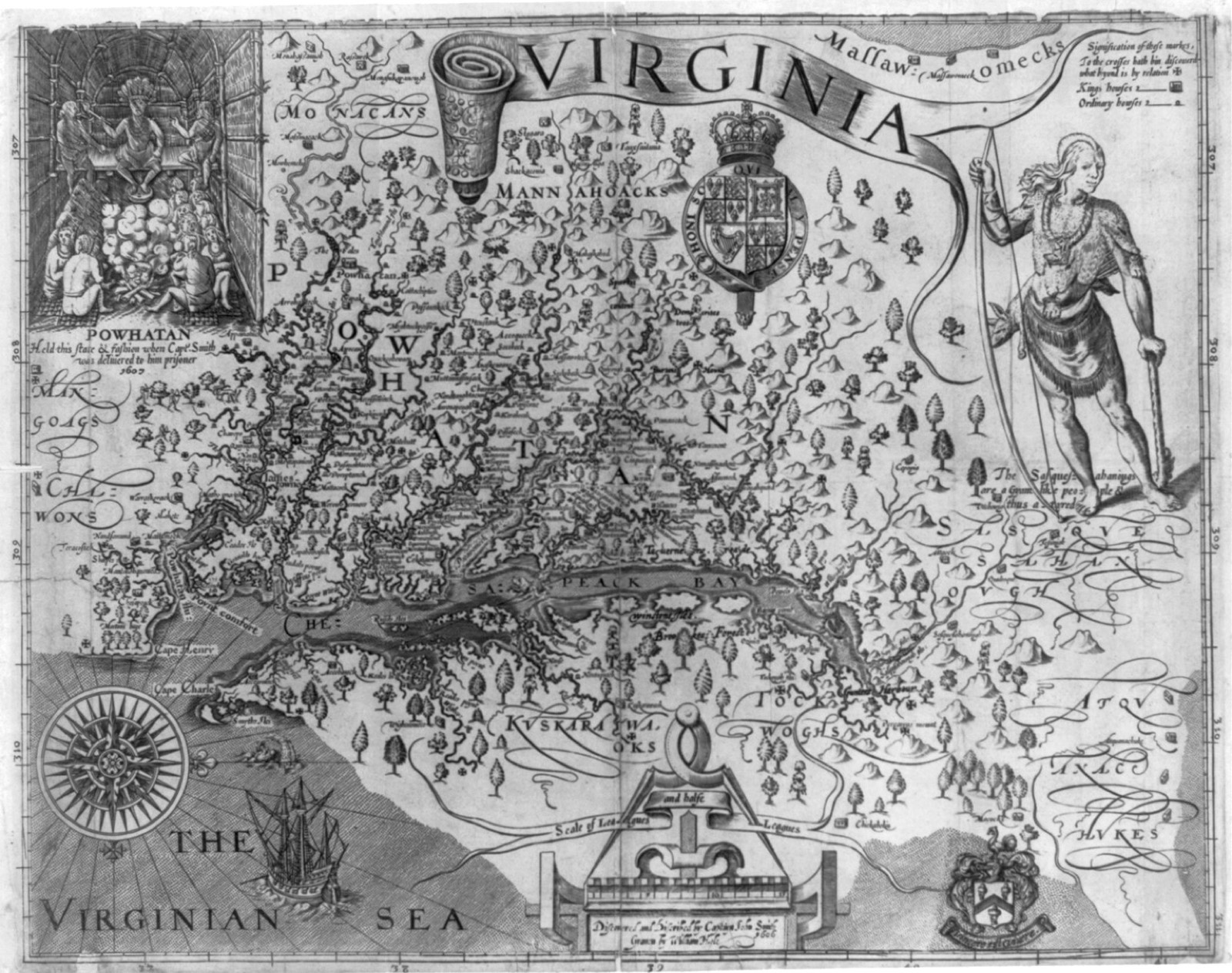
John Smith’s map of Virginia, engraved by William Hole and published in 1612. Public domain.
In Oregon a federal law gave large claims to white settlers who lived on the land and farmed it.
A single poor man could claim half of what a married couple could, and a family without the means to occupy and cultivate got nothing.
A married farming household could file a large early claim, with the wife’s half written in her own name.
Men with capital to stock a big claim, and speculators who worked the paperwork, took more ground than a cabin family could use.
The Donation Land Claim Act of 1850 offered 320 acres to a qualifying white settler and 640 to a married couple who were in Oregon before December 1850 and then lived on and farmed the claim for four years.
Later arrivals, until 1855, could take half those amounts.
The statute addressed white settlers, and the acres were cut from Native homelands.
Donation Land Claim Act, 9 Stat. 496 (1850); Dorothy O. Johansen, Empire of the Columbia (1967)