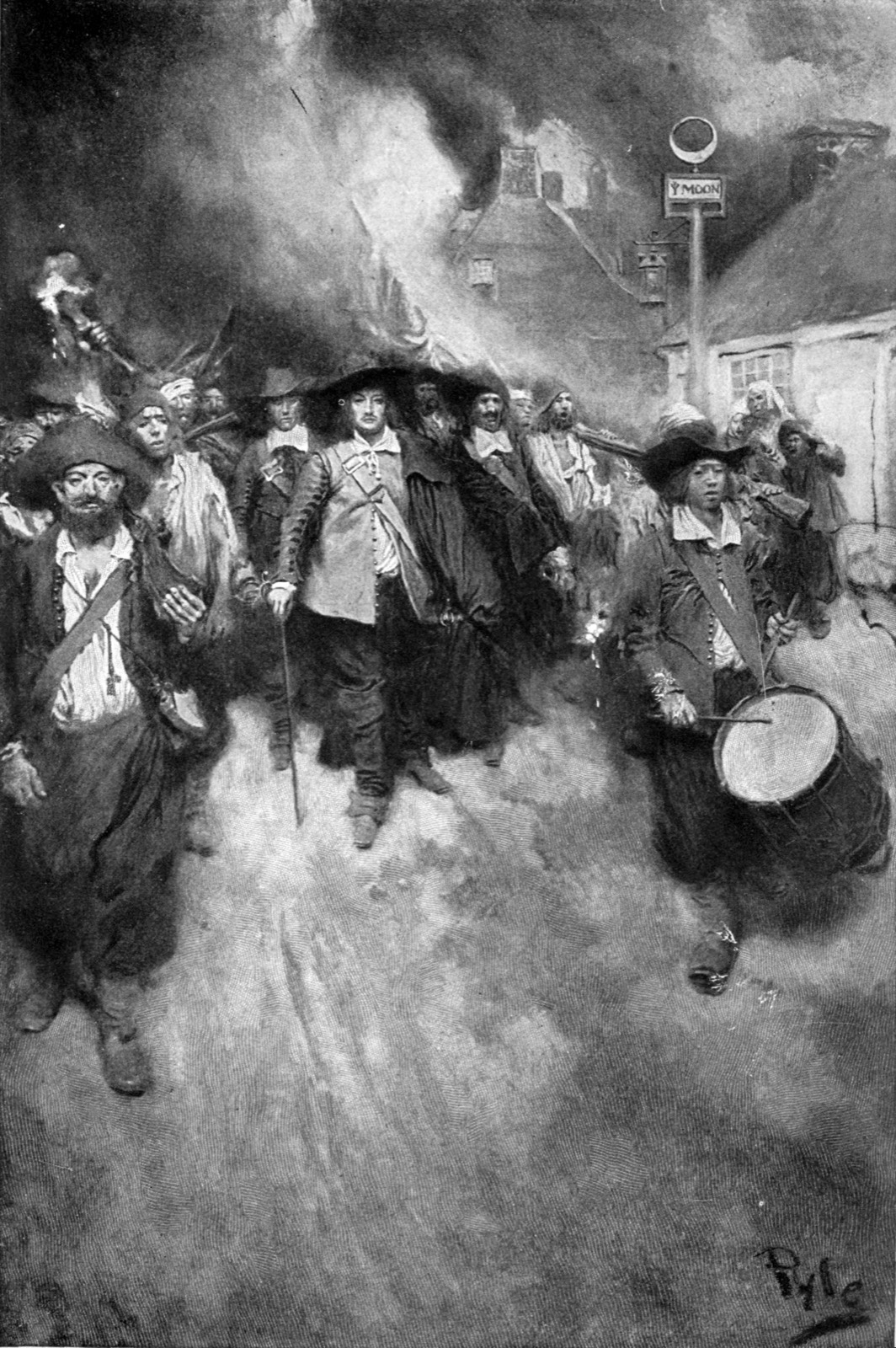
Howard Pyle, The Burning of Jamestown, an early-twentieth-century illustration, not an eyewitness view. Public domain.
The Kansas-Nebraska Act let settlers vote on slavery in land where Congress had barred it for a generation.
A poor white family moving into Kansas walked into a fight over whether neighbors would hold slaves, and free Black settlement was unwelcome in the camps that won.
A farmer who wanted a free-soil claim found the territory torn by armed factions instead of a quiet land office.
Slaveholders gained a legal opening north of the old Missouri Compromise line, which is why the act blew up national politics.
Stephen Douglas pushed the Kansas-Nebraska Act through in 1854 to organize the plains and clear a railroad path.
It repealed the Missouri Compromise ban on slavery north of 36 degrees 30 minutes in the rest of the Louisiana Purchase.
Popular sovereignty was the slogan, and the fighting in Kansas was the result.
Kansas-Nebraska Act, 10 Stat. 277 (1854); Eric Foner, Free Soil, Free Labor, Free Men (1970)