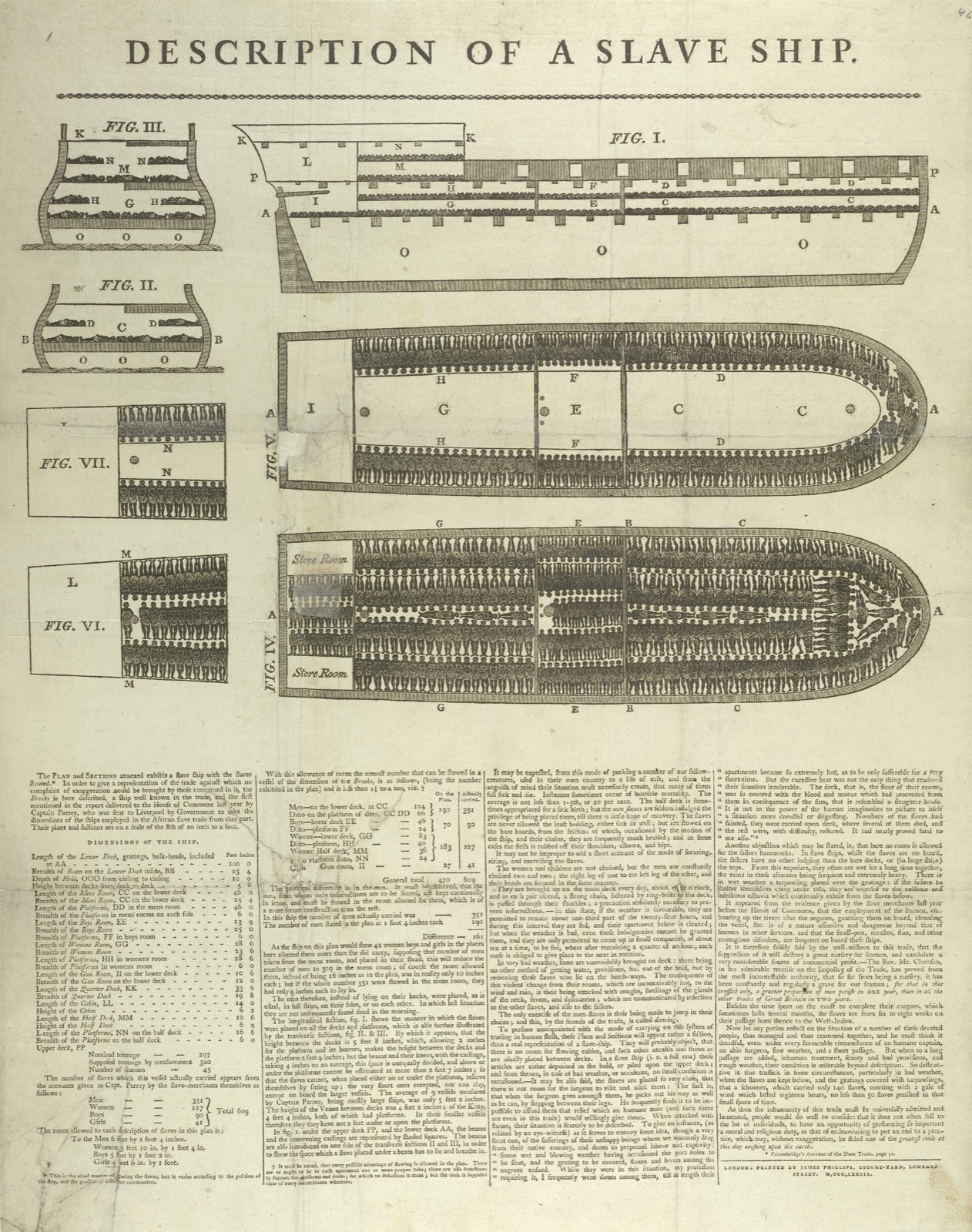
Diagram of the British slave ship Brookes, published in 1788. Public domain, British Library.
In 1857 a major trust company failed, railroads wobbled, and banks stopped paying gold.
A wage household in a northern city lost work when shops and rail projects stalled.
A small farmer who had counted on high grain prices found the market down once European war demand faded.
Railroad promoters and bankers who had borrowed to lay new track were the ones the failure hit first.
The Ohio Life Insurance and Trust Company suspended in August 1857 and set off a run through New York.
Grain prices had fallen after the Crimean War, and too many railroads had been built on credit.
The cotton South was hurt less than the industrial North, and southern politicians read that as proof their system was safer.
James L. Huston, The Panic of 1857 and the Coming of the Civil War (1987)