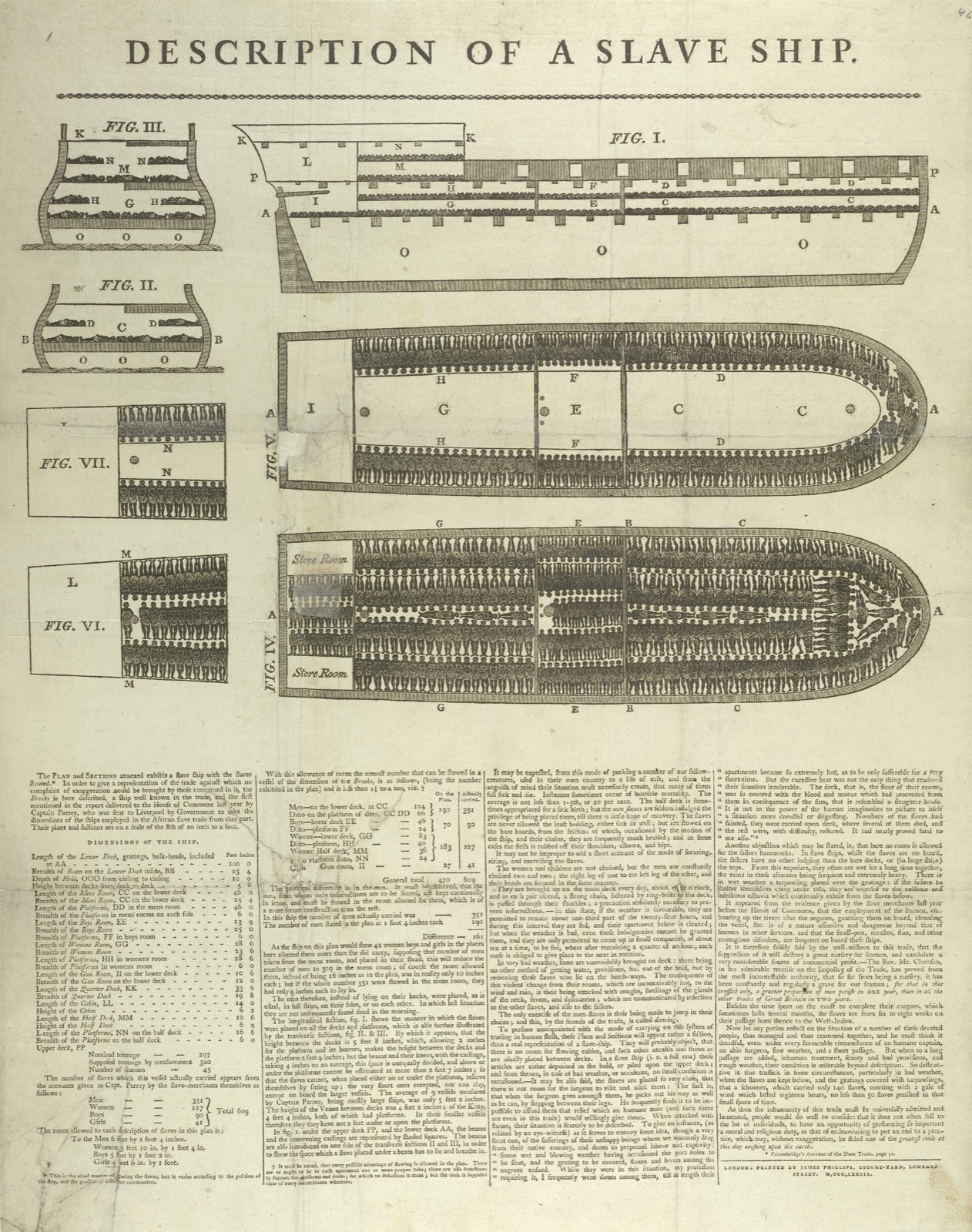
Diagram of the British slave ship Brookes, published in 1788. Public domain, British Library.
In 1859 a drilled well in Pennsylvania produced oil in quantity, and kerosene began to push whale oil out of the lamp.
A poor household that bought light by the bottle stood to pay for a cheaper fuel once kerosene reached the store.
A town household or a small workshop could keep lamps burning longer once petroleum oil spread.
Men with capital to lease land, drill, and refine took the new business, and whale-oil merchants met a rival they did not own.
Edwin Drake struck oil at Titusville on August 27, 1859, with a drilled well rather than a seep.
Before that, petroleum was mostly a curiosity and a patent medicine.
Within a few years kerosene from Pennsylvania crude was a commercial lamp fuel, and a new industry sat along Oil Creek.
Harold F. Williamson and Arnold R. Daum, The American Petroleum Industry (1959); Brian Black, Petrolia (2000)