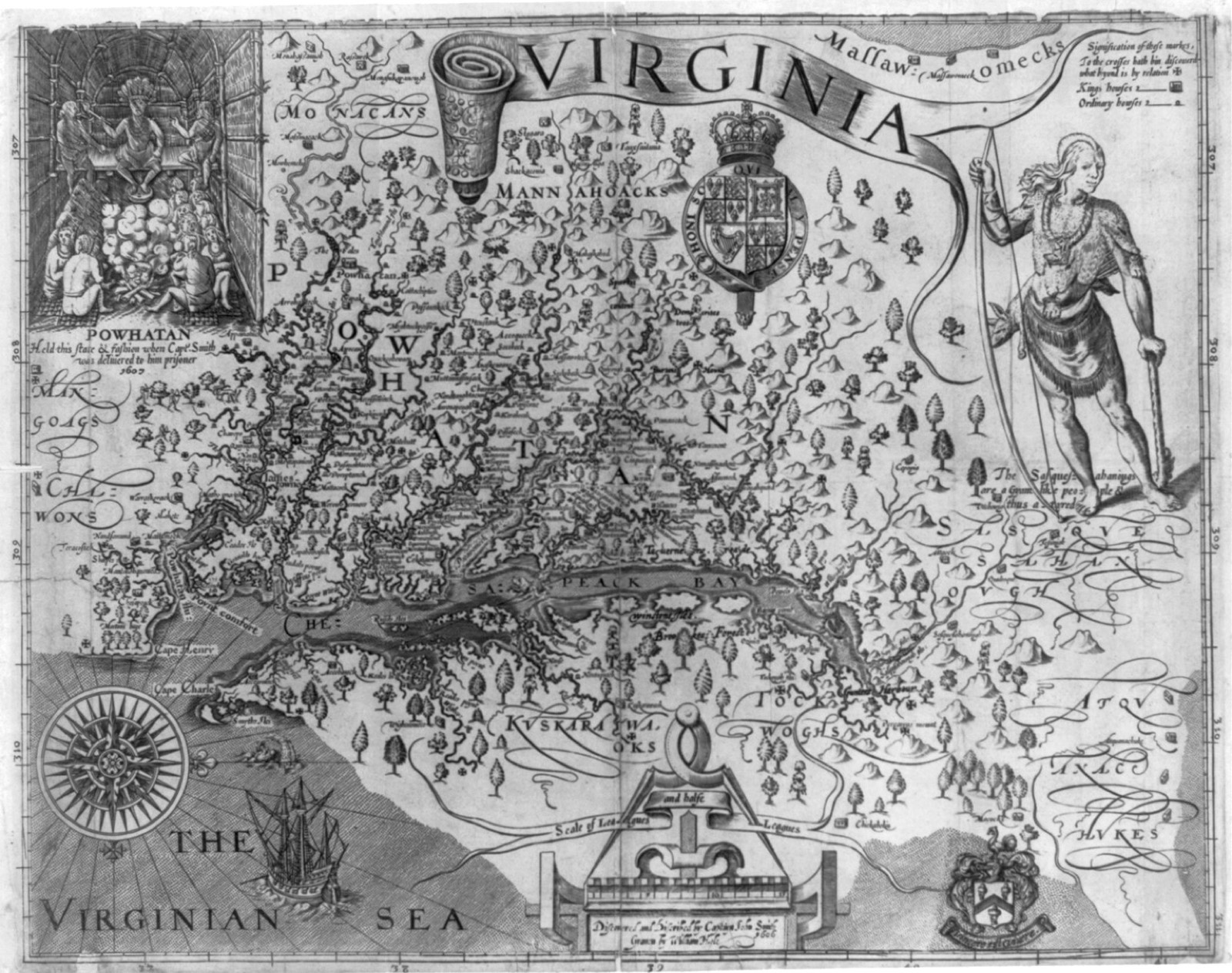
John Smith’s map of Virginia, engraved by William Hole and published in 1612. Public domain.
Congress chartered a railroad to the Pacific and paid the builders in government bonds and public land.
A poor household did not receive the subsidy, and the construction camps hired men, many of them immigrants, for hard and dangerous work.
A farmer in the path of the line could gain a market and lose a quiet land price once the grant and the trains arrived.
Promoters of the Union Pacific and the Central Pacific received bonds and alternating sections they could borrow against before a wheel turned.
The Pacific Railway Act of July 1, 1862, authorized federal loans of 16,000 dollars a mile on easy ground, 32,000 on the harder stretches, and 48,000 in the mountains, plus a land grant.
A follow-up act in 1864 doubled the land and eased the financing.
The two companies’ tracks met in Utah in 1869.
Pacific Railway Act, 12 Stat. 489 (1862); Pacific Railway Act, 13 Stat. 356 (1864); Richard White, Railroaded (2011)