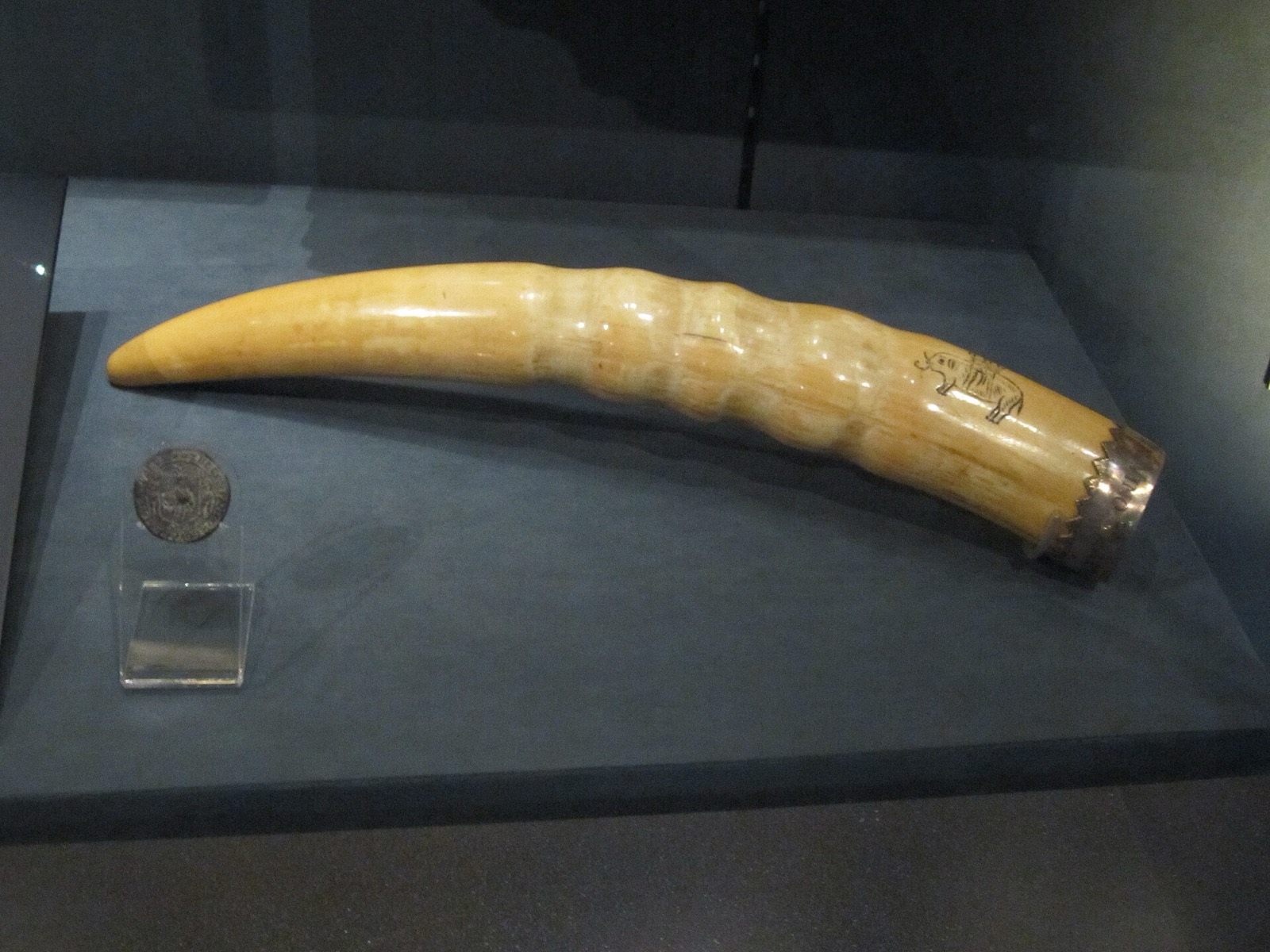
Ivory marked by the Royal African Company. International Slavery Museum, Liverpool. Wikimedia Commons.
Jay Cooke sold Union war bonds to ordinary households, and the federal debt became a fact of daily life.
A poor family that bought even a small bond was lending to the government, and a family that bought none still lived with wartime prices and taxes.
A household with savings in a drawer could put them into a 6 percent bond instead of only into a local bank.
Banks and wealthy buyers still took large blocks, but Cooke’s agents made the debt a widely held asset, and his firm took its pay in commissions.
In 1862 the Treasury hired Jay Cooke to sell the five-twenty bonds, which paid 6 percent, could be redeemed after five years, and ran for twenty.
Cooke advertised in newspapers and used a swarm of agents beyond Wall Street.
Treasury ledgers show a public debt of about 65 million dollars in 1860 and about 2,680 million dollars in 1865.
Ellis Paxson Oberholtzer, Jay Cooke: Financier of the Civil War (1907); United States Treasury historical debt statements