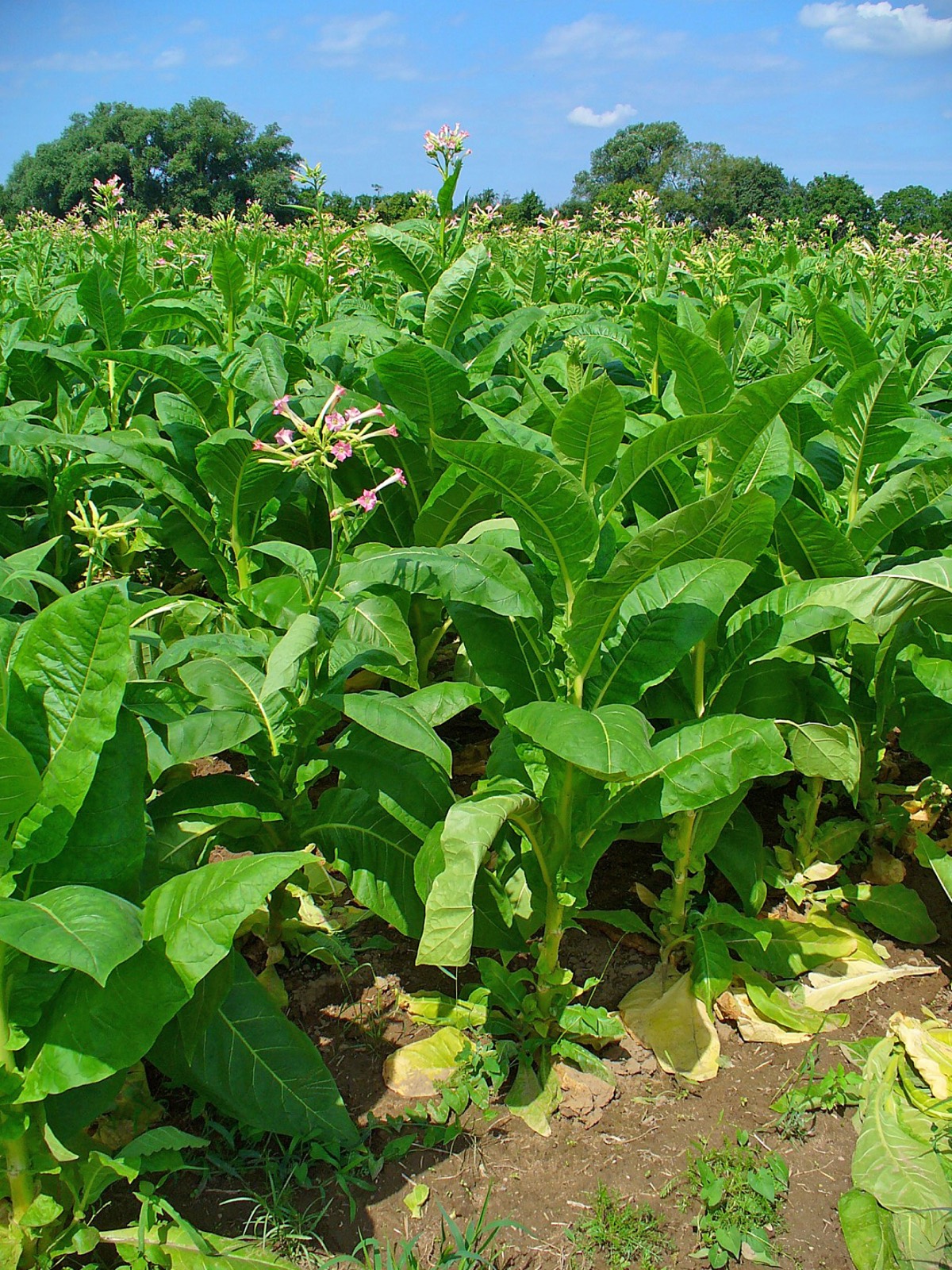
The tobacco plant, Nicotiana tabacum. Public-domain photograph.
After emancipation, many freed families farmed land they did not own and paid the landlord with a share of the crop.
A poor Black household supplied the labor and most of the risk of a bad year, and often closed the season owing the store.
A small white farmer without land or a mule could fall into the same share contract.
Landowners kept the land and, through the furnishing merchant, kept the credit that set the share.
Sharecropping spread across the cotton South after 1865 because planters had land and little cash for wages, and freed people refused to work in gang labor as they had under slavery.
A crop lien let a merchant supply food and seed and take a claim on the harvest.
Families stayed on the land without gaining title to it.
Roger L. Ransom and Richard Sutch, One Kind of Freedom (1977)