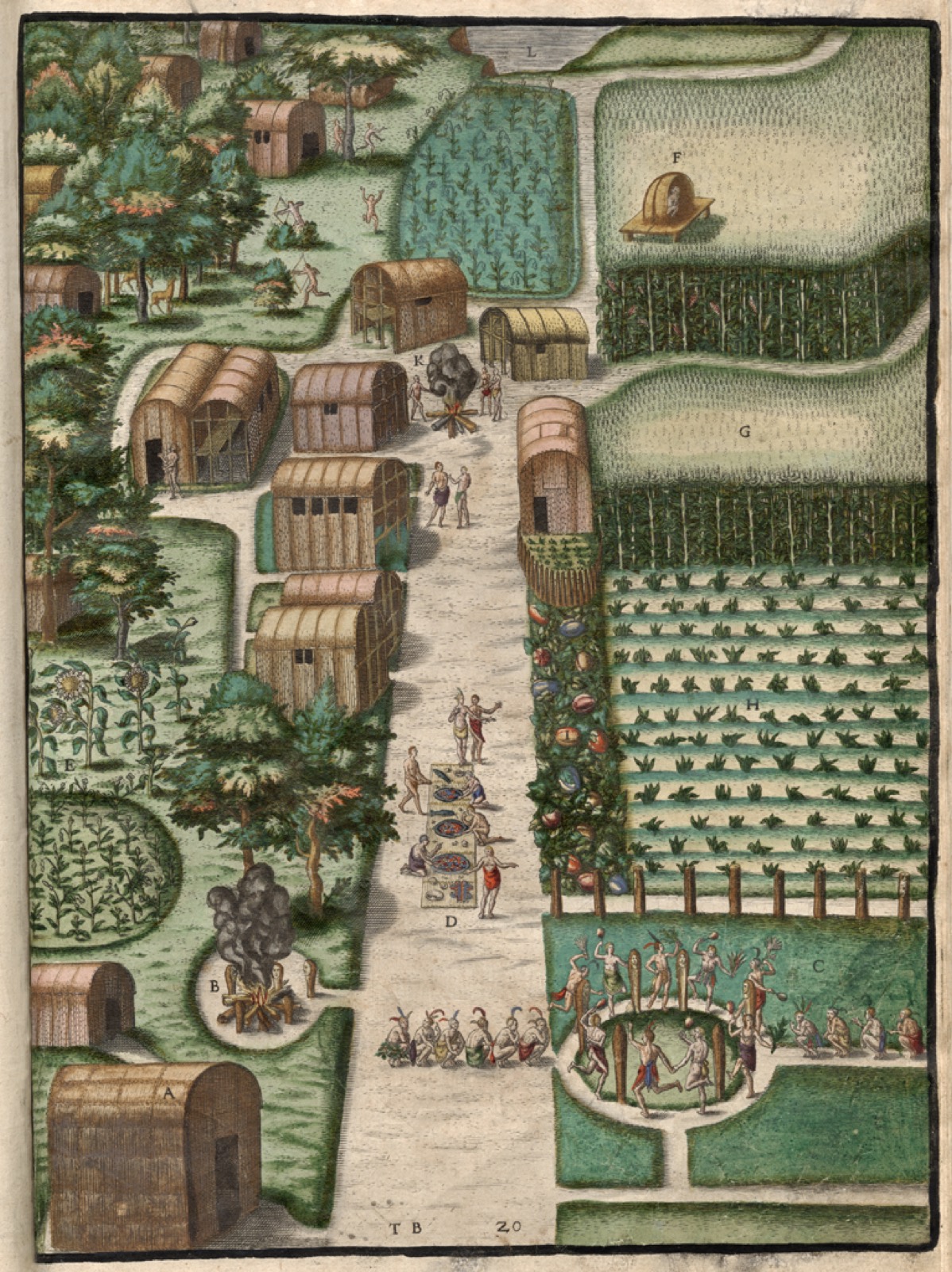
Theodor de Bry’s 1590 engraving of Secoton, from John White’s watercolors. Public domain.
Southern Black Codes tried to push freed people back onto plantations through vagrancy rules and forced contracts.
A poor Black household could be arrested for being out of work and then hired out, which kept wages from rising.
A small white farmer gained little from these codes and sometimes lost when labor was pinned to the big plantations.
Planters used the new statutes to rebuild a cheap, tied workforce after they could no longer own people.
In 1865 and 1866 states of the former Confederacy passed Black Codes.
Mississippi’s code required Black workers to hold written annual contracts and treated unemployment as vagrancy.
Congress answered with the Civil Rights Act of 1866 and then the Fourteenth Amendment, and military Reconstruction overrode much of that code system.
Mississippi Black Code (1865); Civil Rights Act of 1866, 14 Stat. 27; Foner, Reconstruction