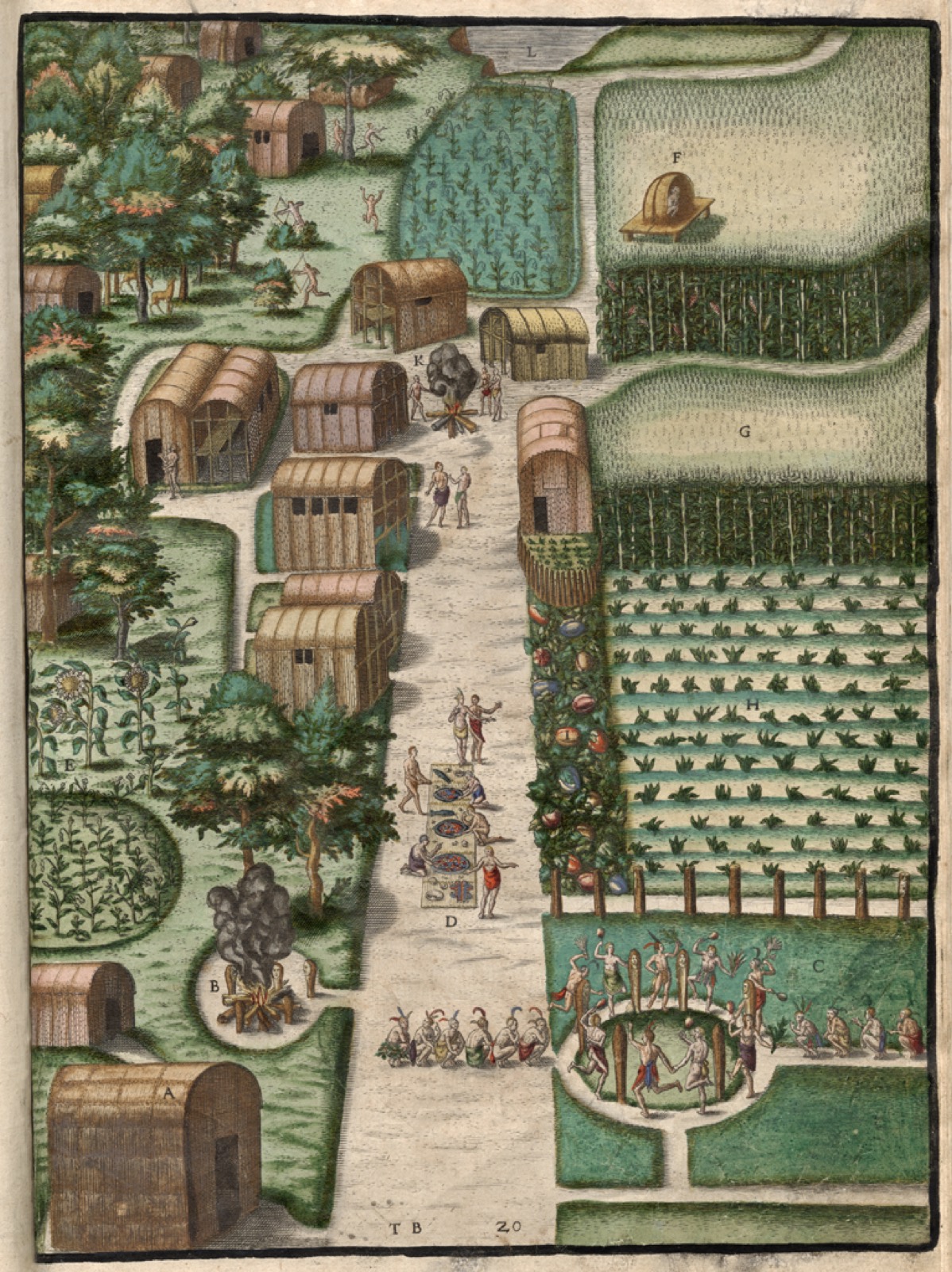
Theodor de Bry’s 1590 engraving of Secoton, from John White’s watercolors. Public domain.
The Fourteenth Amendment made freed people citizens and promised equal protection, and later courts used parts of it to shield corporations.
A poor Black household gained a constitutional citizenship that the Dred Scott decision had denied.
A small farmer or shopkeeper received the same formal promise of due process, which mattered most when a state law singled people out.
Railroad lawyers later argued that a corporation counted as a person under the amendment, and courts used that reading to limit state regulation.
Ratified in 1868, the Fourteenth Amendment defined national citizenship, barred states from denying due process or equal protection, and threatened to cut a state’s representation if it kept men from voting.
Its first purpose was the status of freed people and the terms for restoring the South.
In later decades federal courts carried the due process clause into fights over railroad rates and corporate property.
United States Constitution, Amendment XIV (1868); Foner, Reconstruction; Morton J. Horwitz, The Transformation of American Law, 1870-1960 (1992)