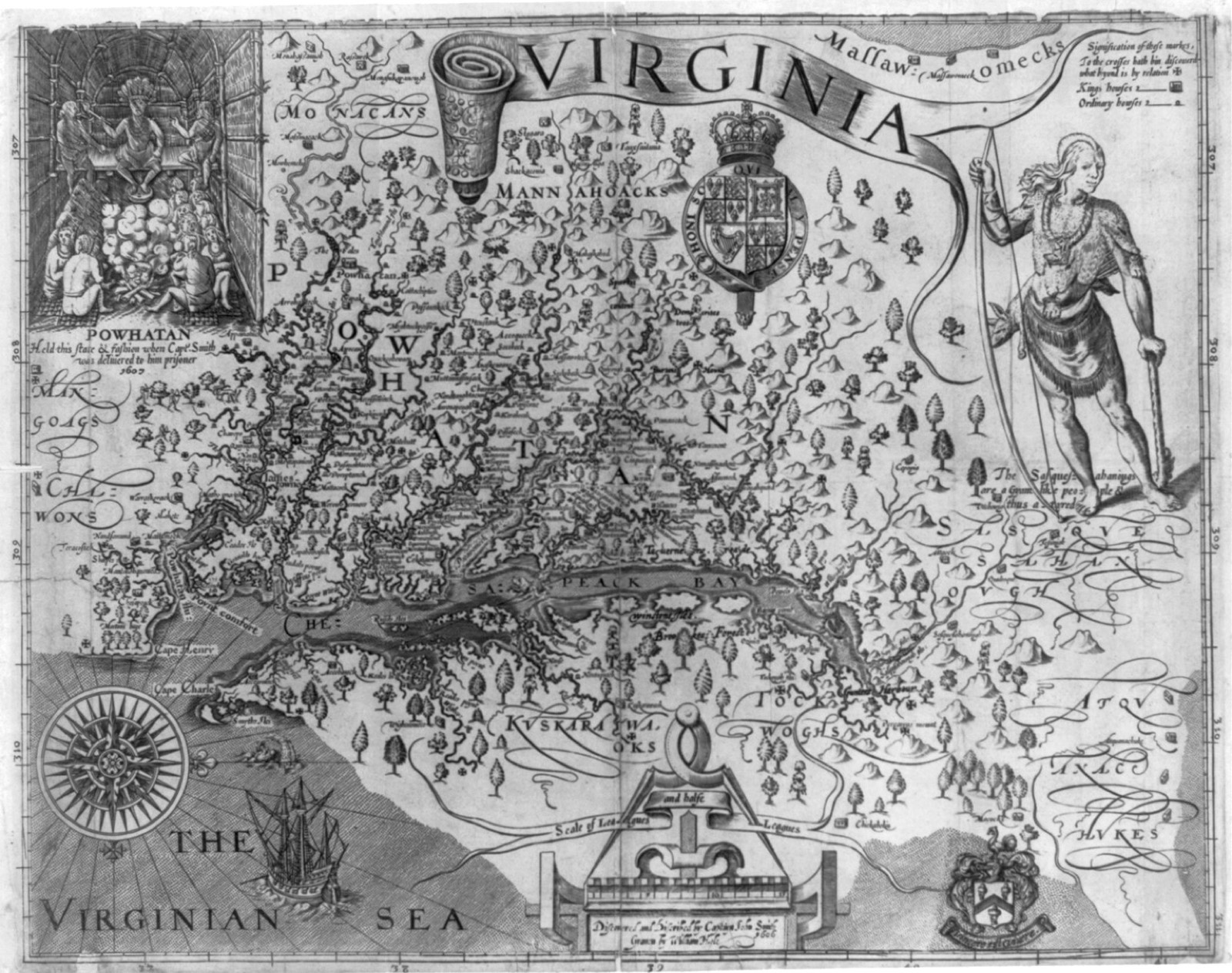
John Smith’s map of Virginia, engraved by William Hole and published in 1612. Public domain.
In 1869 the first transcontinental railroad was finished, and the trip west stopped being only a wagon journey.
A poor household did not ride in a sleeping car, but wages and prices in trackside towns now moved with the freight rate.
A merchant in a prairie town could order goods and ship grain on a schedule instead of waiting on a season.
The owners of the Union Pacific and the Central Pacific, and the bondholders behind them, held a road the public had helped pay for.
The tracks met at Promontory Summit, Utah, on May 10, 1869.
The Union Pacific had built west from Omaha and the Central Pacific east from California, with Chinese crews doing much of the Sierra work and Irish and other immigrants much of the plains work.
The golden spike was a ceremony, and the economic fact was a private line financed with federal bonds and land.
Pacific Railway Acts of 1862 and 1864; White, Railroaded