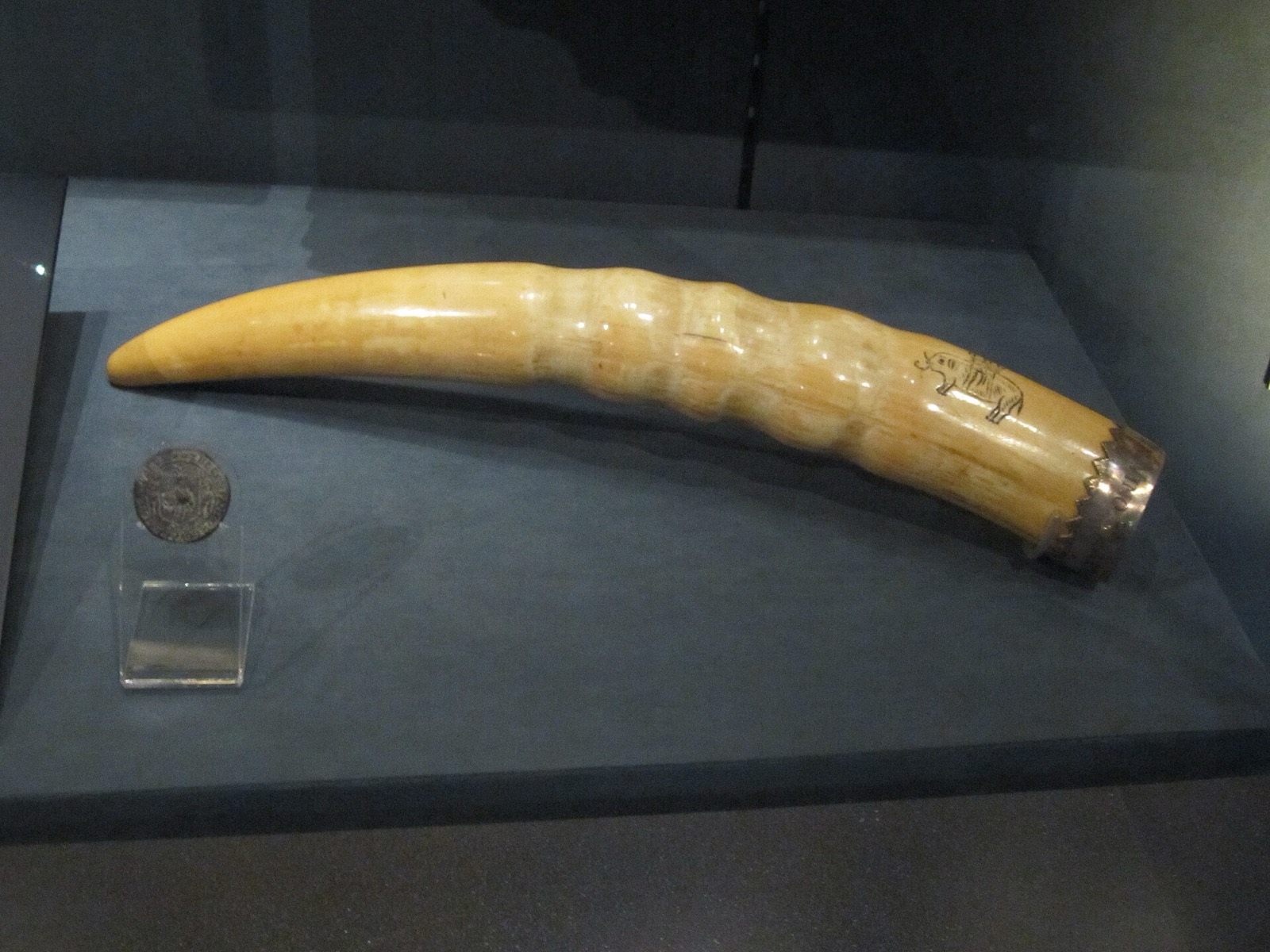
Ivory marked by the Royal African Company. International Slavery Museum, Liverpool. Wikimedia Commons.
In 1873 Congress dropped the standard silver dollar from the coin list, and later debtors called that the Crime of 1873.
A poor household that rarely saw a silver dollar still lived with tighter prices for whatever they had to sell.
A farmer with a mortgage wanted cheaper dollars so the debt would be easier to pay, and this law pointed the other way.
Creditors owed long-term dollars gained a currency that would not be inflated by unlimited silver coinage.
The Coinage Act of 1873 listed the coins the mint would strike and left out the standard silver dollar, just as western silver mines were about to pour metal onto the market.
For large payments the country was, in practice, on gold.
A generation of Populists treated the omission as a betrayal by bankers.
Coinage Act of 1873, 17 Stat. 424; Milton Friedman and Anna Jacobson Schwartz, A Monetary History of the United States (1963)