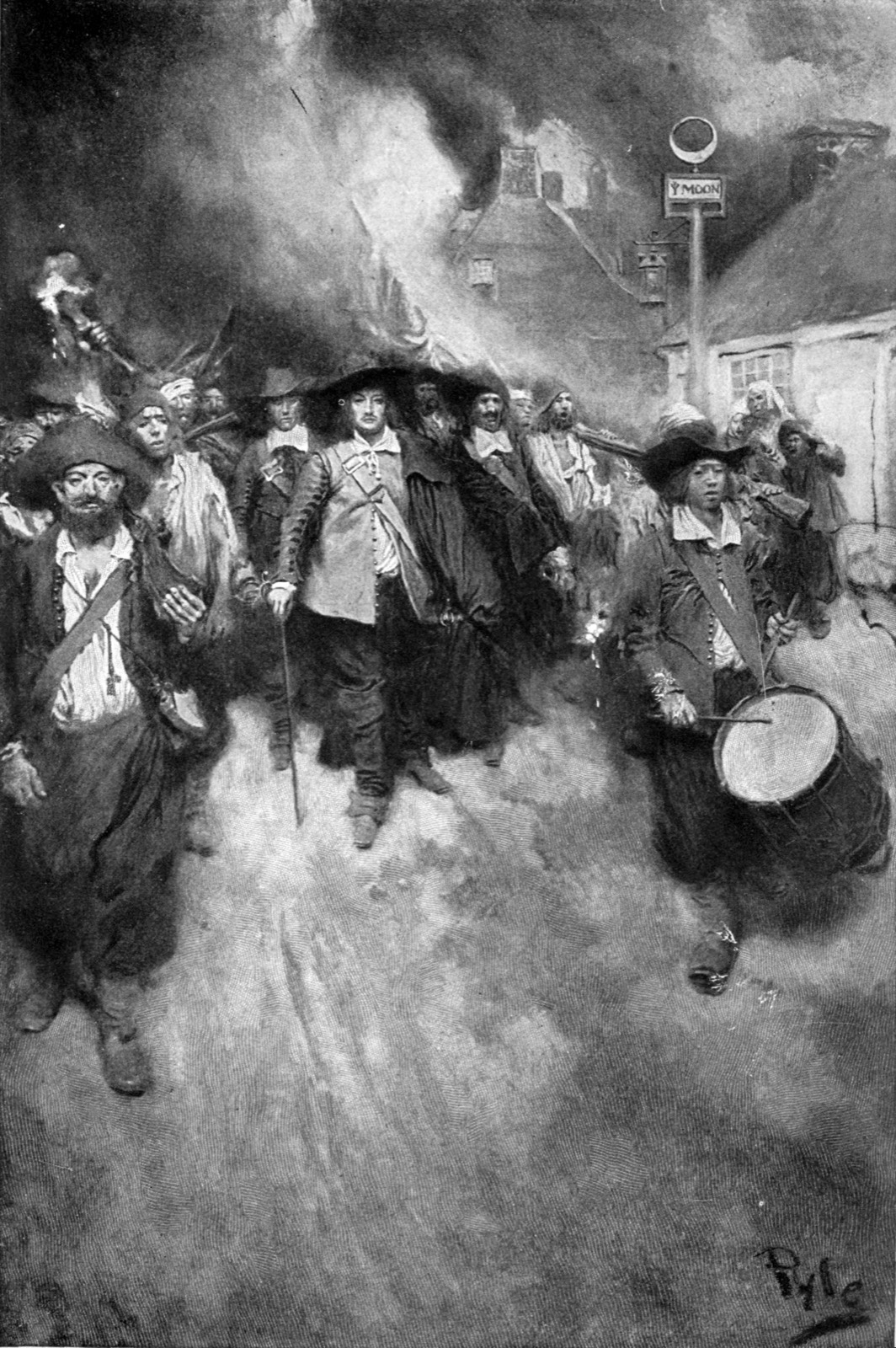
Howard Pyle, The Burning of Jamestown, an early-twentieth-century illustration, not an eyewitness view. Public domain.
Jay Cooke’s bank failed when it could not sell bonds for a northern railroad, and a long depression followed.
A poor household in a mill or on a rail gang lost work as building stopped and orders dried up.
A small business that lived on credit found the bank unwilling and its customers late to pay.
Cooke, railroad promoters, and their bondholders were the first layer to crack, and firms that had looked solid failed behind them.
On September 18, 1873, Jay Cooke and Company closed after failing to place Northern Pacific bonds.
The New York Stock Exchange shut for ten days.
A depression then ran through the rest of the 1870s, with heavy unemployment in industrial cities and falling prices for farm goods.
Elmus Wicker, Banking Panics of the Gilded Age (2000); Henrietta M. Larson, Jay Cooke, Private Banker (1936)