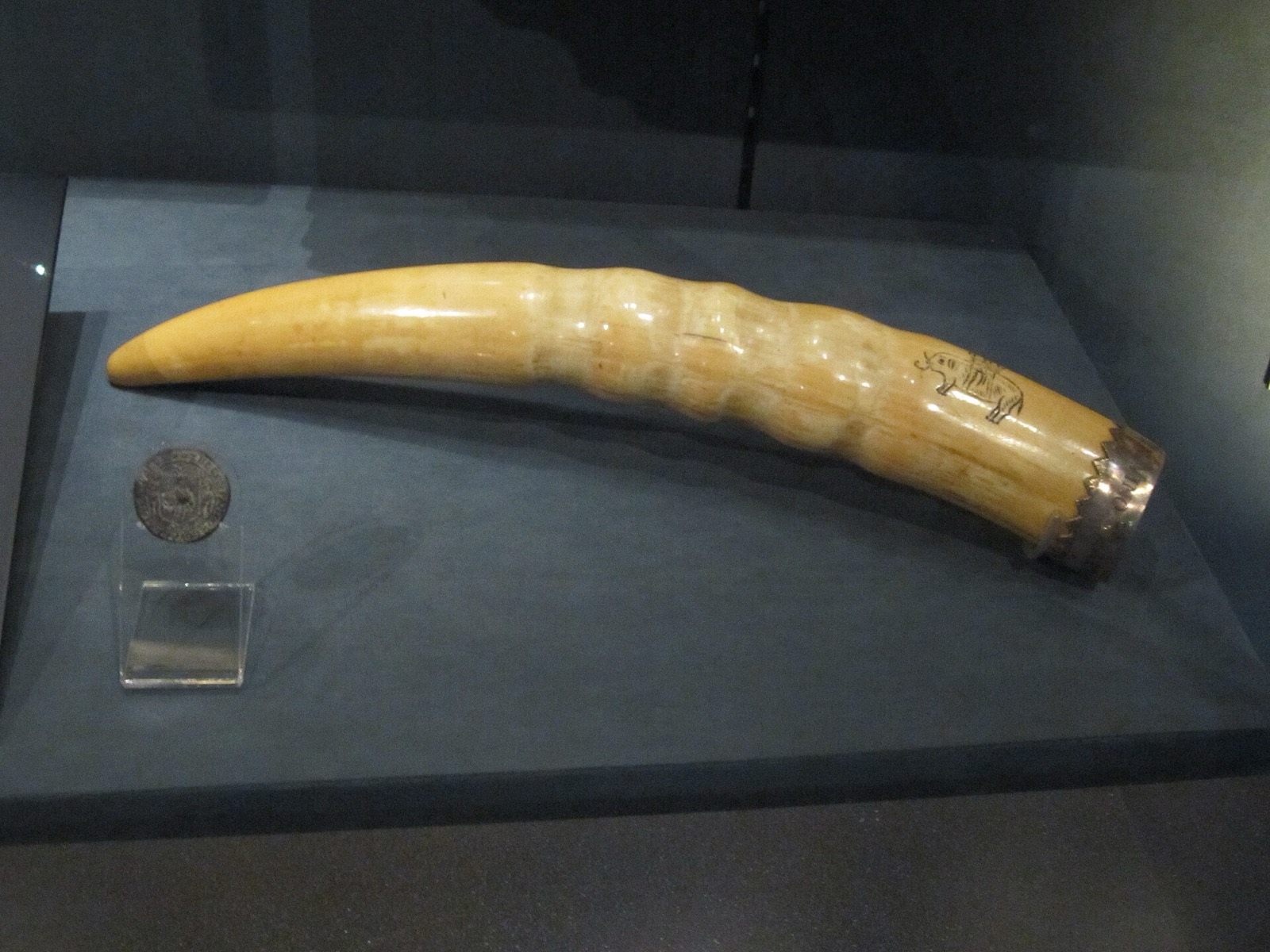
Ivory marked by the Royal African Company. International Slavery Museum, Liverpool. Wikimedia Commons.
Congress promised that on the first day of 1879, paper dollars could again be redeemed in gold coin.
A poor household did not hold a stack of notes to redeem, and the tighter money showed up as lower prices for labor and crops.
A saver with paper dollars gained a promise that those dollars would again match gold.
Bondholders who had lent in gold, and bankers who wanted a hard currency, got the policy they had pressed since the war.
The Specie Resumption Act of 1875 ordered the Treasury to redeem United States notes in coin beginning January 1, 1879, and it let the greenback issue shrink as national bank notes grew.
On the appointed day redemption worked without a panic, because the Treasury had gathered gold and the paper premium had already faded.
Silver advocates saw the act as a lock on the gold dollar.
Specie Resumption Act, 18 Stat. 296 (1875); Friedman and Schwartz, A Monetary History of the United States