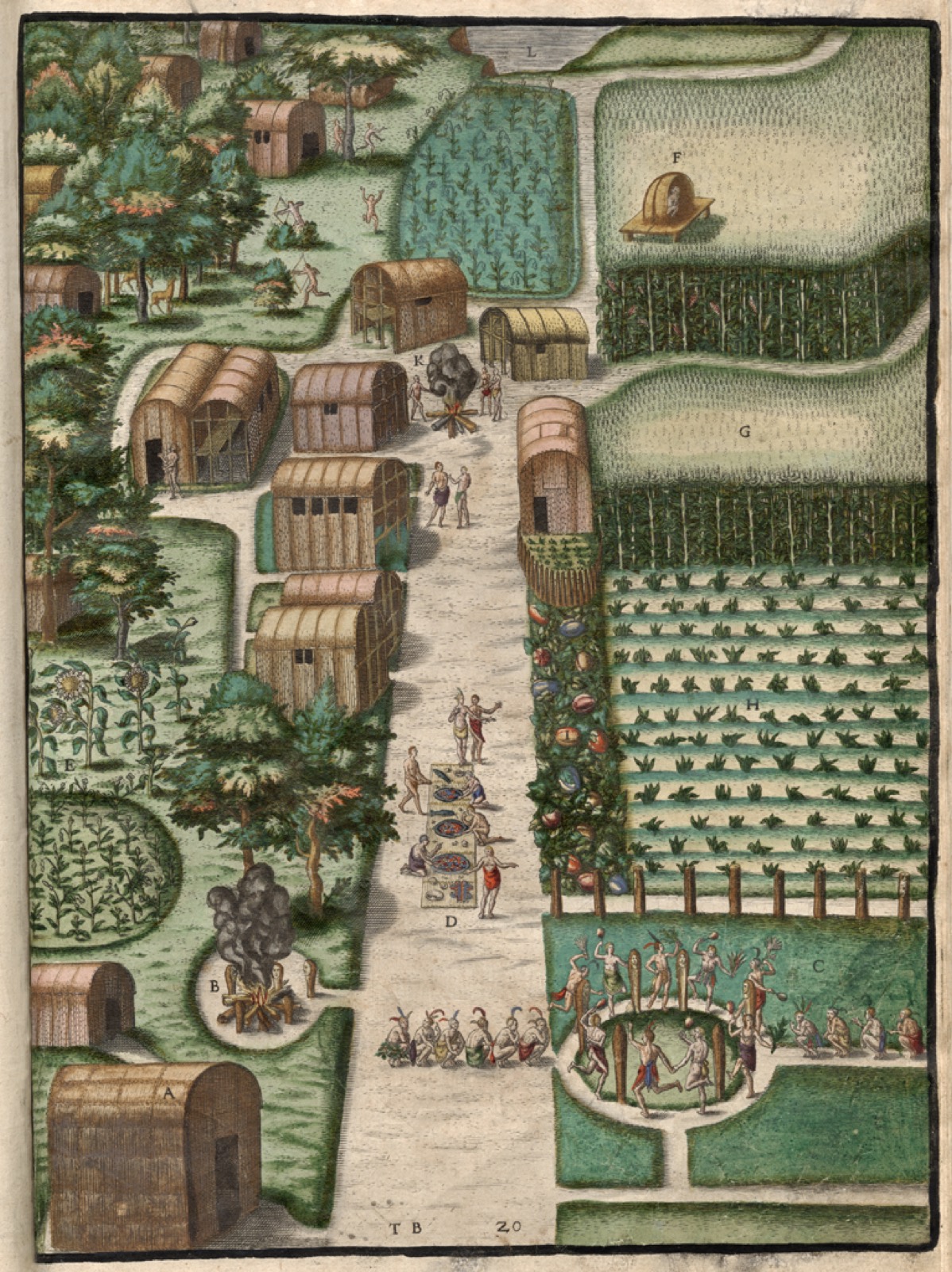
Theodor de Bry’s 1590 engraving of Secoton, from John White’s watercolors. Public domain.
Andrew Carnegie built steel works that drove down the cost of a ton and undercut rivals who could not keep up.
A poor household in a steel town got a wage and a dangerous job, and no share of the cheaper ton.
A small ironmaster using older methods could not match the new price and often sold or closed.
Carnegie and his partners already had capital, railroad orders, and a habit of putting profits back into faster mills.
The Edgar Thomson Steel Works at Braddock, near Pittsburgh, opened in 1875 and used the Bessemer process to make rails in volume.
Carnegie cut costs, tied together ore, coke, and mills, and drove managers with strict accounts.
By the 1890s his firms dominated American steel rails and structural shapes.
Joseph Frazier Wall, Andrew Carnegie (1970); David Brody, Steelworkers in America (1960)