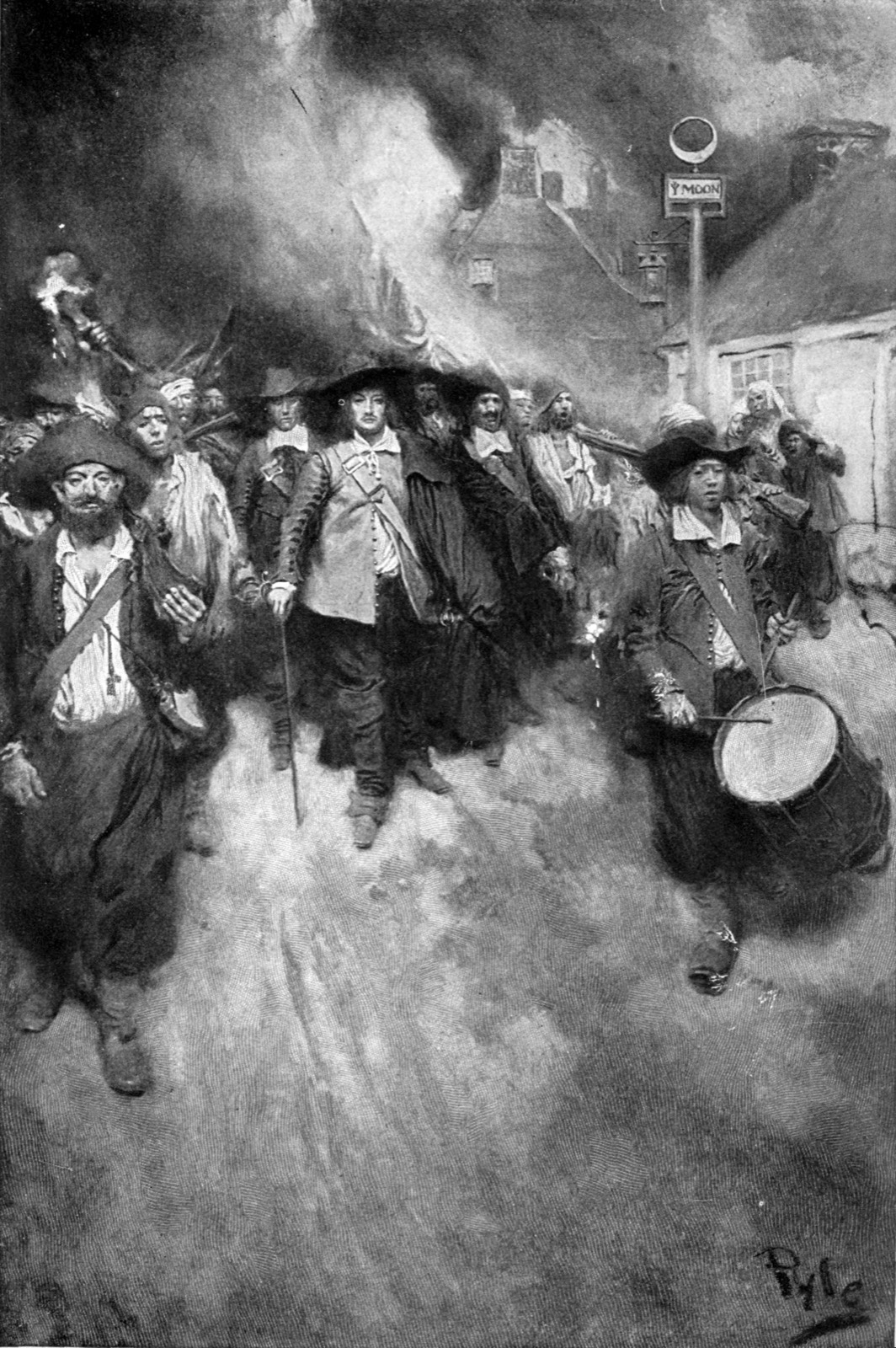
Howard Pyle, The Burning of Jamestown, an early-twentieth-century illustration, not an eyewitness view. Public domain.
In 1877 railroad workers walked out against a wage cut, and the strike spread until federal troops broke it.
A poor rail household had already taken a pay cut in a depression, and the strike was a refusal to take another.
A small shop in a struck city lost business when the trains and then the streets stopped.
Railroad owners kept the cut, and they learned they could call on the Army when local militia would not fire on a crowd.
The Great Railroad Strike began on the Baltimore and Ohio in July 1877 after a cut of 10 percent and spread through rail centers from Baltimore to St.
Louis.
Militia and then federal troops fought strikers and town crowds, and people were killed in several cities.
It was the largest labor conflict the country had yet seen, and it did not restore the wage.
Robert V. Bruce, 1877: Year of Violence (1959); Philip S. Foner, The Great Labor Uprising of 1877 (1977)