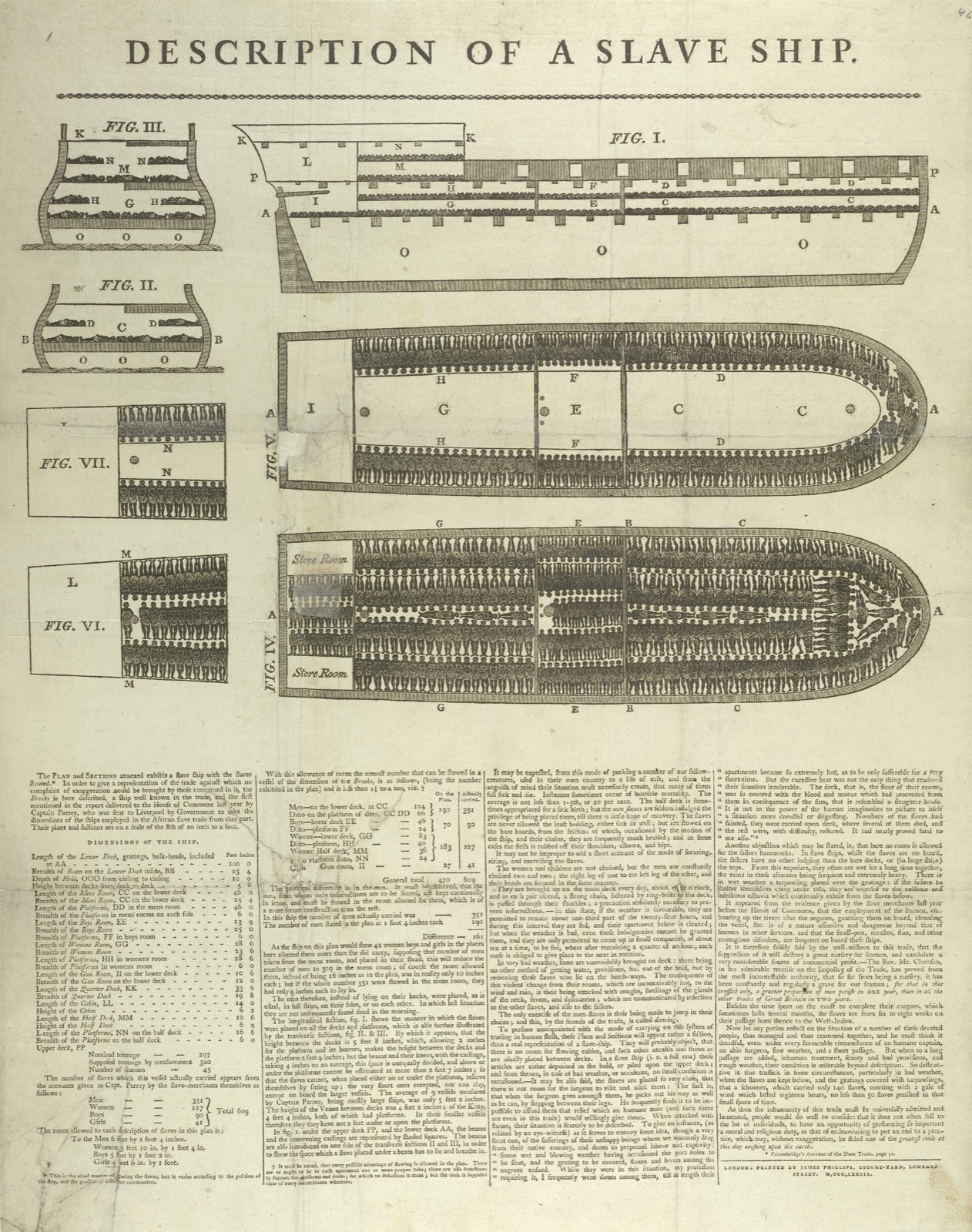
Diagram of the British slave ship Brookes, published in 1788. Public domain, British Library.
The Supreme Court said Illinois could limit what grain elevators charged, because that business was tied to the public.
A poor farm household did not own an elevator, and a cap on the toll was one of the few brakes on the man who stored the crop.
A farmer who had to use a Chicago warehouse gained a legal argument against an arbitrary charge.
Elevator owners, and the railroads behind them, lost the claim that private property put their prices beyond the legislature.
In Munn v.
Illinois, decided in 1877, the Court upheld a Granger law regulating grain-warehouse rates.
Chief Justice Morrison Waite wrote that property used in a way the community depends on may be regulated for the public good.
Later cases pulled this doctrine back for interstate railroads, but Munn was the high mark of state control over those charges.
Munn v. Illinois, 94 U.S. 113 (1877); George H. Miller, Railroads and the Granger Laws (1971)