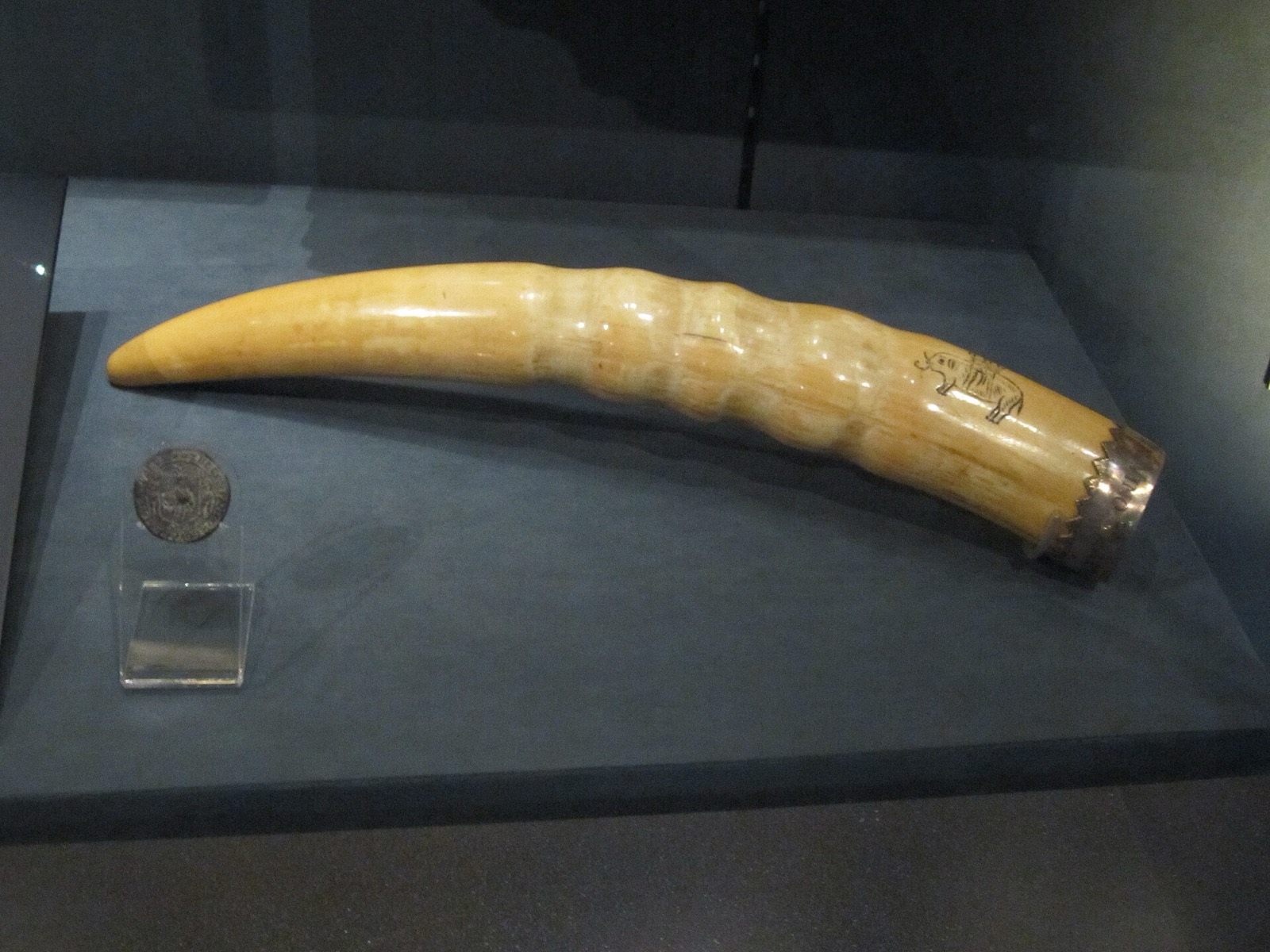
Ivory marked by the Royal African Company. International Slavery Museum, Liverpool. Wikimedia Commons.
Congress ordered the Treasury to buy a limited amount of silver each month and coin it, a compromise that satisfied neither side.
A poor household saw no flood of new cash, and prices for what working people sold stayed under pressure.
A debtor household that wanted a much larger silver coinage got only a trickle.
Gold-standard bankers disliked even a limited silver purchase, and silver-mine owners wanted the government to take all they could dig.
The Bland-Allison Act of 1878 required the Treasury to buy between two million and four million dollars of silver bullion every month and coin it into dollars.
President Hayes vetoed the bill, and Congress overrode him.
The law brought back a silver dollar without allowing unlimited coinage, and the fight rolled on into the 1890s.
Bland-Allison Act, 20 Stat. 25 (1878); Irwin Unger, The Greenback Era (1964)