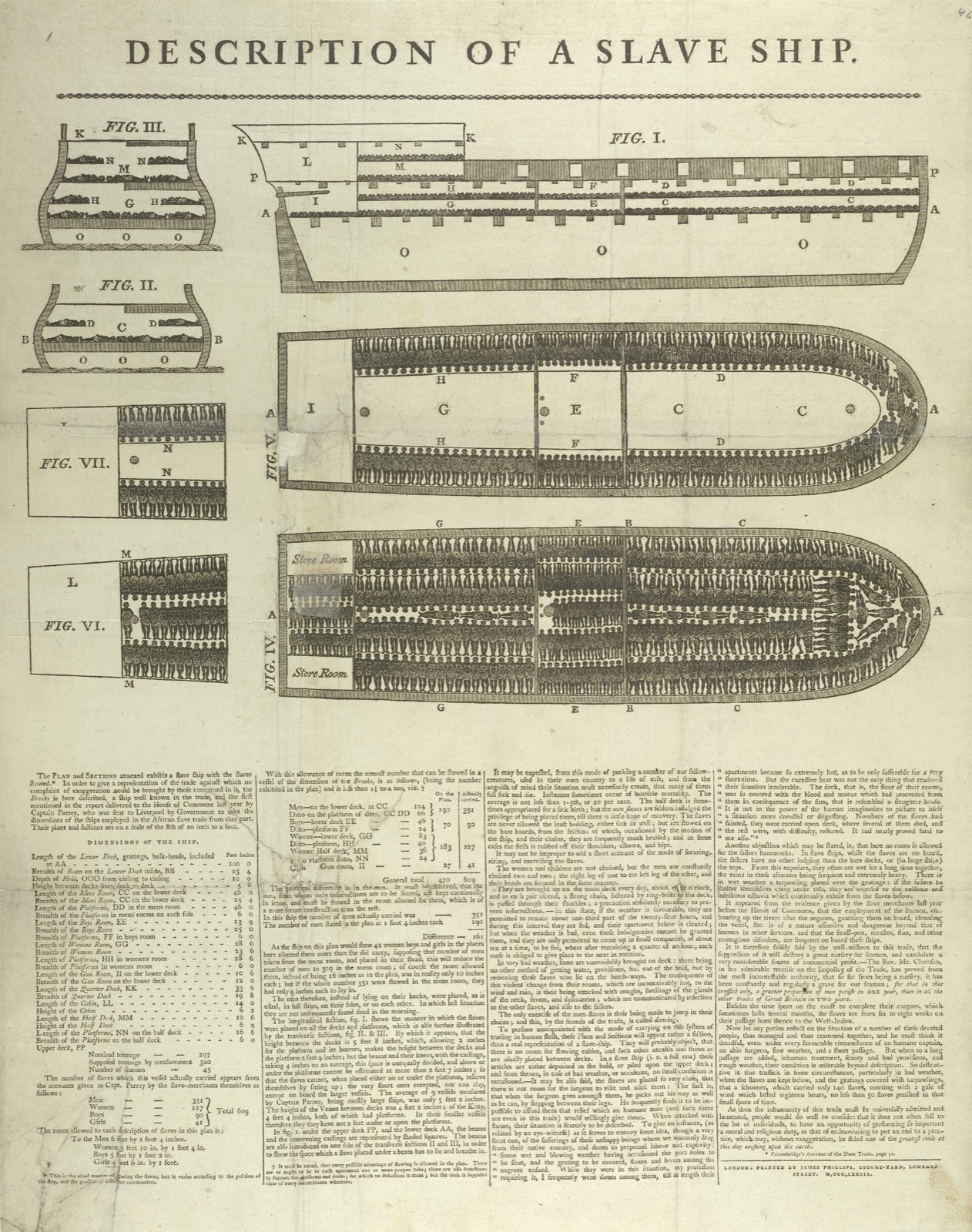
Diagram of the British slave ship Brookes, published in 1788. Public domain, British Library.
Congress created the Interstate Commerce Commission to watch railroad rates, then gave it too little power to do the job.
A poor household did not file a rate complaint, and the fare and the freight were still set by the company.
A small shipper gained a desk where a complaint about rebates could be filed, even if a win was slow and rare.
Railroad managers faced a new federal referee, and for years they found it easier to live with than a strong one would have been.
The Interstate Commerce Act of 1887 required interstate rates to be reasonable and public, barred some discrimination and pooling, and created the Interstate Commerce Commission.
Early court rulings narrowed what the commission could order.
A real power to set maximum rates waited for later statutes, above all the Hepburn Act of 1906.
Interstate Commerce Act, 24 Stat. 379 (1887); Stephen Skowronek, Building a New American State (1982)