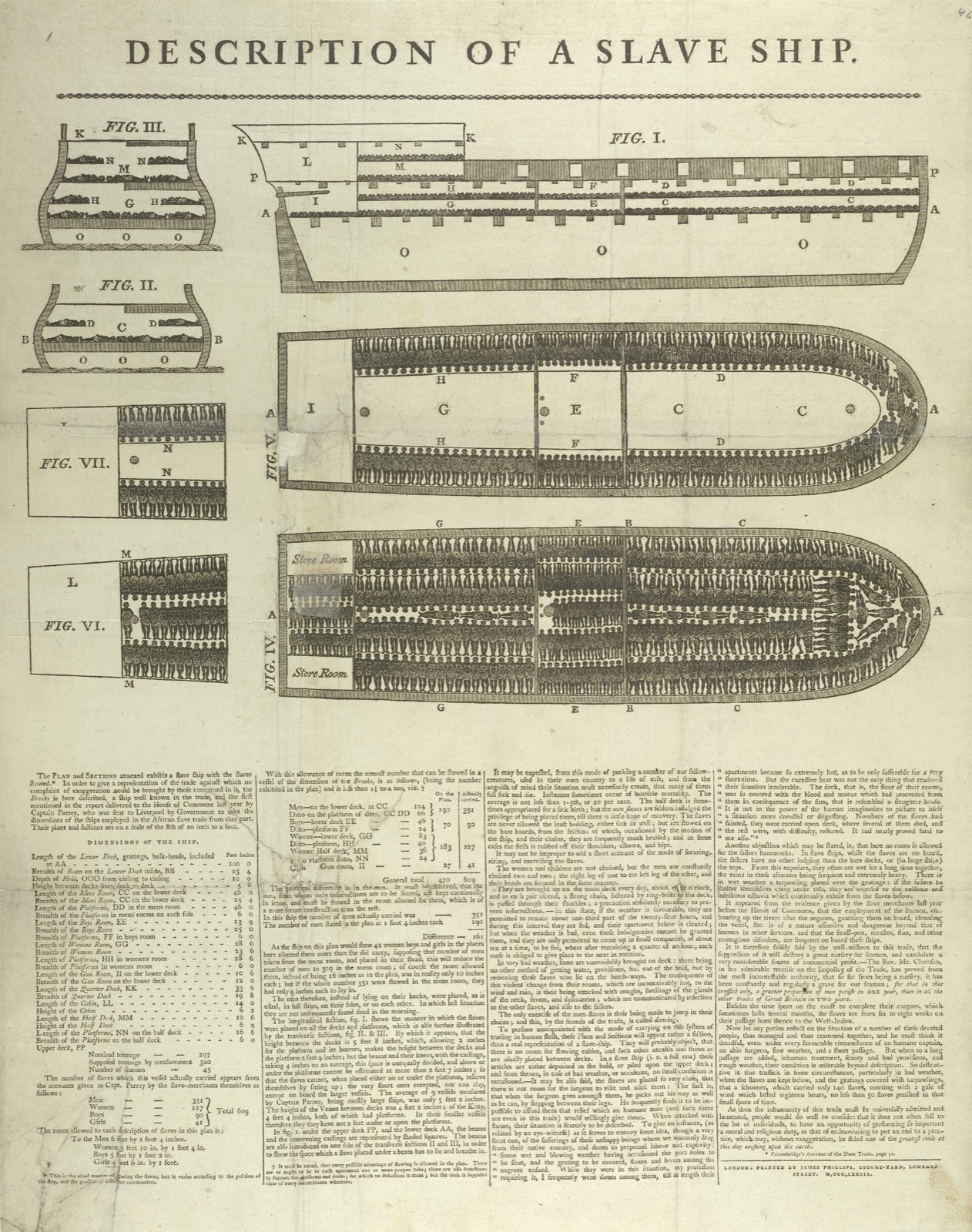
Diagram of the British slave ship Brookes, published in 1788. Public domain, British Library.
The Sherman Act made monopolies and contracts that restrained trade a federal offense.
A poor household was supposed to see competition in the price of oil, sugar, or freight, and for years felt little change.
A small firm squeezed by a trust gained a statute to cite and almost no quick remedy.
Men who built the trusts treated the wording as vague, and many combinations went on until presidents and courts were willing to use the law.
Congress passed the Sherman Antitrust Act in 1890.
It declared illegal every contract, combination, or conspiracy in restraint of trade among the states, and it made monopolizing a trade a crime.
Early enforcement was weak, and in 1895 the Supreme Court, in the Knight sugar case, said manufacturing inside one state was not interstate commerce.
Sherman Antitrust Act, 26 Stat. 209 (1890); United States v. E. C. Knight Co., 156 U.S. 1 (1895); William Letwin, Law and Economic Policy in America (1965)