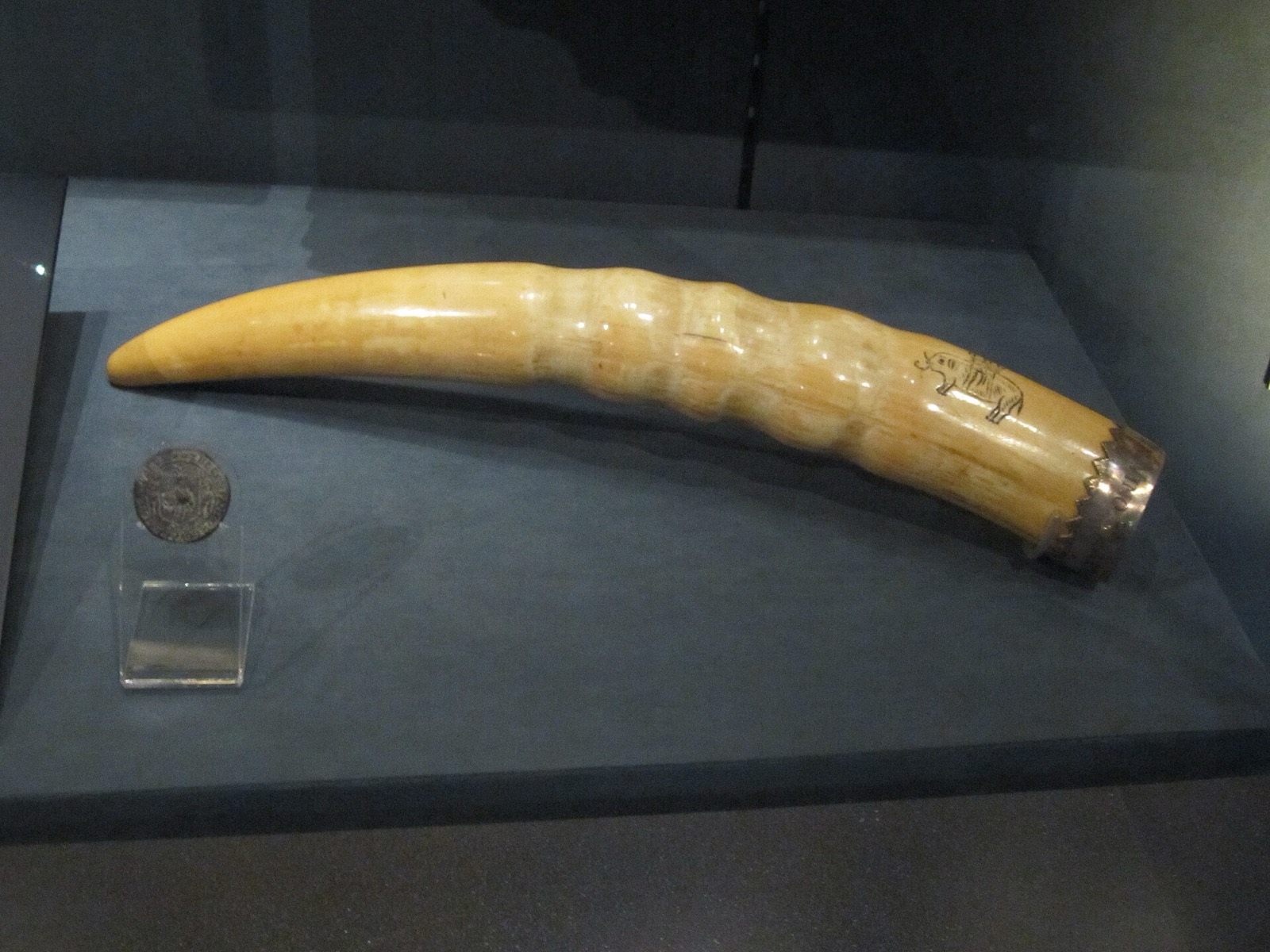
Ivory marked by the Royal African Company. International Slavery Museum, Liverpool. Wikimedia Commons.
In 1890 Congress ordered a much larger monthly purchase of silver, and the nation’s gold reserve later paid for that promise.
A poor household did not redeem notes for gold, and the worry showed up as shaky banks and scared employers.
A farmer who wanted more money in circulation got a bigger silver purchase than in 1878, and still not free coinage.
Silver-mine owners received a guaranteed buyer, and people holding gold watched the Treasury’s reserve with growing doubt.
The Sherman Silver Purchase Act of 1890 required the Treasury to buy four and a half million ounces of silver every month and to pay with notes redeemable in gold or silver.
Western votes for that bill were traded for eastern votes for a high tariff.
The purchase helped drain Treasury gold, and Congress repealed the act in 1893 during the panic.
Sherman Silver Purchase Act, 26 Stat. 289 (1890); Friedman and Schwartz, A Monetary History of the United States