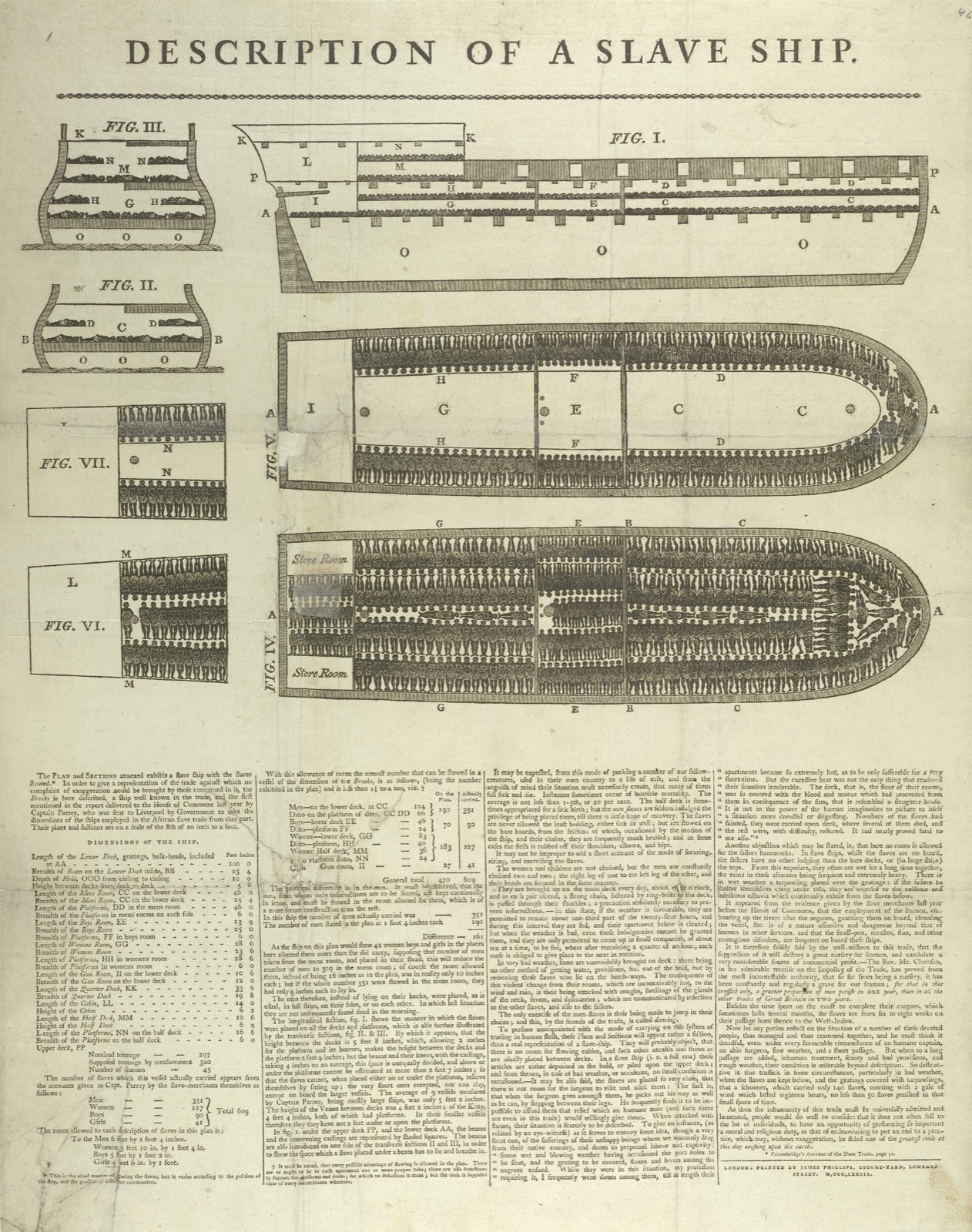
Diagram of the British slave ship Brookes, published in 1788. Public domain, British Library.
The McKinley Tariff raised import duties to protect industry and angered households that bought the taxed goods.
A poor family paid the duty inside the price of woolens, tinware, and tools, and had no lobby of its own.
A small manufacturer in a protected trade gained a higher fence against foreign rivals.
Iron, wool, and factory interests that helped write the bill got the rates, and the party in power paid for it at the next elections.
The Tariff Act of 1890, tied to Representative William McKinley, raised protective duties and passed in a bargain with the silver-purchase law.
Voters punished the higher prices in the elections of 1890 and 1892.
A new tariff in 1894 cut some of those rates back.
Tariff Act of 1890, 26 Stat. 567; Taussig, The Tariff History of the United States