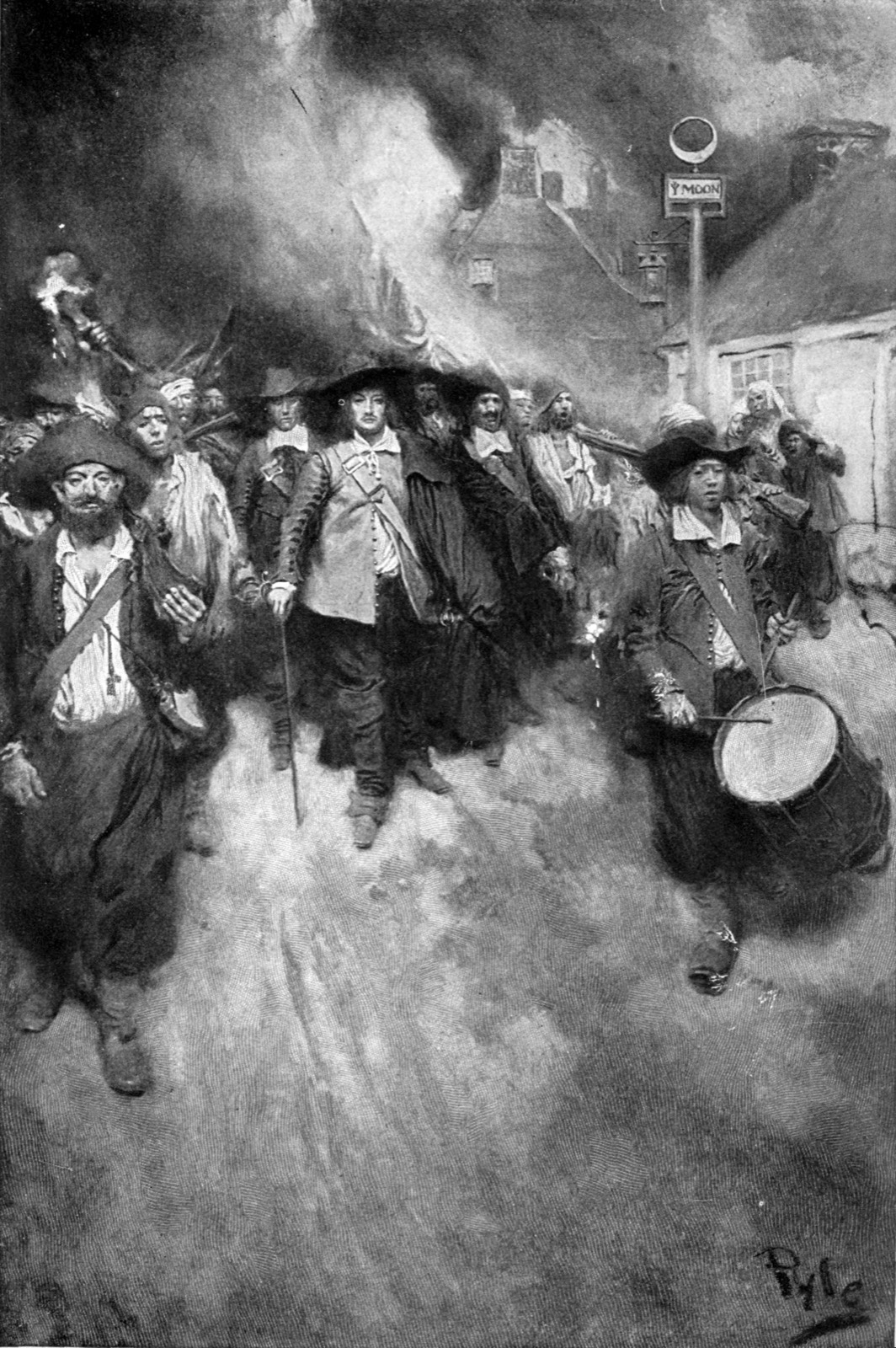
Howard Pyle, The Burning of Jamestown, an early-twentieth-century illustration, not an eyewitness view. Public domain.
In 1893 fear for the Treasury’s gold, plus railroad failures, dropped the country into a deep depression.
A poor household in a factory or on a rail crew lost work, and cities opened soup lines.
A farmer already hit by low crop prices found credit gone and the mortgage still due.
Overbuilt railroads, their bankers, and investors who had been pulling British money home were the fortunes that cracked first.
The Panic of 1893 followed railroad collapses, including the Philadelphia and Reading, and fear that the Treasury could not keep paying gold on demand.
President Cleveland called Congress into session to repeal the Sherman Silver Purchase Act.
Work stayed scarce for years, and the depression fed the Populist and free-silver campaigns.
Douglas Steeples and David O. Whitten, Democracy in Desperation (1998); Wicker, Banking Panics of the Gilded Age