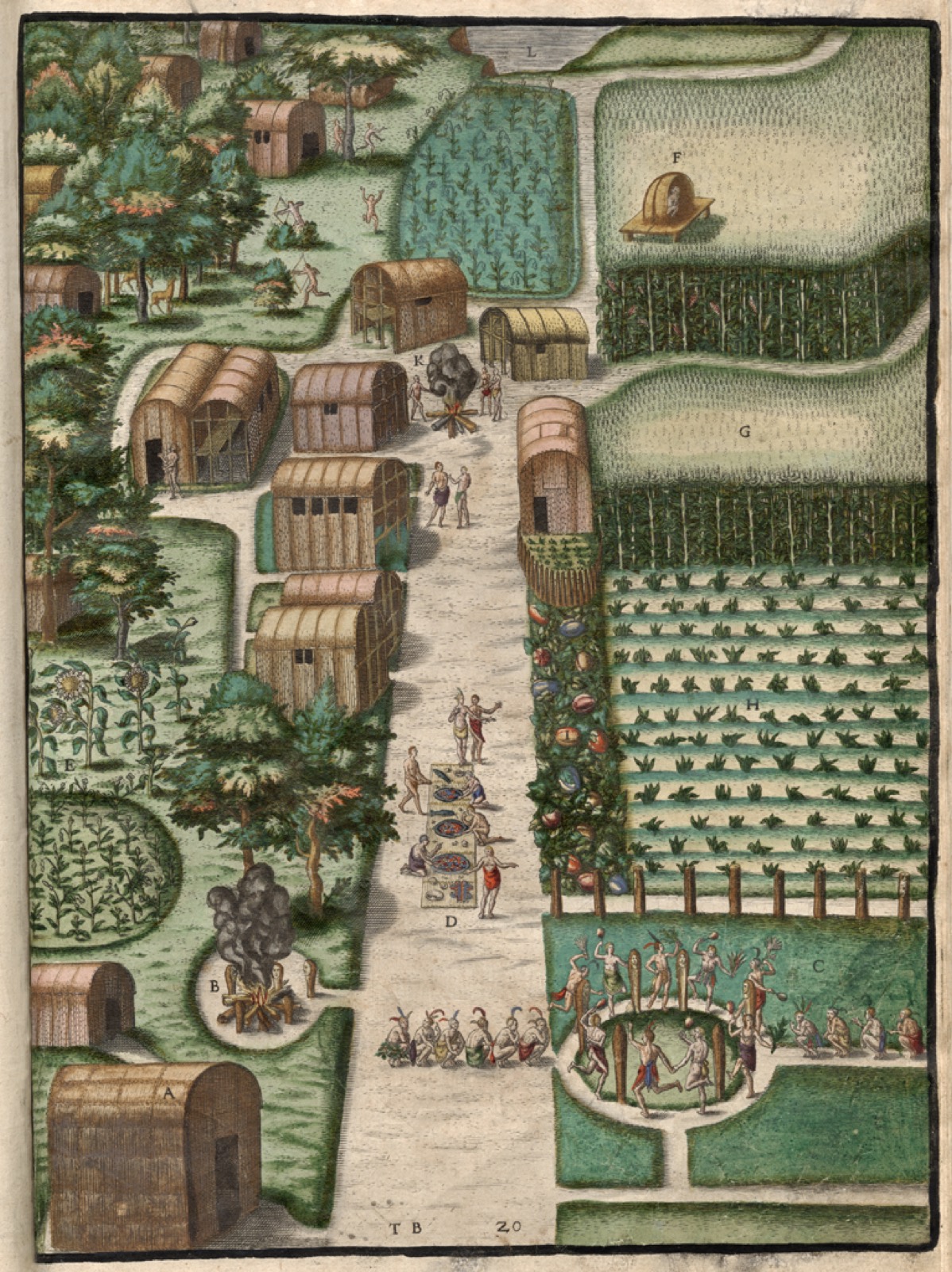
Theodor de Bry’s 1590 engraving of Secoton, from John White’s watercolors. Public domain.
Pullman workers struck when wages were cut in a town the company owned, and a rail boycott brought federal troops.
A poor household in Pullman’s town still owed the company rent while the paycheck shrank, which is what made the cut unbearable.
A shopkeeper or a traveler far from Chicago felt the boycott when the mail trains stopped.
George Pullman kept the town, and the railroad managers got a court order and the Army.
The strike began in May 1894 after Pullman cut wages and would not cut rents in his company town.
The American Railway Union, led by Eugene Debs, refused to handle Pullman cars.
Attorney General Richard Olney, close to the railroads, won a federal injunction, President Cleveland sent troops to Chicago over the Illinois governor’s objection, and the Supreme Court later upheld Debs’s jailing in the Debs case.
In re Debs, 158 U.S. 564 (1895); Almont Lindsey, The Pullman Strike (1942); Nick Salvatore, Eugene V. Debs (1982)