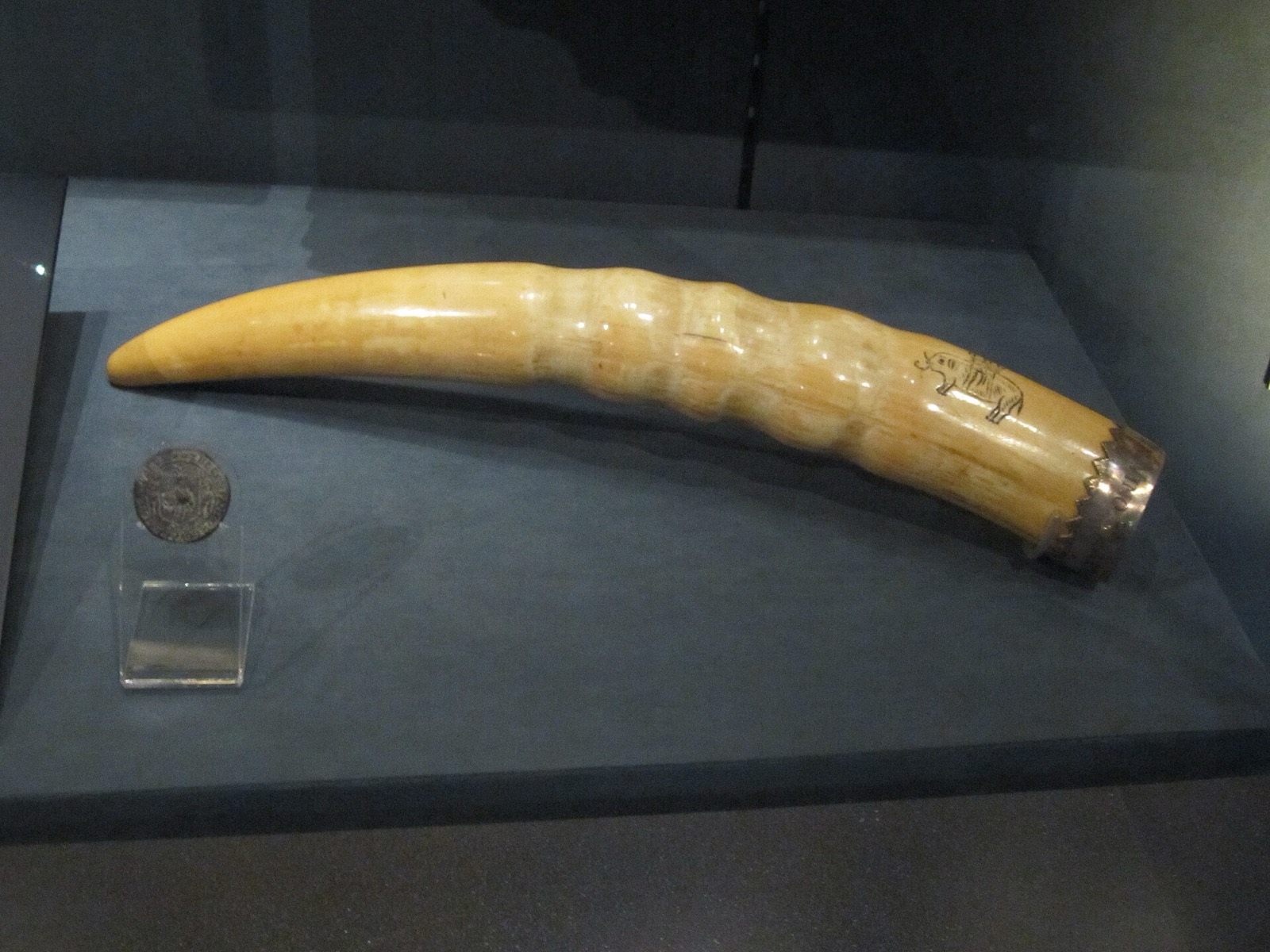
Ivory marked by the Royal African Company. International Slavery Museum, Liverpool. Wikimedia Commons.
In 1895 the Supreme Court threw out a federal income tax, and it took a constitutional amendment before Congress could lay one again.
A poor household was not the target of that tax, and the ruling left Washington living on tariffs and excises that hit people who must spend what they earn.
A professional household above the exemption would have owed the tax, and the Court spared them.
People who lived on rents, dividends, and bond interest were the ones most relieved by the ruling.
The tariff act of 1894 included a tax of 2 percent on incomes above 4,000 dollars.
In Pollock v.
Farmers’ Loan and Trust Company the Supreme Court held that a tax on income from property was a direct tax and had to be divided among the states by population, which made it unworkable.
That ruling stood until the Sixteenth Amendment.
Pollock v. Farmers' Loan and Trust Co., 158 U.S. 601 (1895); Tariff Act of 1894, 28 Stat. 509