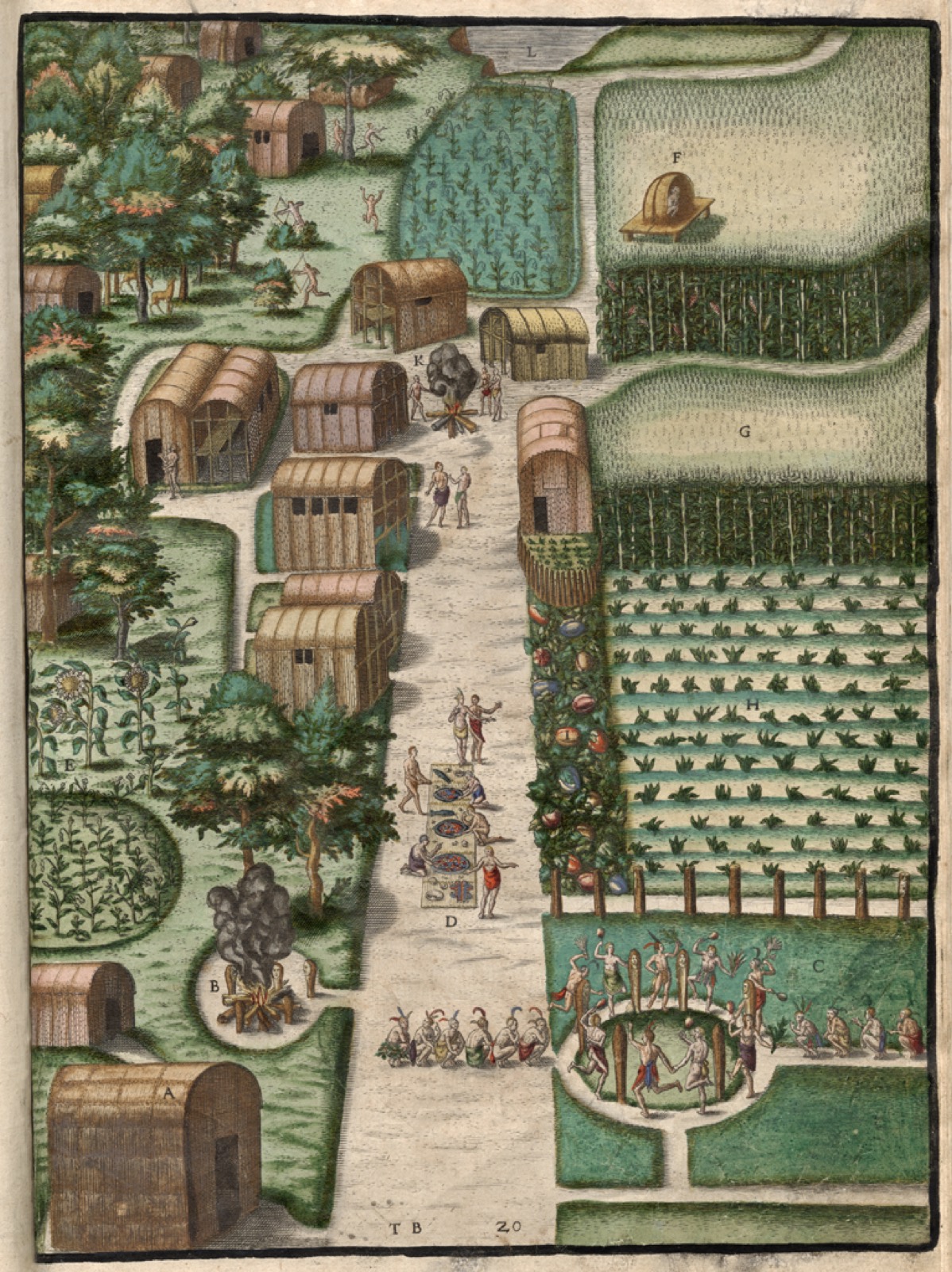
Theodor de Bry’s 1590 engraving of Secoton, from John White’s watercolors. Public domain.
Morgan bought Carnegie out and folded the major steel firms into the United States Steel Corporation.
A poor household in a mill town now worked for a company large enough to set wages and prices across many plants.
A small independent mill had to live beside a combination that owned ore boats, coke, and finishing works.
Carnegie cashed out of the firm he had built, and Morgan’s syndicate held a corporation capitalized at about 1,400 million dollars.
In 1901 Morgan organized the United States Steel Corporation, joining Carnegie Steel with other large producers and the great Mesabi ore holdings.
It was the first American corporation capitalized above a billion dollars.
The sale closed the Carnegie partnership and put a huge share of the country’s steel under one holding company.
Jean Strouse, Morgan: American Financier (1999); Wall, Andrew Carnegie