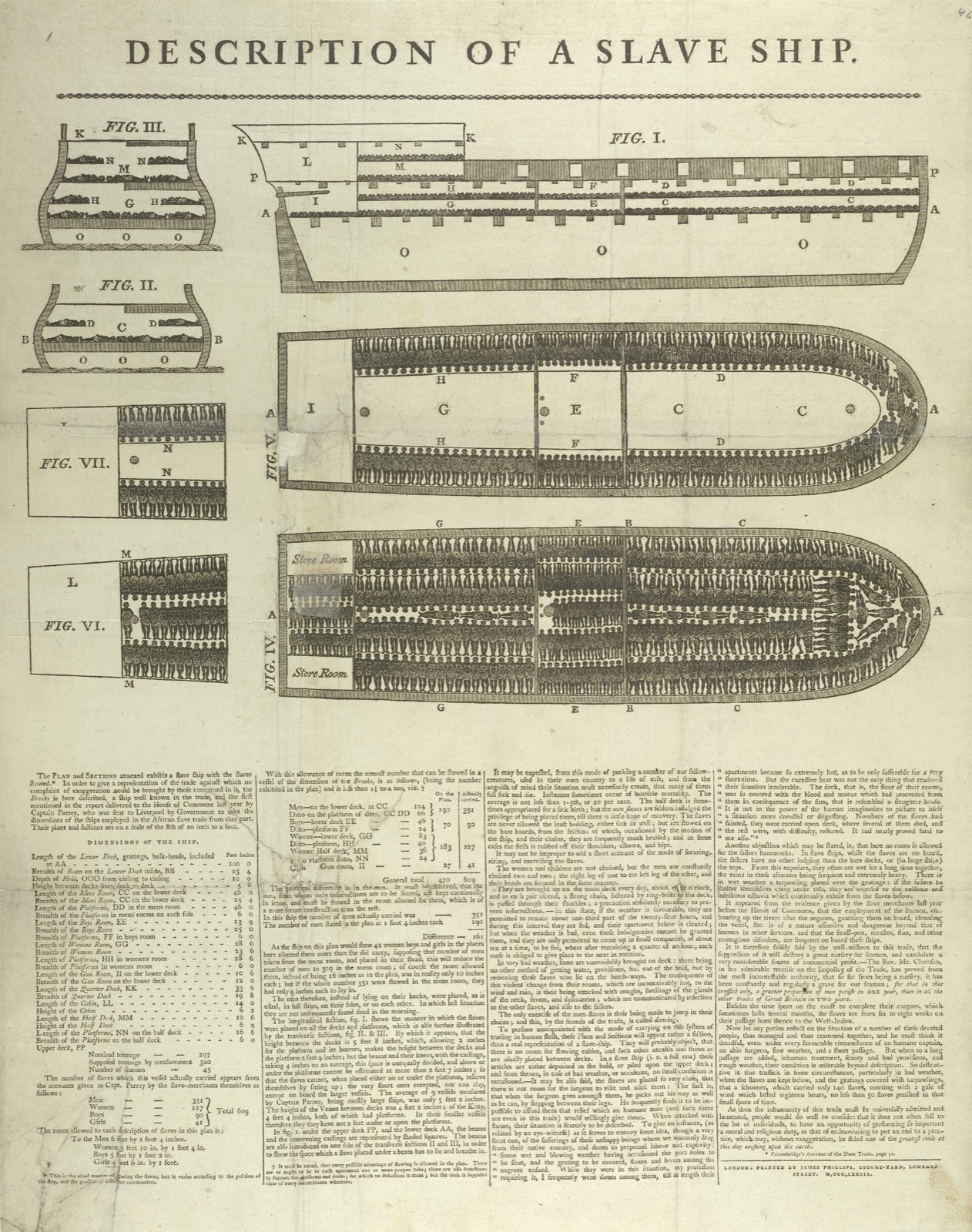
Diagram of the British slave ship Brookes, published in 1788. Public domain, British Library.
The Hepburn Act let the Interstate Commerce Commission set a maximum railroad rate instead of only complaining about one.
A poor household met railroad power in the price of coal and food, and a stronger commission was aimed at that power.
A farmer or small shipper gained a federal body that could name a ceiling on a rate.
Railroad owners lost the freedom to post a charge and dare a weak commission to undo it.
The Hepburn Act of 1906 widened the Interstate Commerce Commission, authorized it to fix maximum rates, and brought oil pipelines under its eye.
Theodore Roosevelt pushed the bill after courts had thinned the 1887 law.
For the first time the federal government had a working power to set prices in interstate railroading.
Hepburn Act, 34 Stat. 584 (1906); Skowronek, Building a New American State