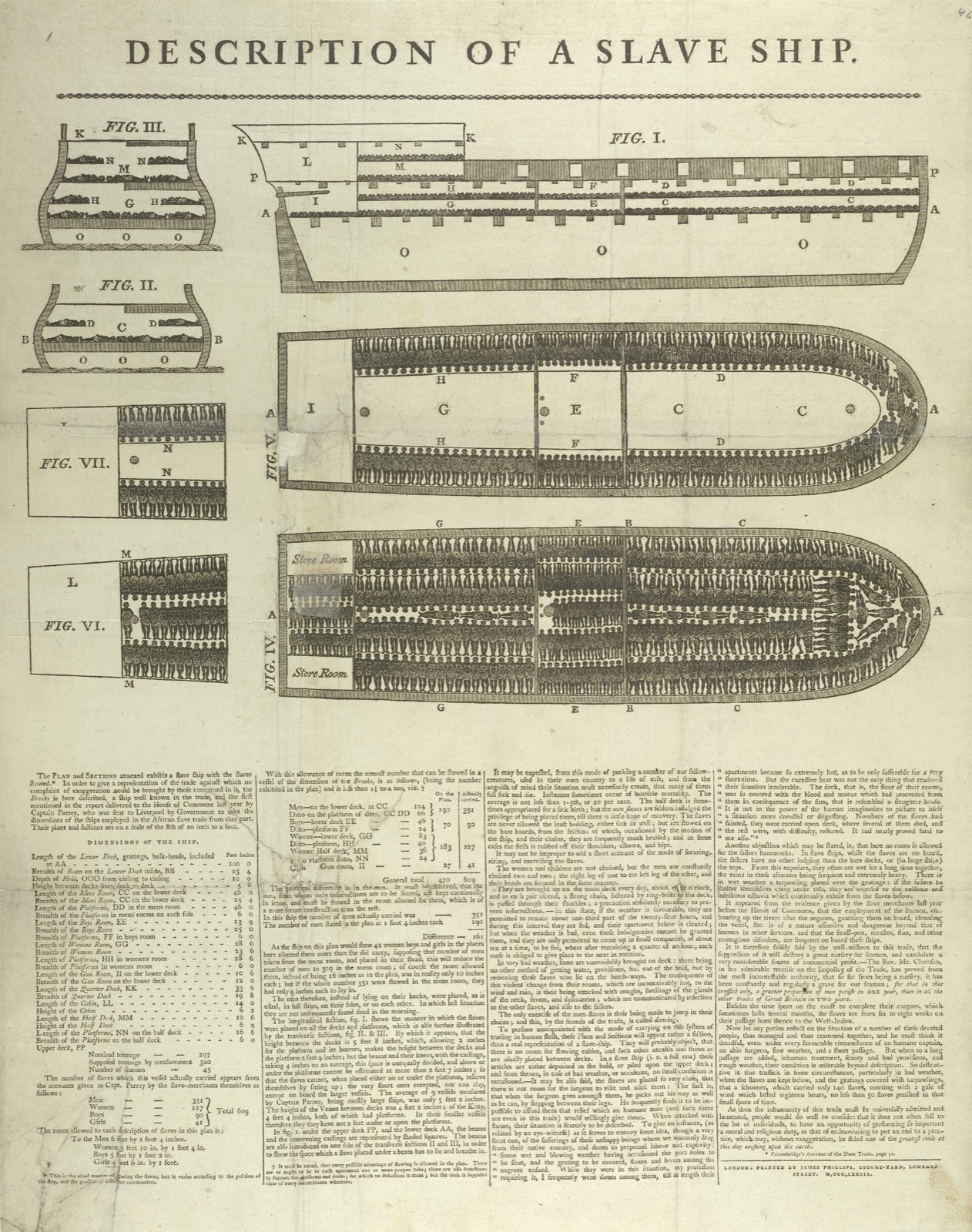
Diagram of the British slave ship Brookes, published in 1788. Public domain, British Library.
The Payne-Aldrich tariff promised lower duties and, on the whole, left them high, and the fight pushed an income tax closer.
A poor household still paid the tariff inside the price of ordinary goods.
A small firm in a protected trade kept its shelter, and a firm that wanted cheaper imported materials did not get them.
Protected manufacturers and the regular Republican leadership kept the wall, and a reform wing of the party broke with them over it.
The Payne-Aldrich Act of 1909, under President Taft, revised the tariff without a real downward overhaul.
Congress also laid a small excise on corporate income while an income-tax amendment went out to the states.
The quarrel helped split Republicans into regulars and Progressives.
Payne-Aldrich Tariff Act, 36 Stat. 11 (1909); Taussig, The Tariff History of the United States