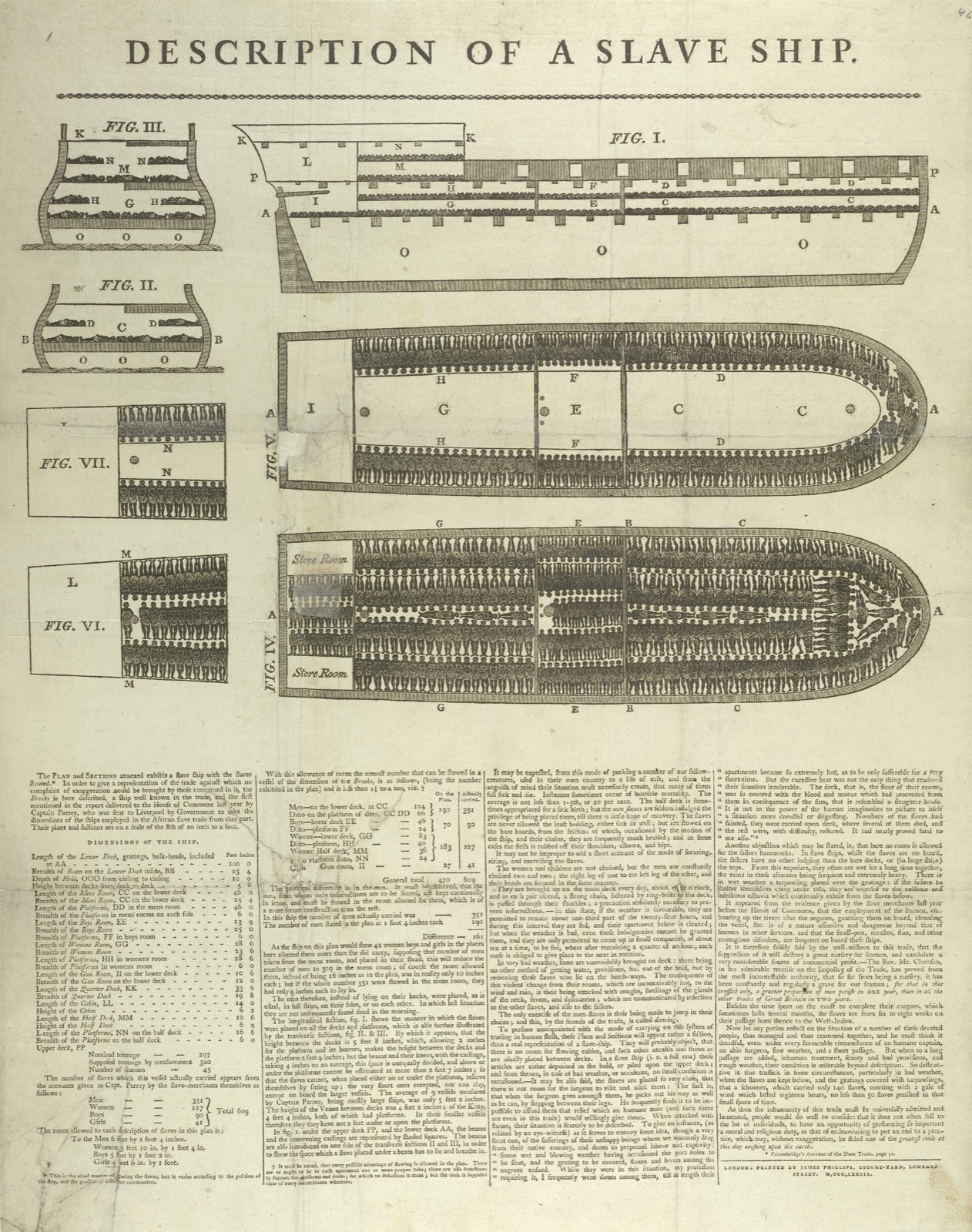
Diagram of the British slave ship Brookes, published in 1788. Public domain, British Library.
The Supreme Court broke Standard Oil apart and, in the same breath, said only unreasonable restraints of trade were illegal.
A household buying kerosene or gasoline was promised competition, and the pieces of the old trust still loomed over the market for years.
A small dealer faced several giant successors rather than a crowd of equals.
Rockefeller’s shareholders received stock in the successor companies, so the breakup did not strip the old owners of their wealth.
In 1911 the Supreme Court held that Standard Oil of New Jersey violated the Sherman Act and ordered the combination split into separate firms.
Chief Justice Edward White’s opinion announced a rule of reason, so not every restraint would be treated as unlawful on its face.
The same year the Court ordered the American Tobacco combination broken up on similar grounds.
Standard Oil Co. of New Jersey v. United States, 221 U.S. 1 (1911); United States v. American Tobacco Co., 221 U.S. 106 (1911)