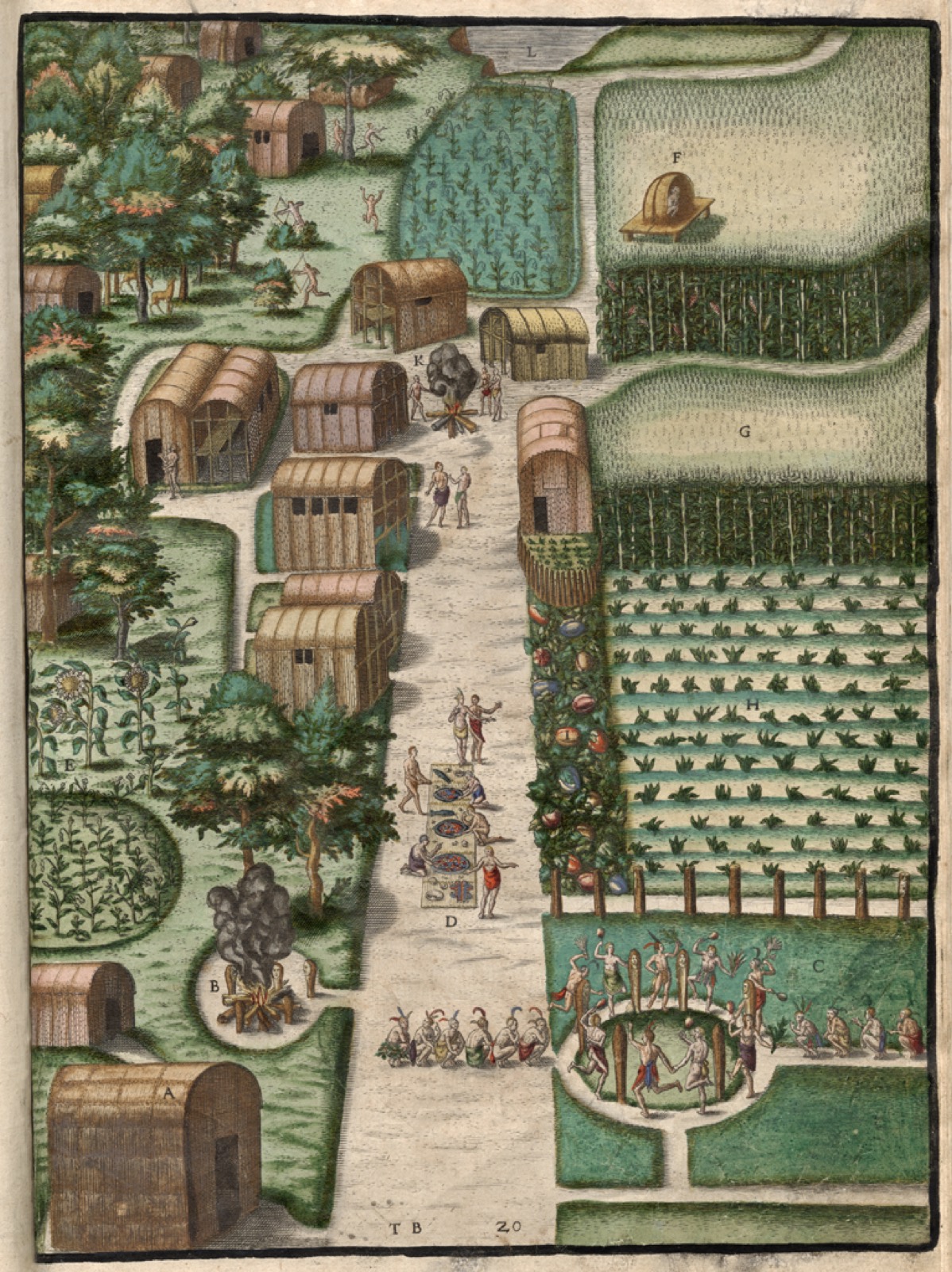
Theodor de Bry’s 1590 engraving of Secoton, from John White’s watercolors. Public domain.
The Sixteenth Amendment let Congress tax incomes without dividing the tax among the states, and Congress quickly used that power.
A poor household under the exemption owed nothing in income tax at first and still met the customs duty in the price of goods.
A salaried professional above the line began paying a small federal tax on yearly income.
People with large incomes, the group the 1895 decision had shielded, were the reason the amendment was written.
The Sixteenth Amendment was ratified in February 1913.
The Underwood-Simmons tariff of October 1913 cut many import duties and laid a graduated income tax, with a normal rate of 1 percent above an exemption and added surtaxes on higher incomes.
Washington then had a revenue tool that did not rest only on the customs house.
United States Constitution, Amendment XVI (1913); Underwood-Simmons Tariff, 38 Stat. 114 (1913); John D. Buenker, The Income Tax and the Progressive Era (1985)