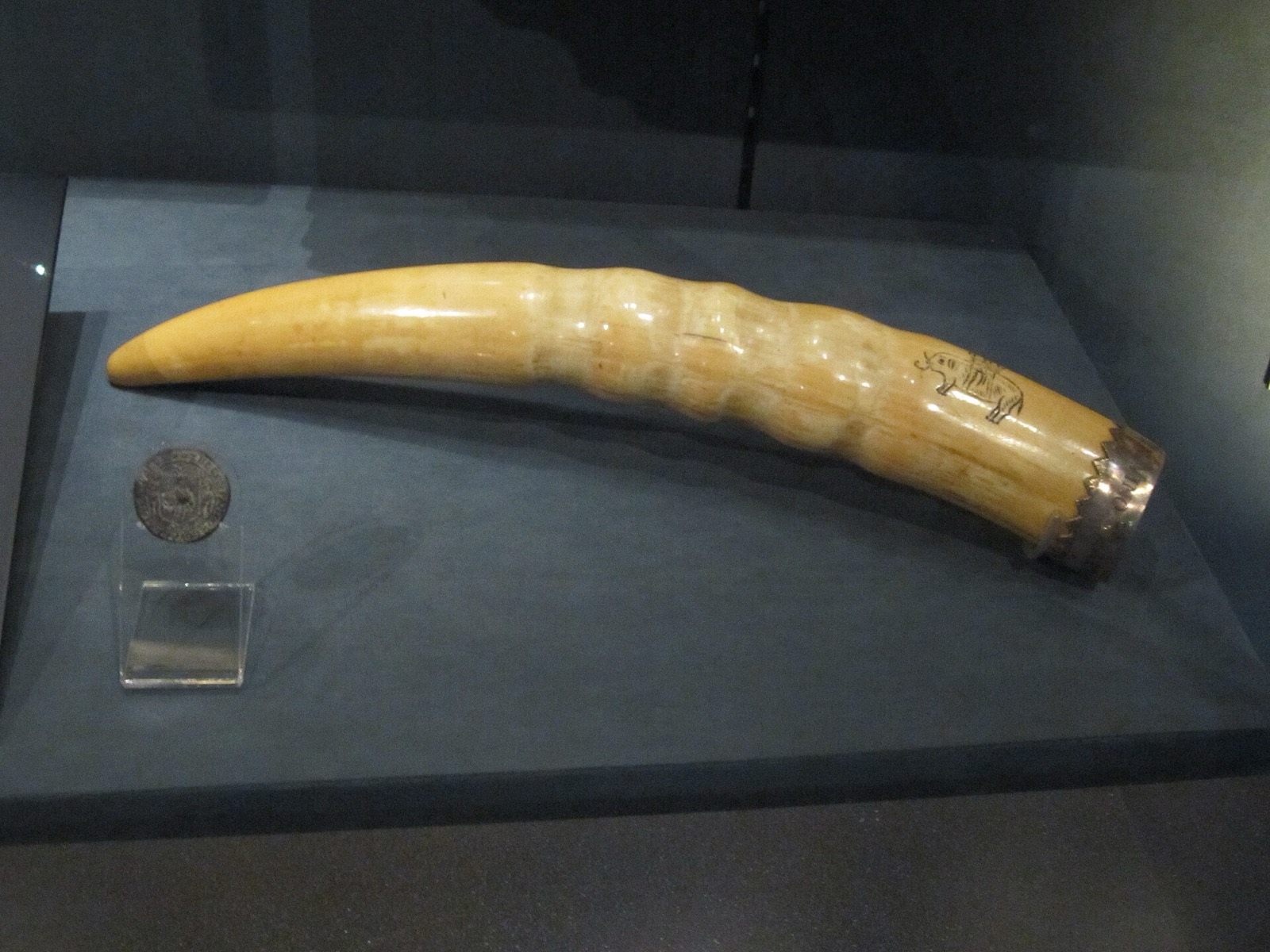
Ivory marked by the Royal African Company. International Slavery Museum, Liverpool. Wikimedia Commons.
The Federal Reserve Act created a central banking system so the next panic would not depend on one private banker.
A poor household still dealt, if at all, with a local counter, and the new system was meant to keep those counters from failing together.
A small business that lived on bank credit gained a backstop the city had lacked in 1907.
Member banks had to put money into the new reserve banks, and New York bankers lost the claim that they alone should hold the nation’s reserves.
Congress passed the Federal Reserve Act in December 1913, and President Wilson signed it on December 23.
It created a Federal Reserve Board in Washington and twelve regional reserve banks, and it required national banks to join.
The shape was a compromise between one central bank and a scattered one, written because of the Panic of 1907.
Federal Reserve Act, 38 Stat. 251 (1913); Roger Lowenstein, America's Bank (2015)