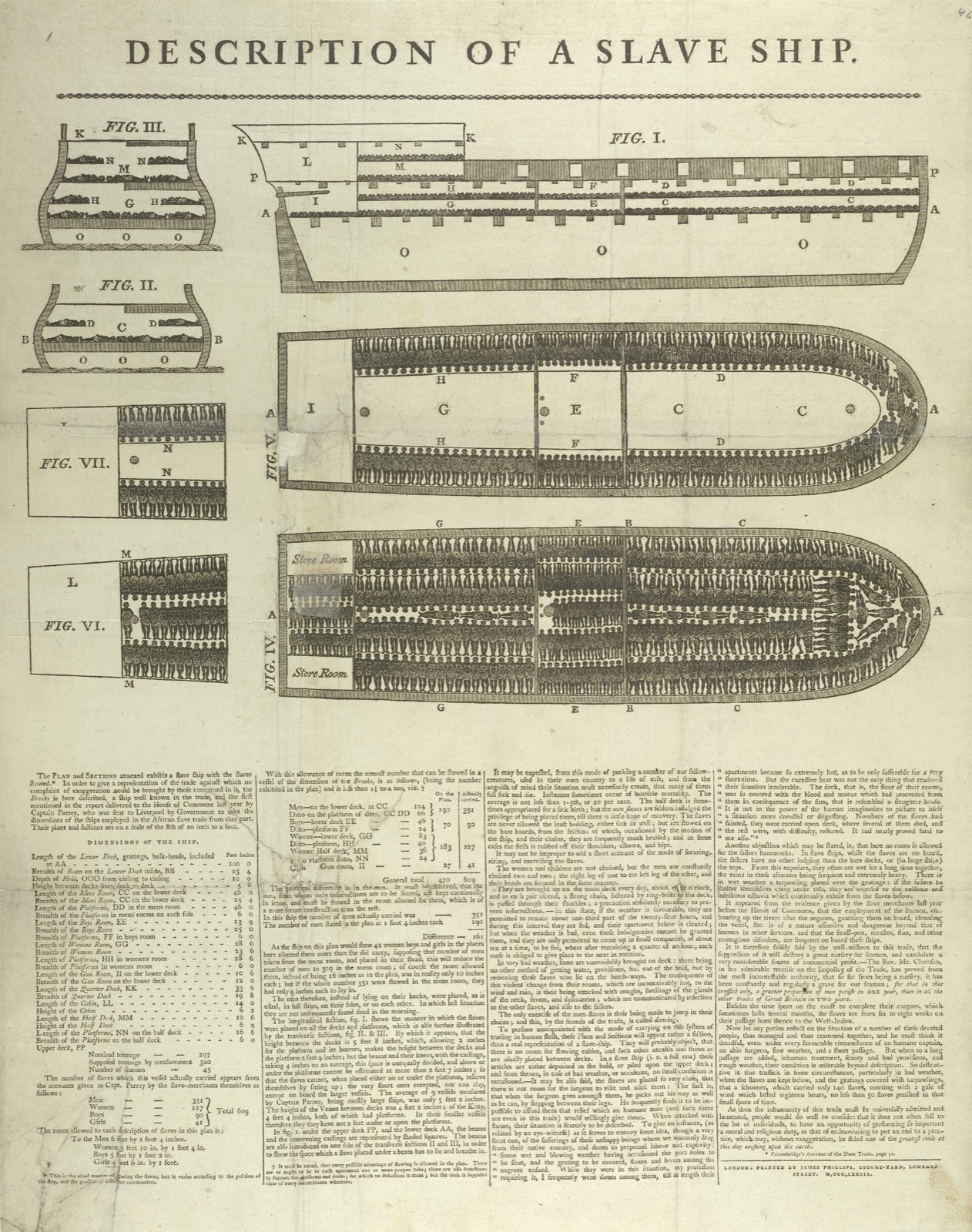
Diagram of the British slave ship Brookes, published in 1788. Public domain, British Library.
When war started in Europe, the New York Stock Exchange closed so Europeans could not dump American shares and take the gold home.
A household with no shares still met a tighter town, because credit and factory orders paused while the financiers waited.
A household that owned a few shares could not sell them at a public price for the months the floor stayed shut.
Banks, brokers, and anyone holding a large portfolio had to wait the closure out or find a private buyer, and the firms that lived on commissions had no ordinary business.
Treasury Secretary William McAdoo pressed the exchange to close in late July 1914, and stocks did not fully resume until December.
European holders had been selling American securities to ship gold back for the war.
An outdoor market met in the street, but it was thin, and it was not a price a household could trust.
William L. Silber, When Washington Shut Down Wall Street (2007)