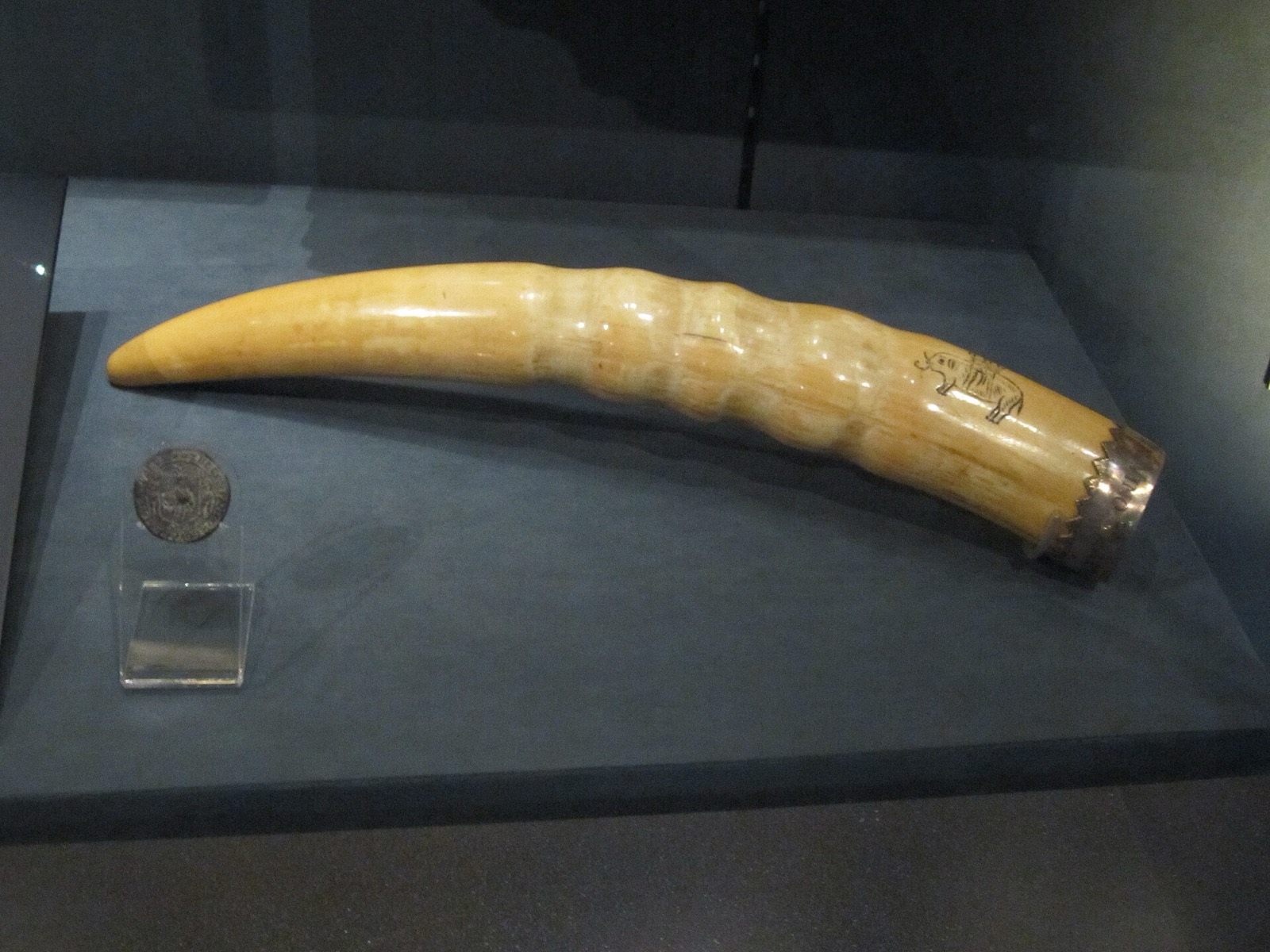
Ivory marked by the Royal African Company. International Slavery Museum, Liverpool. Wikimedia Commons.
The Treasury sold Liberty Bonds in small denominations so wage households, and not only bankers, would lend the money that fought the war.
A household living week to week was pressed by posters, bosses, and neighbors to subscribe, and the money in the bond could not buy that week’s food.
A household that bought a bond and held it received the interest printed on the paper, and a household that later had to sell, when newer bonds paid more, could get back less than it had handed over.
A wealthy buyer or a bank could take the bonds in size, collect the interest, and pledge them as collateral, which is a different seat from a wage earner paying for one bond out of pay.
Four Liberty Loans during the war, and a Victory Loan just after the Armistice, were sold through banks, newspapers, and volunteers.
A buyer who held to maturity got the terms on the bond.
A buyer who needed cash in the early 1920s, after interest rates had risen, often sold below the purchase price, because an old bond with a lower rate is worth less when new bonds pay more.
First Liberty Bond Act of 1917; Kennedy, Over Here (1980)