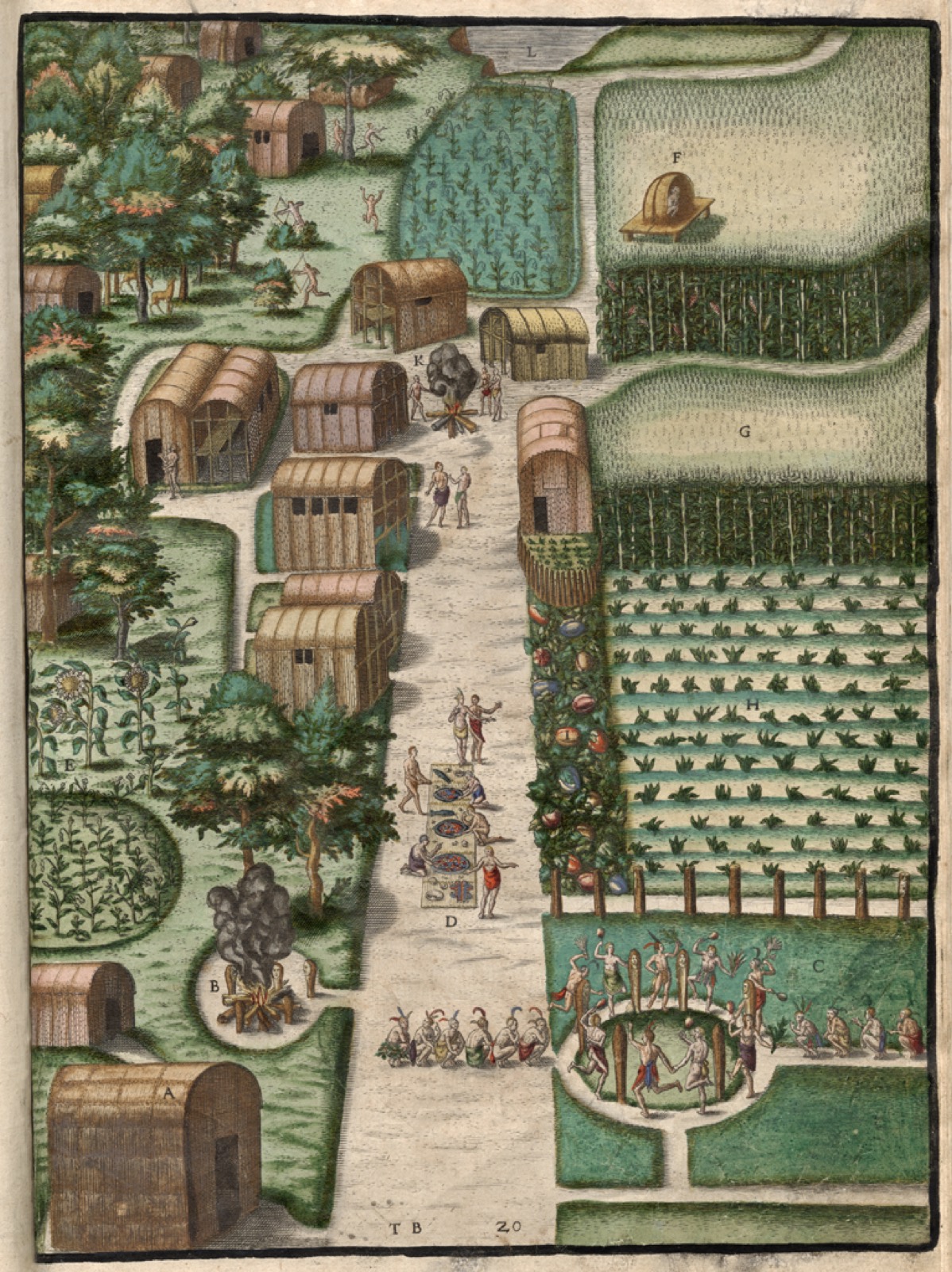
Theodor de Bry’s 1590 engraving of Secoton, from John White’s watercolors. Public domain.
Food and fuel rose faster than many wages, and Washington answered with legal power over supply and with appeals to eat less.
A stretched household cut meat, wheat, and sugar because the posters said to and because the budget already said to.
A household with a war job could keep the table set and still watch rent and clothing take the raise.
A dealer who could get scarce goods, or a farmer selling into the wartime price, stood on the selling side of the same squeeze.
The Food and Fuel Control Act of 1917 gave the government authority over food and fuel, and Herbert Hoover’s Food Administration preferred wheatless and meatless days to a full ration book.
Many wages rose.
Prices rose on the things a family bought every week, and the household lived in that gap.
Food and Fuel Control Act of 1917; Kennedy, Over Here (1980)