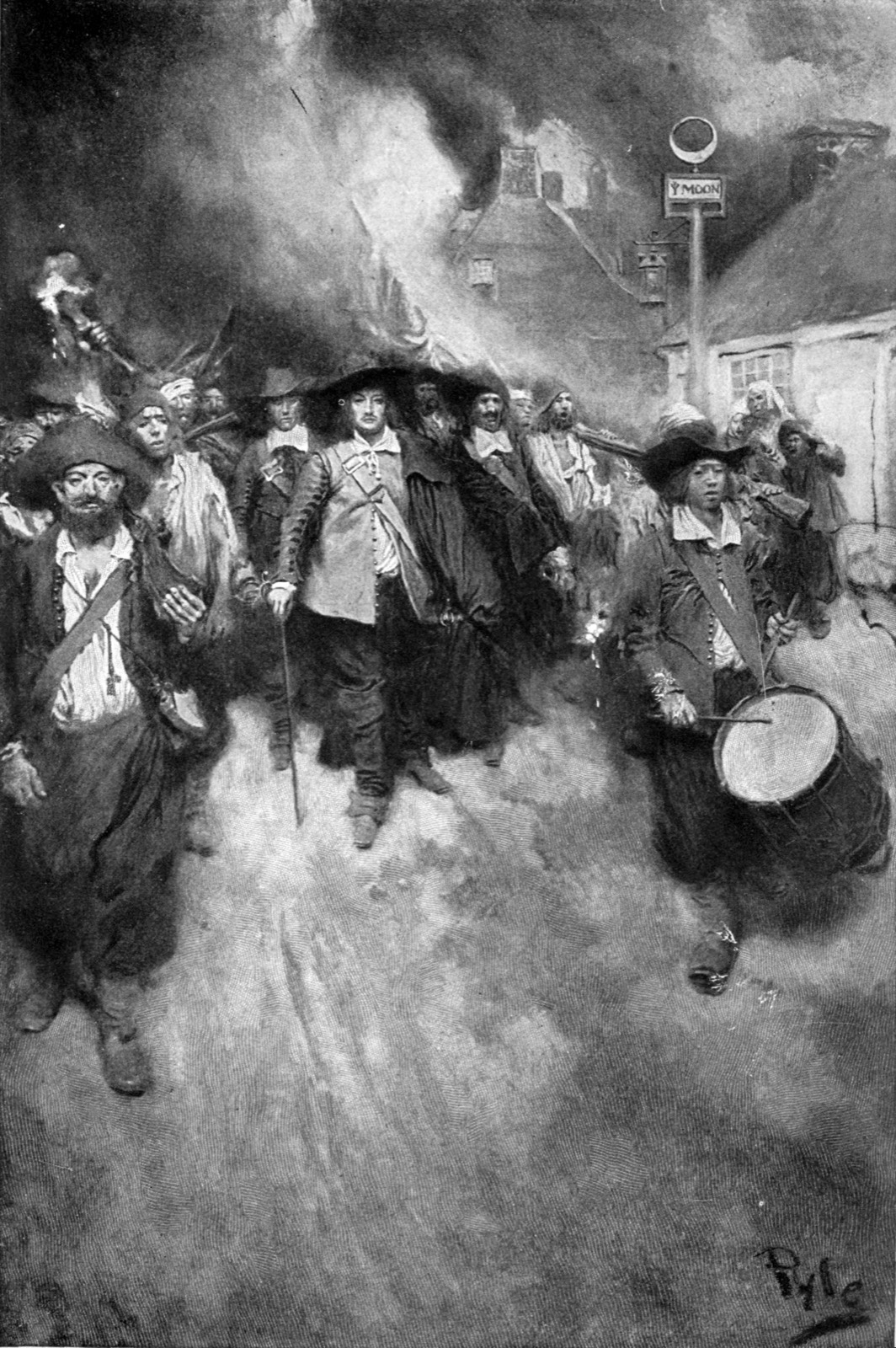
Howard Pyle, The Burning of Jamestown, an early-twentieth-century illustration, not an eyewitness view. Public domain.
After the fighting stopped, prices kept climbing, and a wave of strikes tried to hold the wartime wage.
A stretched household in a strike spent what it had saved or went without pay, and could lose the job if the strike failed.
A household that stayed at work through 1919 paid more for meat, rent, and clothes, and a raise on paper could still leave the kitchen behind.
A mill owner or a landlord could often wait the strike out or collect the higher rent, so the same inflation was not the same event on both sides of the paycheck.
The steel strike of 1919 was the largest of that wave, and it failed.
Employers held the line, and wartime gains in hours and recognition were not locked in for those workers.
Across town, a household that never struck still found that the Armistice had not brought prices down.
David Brody, Labor in Crisis (1965)