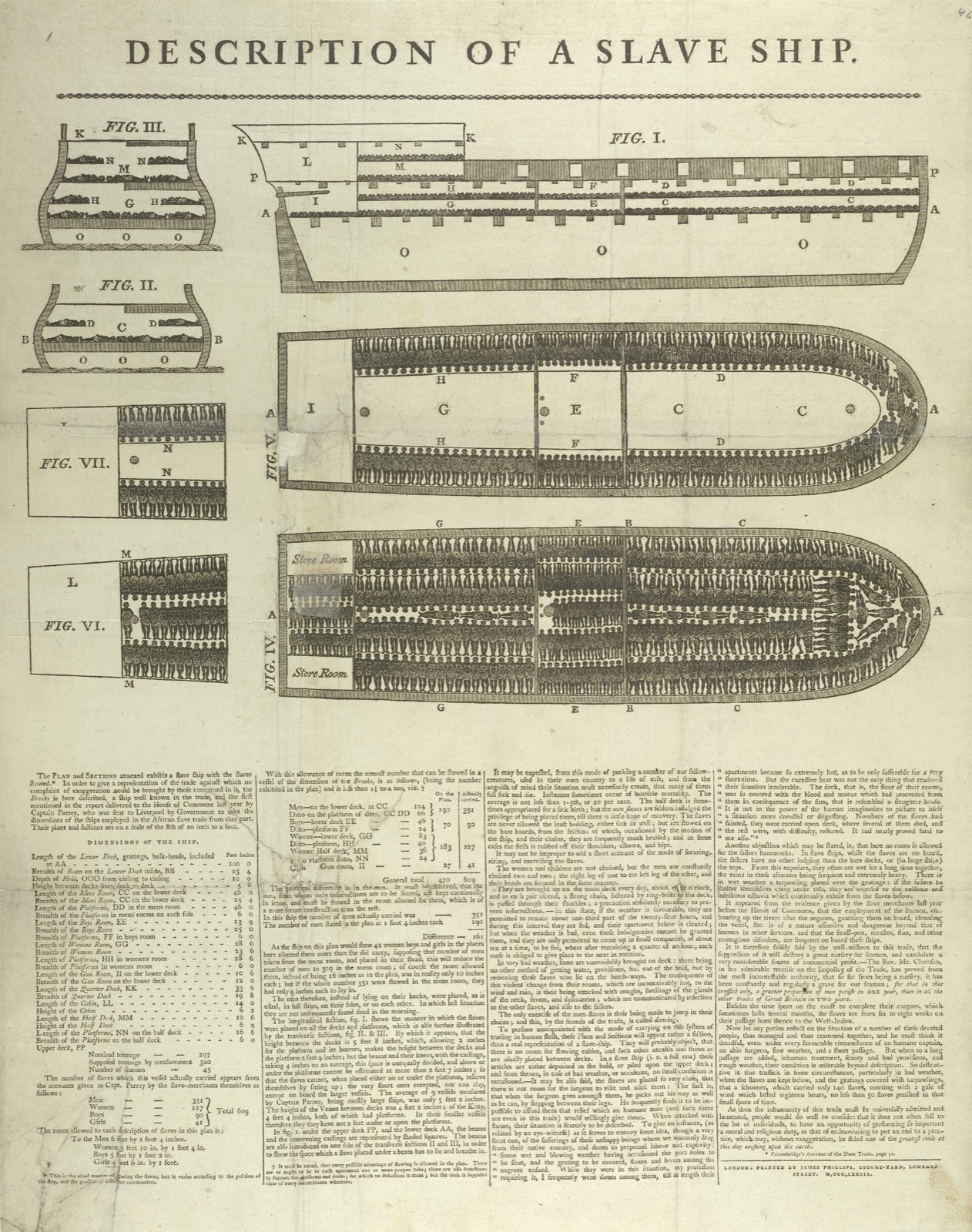
Diagram of the British slave ship Brookes, published in 1788. Public domain, British Library.
In 1920 and 1921 the Federal Reserve tightened credit to stop inflation, and prices and jobs fell fast and then, in the cities, came back.
A household that lost a factory job in that drop had little saved and no federal unemployment check to fill the weeks.
A household that kept its job found that the same dollars bought more once prices broke, a quiet gain easy to miss in a year of layoffs.
A business holding a warehouse bought at wartime prices sold into the fall at a loss, and a household that held cash or bonds through the drop gained buying power.
Wholesale prices fell sharply and unemployment jumped, and the urban slump was over in roughly two years, which is why later memory skipped it.
The Federal Reserve had chosen to break the inflation even at that cost.
Farms did not share the quick city recovery.
Milton Friedman and Anna Jacobson Schwartz, A Monetary History of the United States (1963)