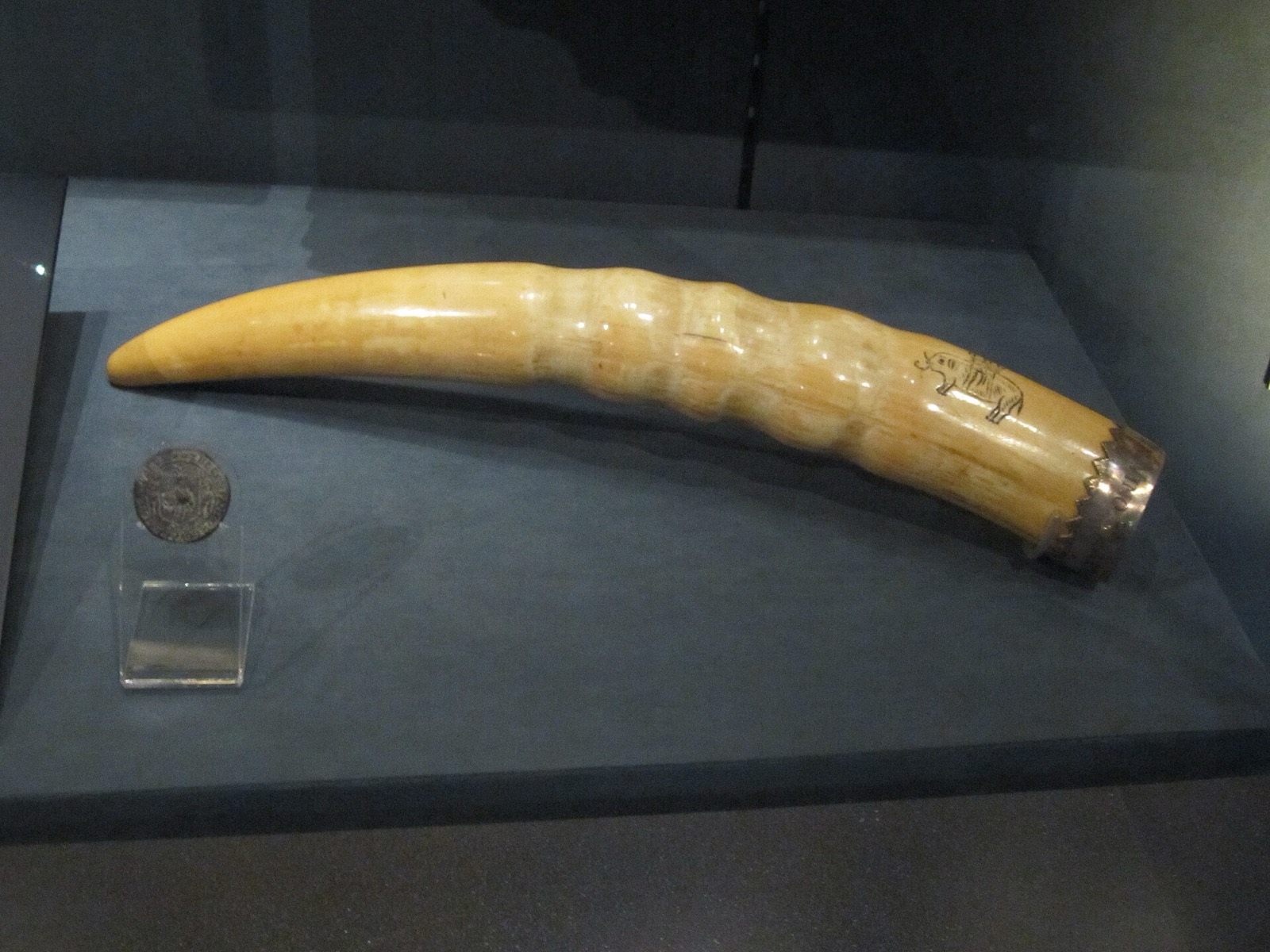
Ivory marked by the Royal African Company. International Slavery Museum, Liverpool. Wikimedia Commons.
Brokers borrowed the money they lent to margin customers from banks and from companies that wanted the high rate on loans they could take back on short notice.
A stretched household did not earn that rate and did not lend in that market, and its only tie to the loans was a job or a bank living off a boom it did not direct.
A household with a margin account sat at the far side of a chain of loans, and its broker could demand cash the same day the lender behind the broker called the loan.
A corporation with idle cash, or a bank, could earn a high return by lending it and could take the money home quickly, a privilege the margin customer did not have.
Through 1928 and into 1929, this call money was a favored use of spare cash because the rate was attractive and the loan was secured by stocks.
The Federal Reserve had grown uneasy about credit used for speculation and had tried to restrain the banks, without stopping the loans that came from companies outside those rules.
The lending stayed profitable until the collateral started to fall.
Galbraith, The Great Crash, 1929 (1955); Friedman and Schwartz, A Monetary History of the United States (1963)