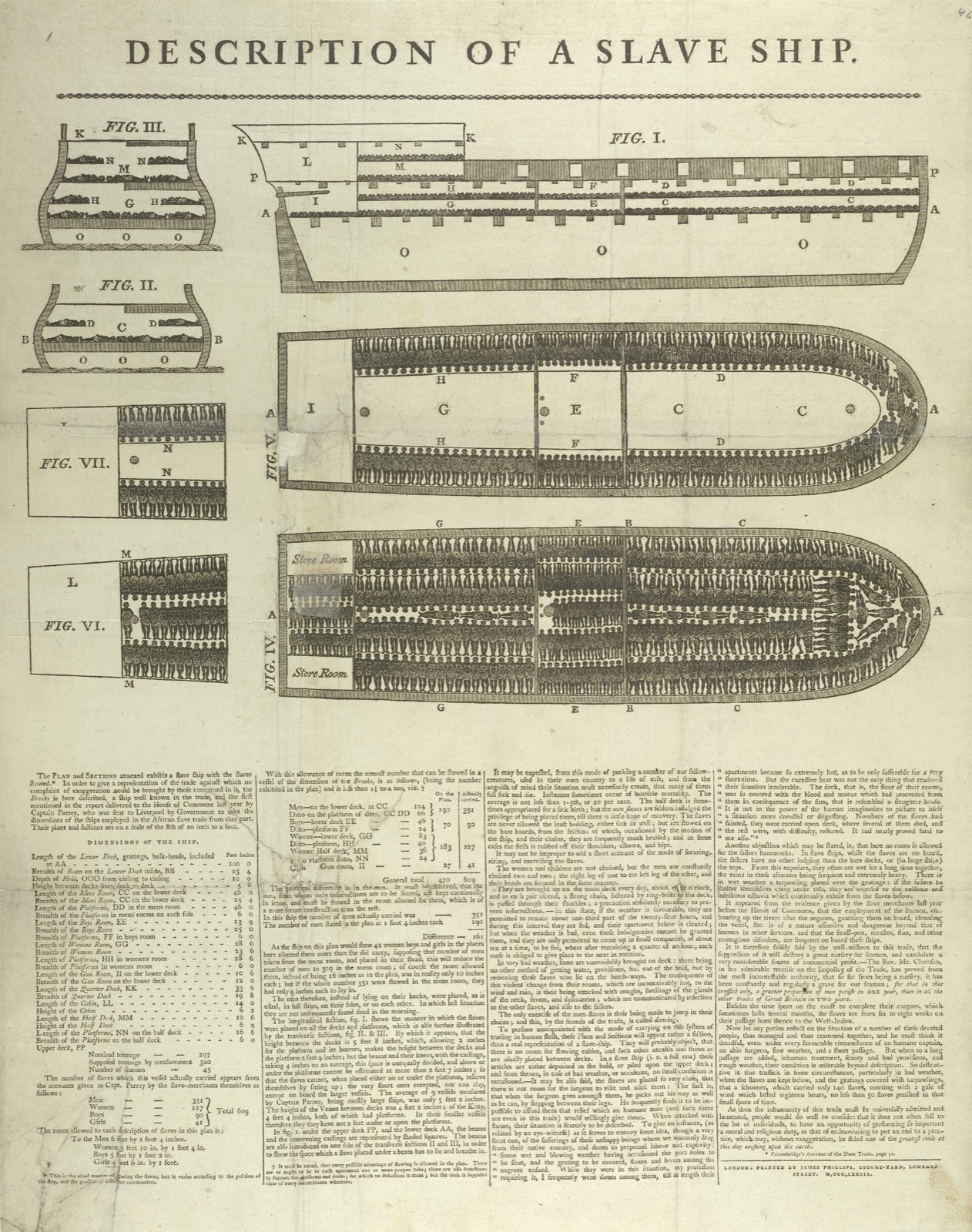
Diagram of the British slave ship Brookes, published in 1788. Public domain, British Library.
In June 1930 Congress raised import duties on a very long list of goods, and trading partners answered with tariffs of their own.
A stretched household paid the duty inside the price of imported goods it still bought, and gained no protection on a job it did not have.
A farm household that had been promised relief did not get the 1920 crop price back, and met retaliation in markets that used to take American food.
A manufacturer competing with imports gained a higher wall, and an exporter lost orders when foreign customers shut their own doors.
The Tariff Act of 1930, called Smoot-Hawley after Senator Reed Smoot and Representative Willis Hawley, became law when trade was already shrinking.
It did not start the Depression.
It made foreign markets smaller and handed other countries a grievance and a model.
Douglas A. Irwin, Peddling Protectionism (2011); Tariff Act of 1930