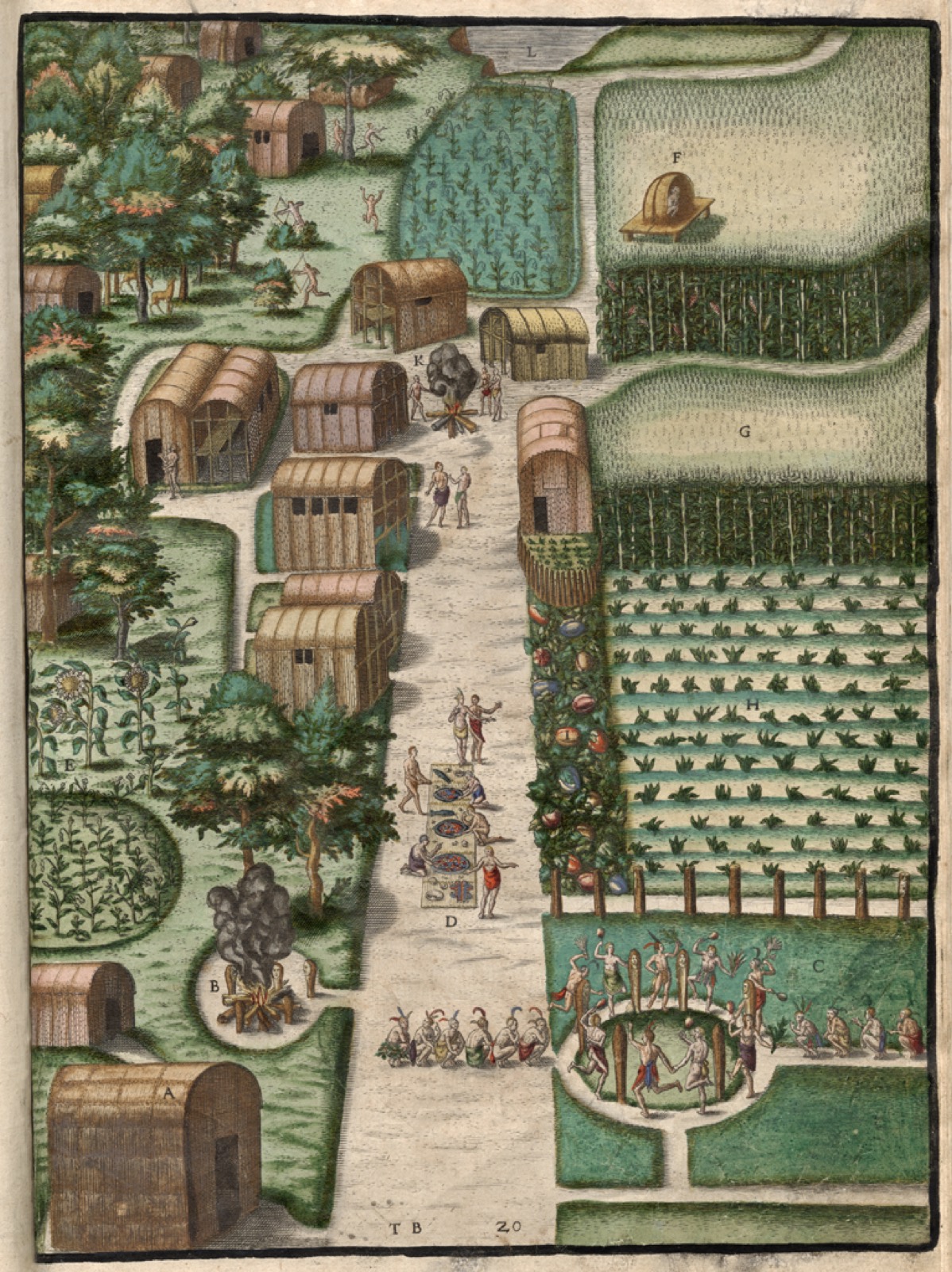
Theodor de Bry’s 1590 engraving of Secoton, from John White’s watercolors. Public domain.
When orders were canceled in 1930, a lost wage meant living on savings, family, a grocer’s book, or local charity, because there was no federal unemployment insurance.
A stretched household could be behind on rent within weeks of a layoff, and the charity office could demand proof of destitution before it helped.
A household with a small savings account could last longer and still watch the savings fall, with no date on which a benefit would start.
A business that cut the payroll and kept its cash shifted the immediate cost of the slump onto the people who had been paid out of revenue.
Private charity and city relief had been built for ordinary hardship, not for a national wave of layoffs.
States were not yet paying unemployment insurance, and Washington sent no replacement wage.
The household’s resources were what it had saved, what a relative could spare, and what a local bureau would grant after checking that the family was poor enough.
David M. Kennedy, Freedom from Fear (1999)