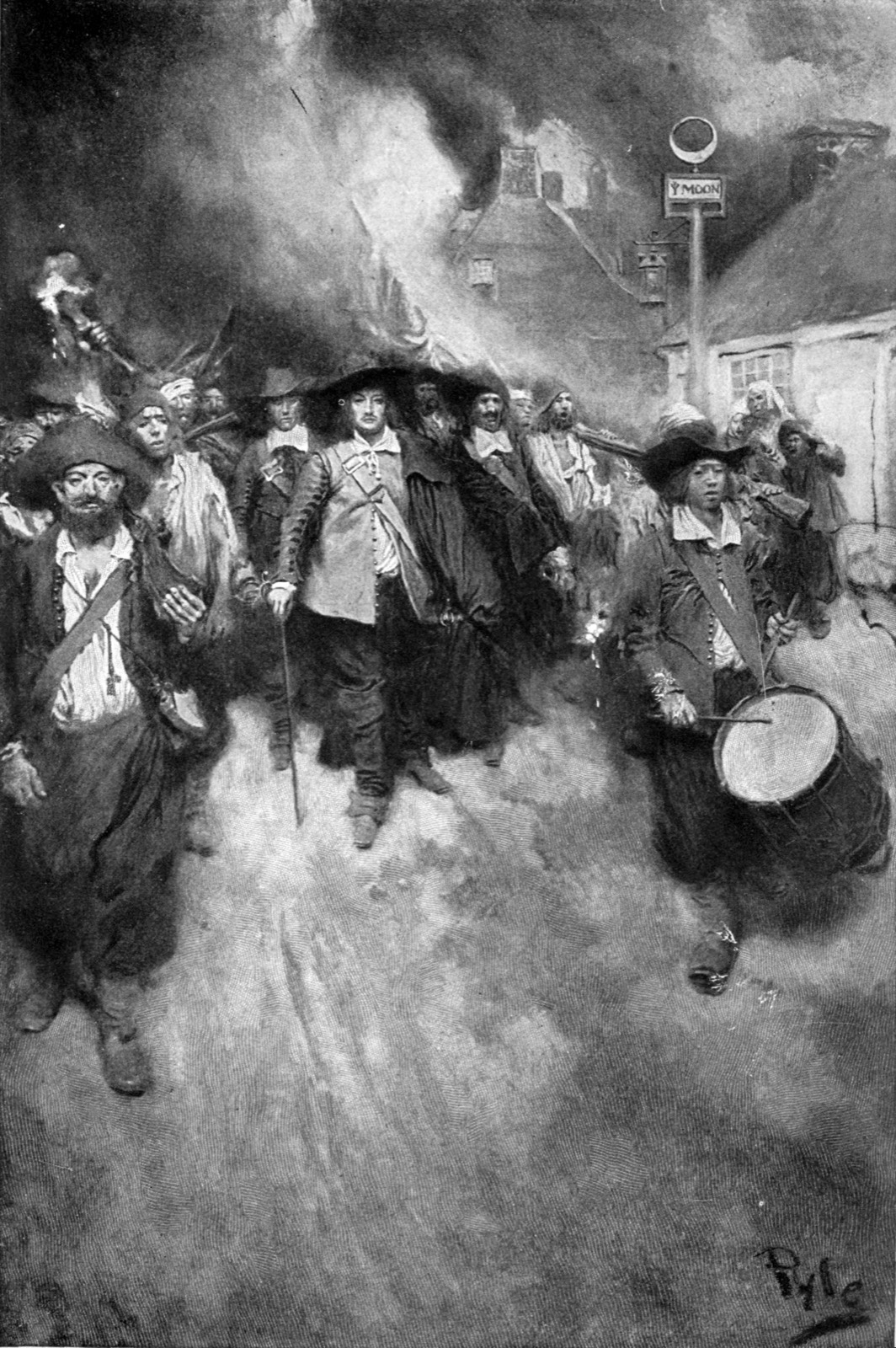
Howard Pyle, The Burning of Jamestown, an early-twentieth-century illustration, not an eyewitness view. Public domain.
In a bank run, depositors who fear they will be paid last demand cash the bank cannot produce on the spot, because the deposits were lent out.
A stretched household that kept the rent money in the bank could lose it if the doors shut, and waiting to see was itself a gamble.
A household with savings in one local bank had to choose between trust and a withdrawal that helped cause the failure it feared.
A depositor already in cash was safe from that window, and a borrower could be told to repay at the worst moment, which is the other side of the same panic.
In December 1930 the Bank of United States, a private New York bank with many small depositors, failed, and the name made the failure sound like the government’s own.
Through 1931, runs and closings spread as people tried to turn deposits into currency.
A bank can look sound on a long view and still die if everyone wants cash the same morning, because loans on farms and shops cannot be sold before noon.
Friedman and Schwartz, A Monetary History of the United States (1963)