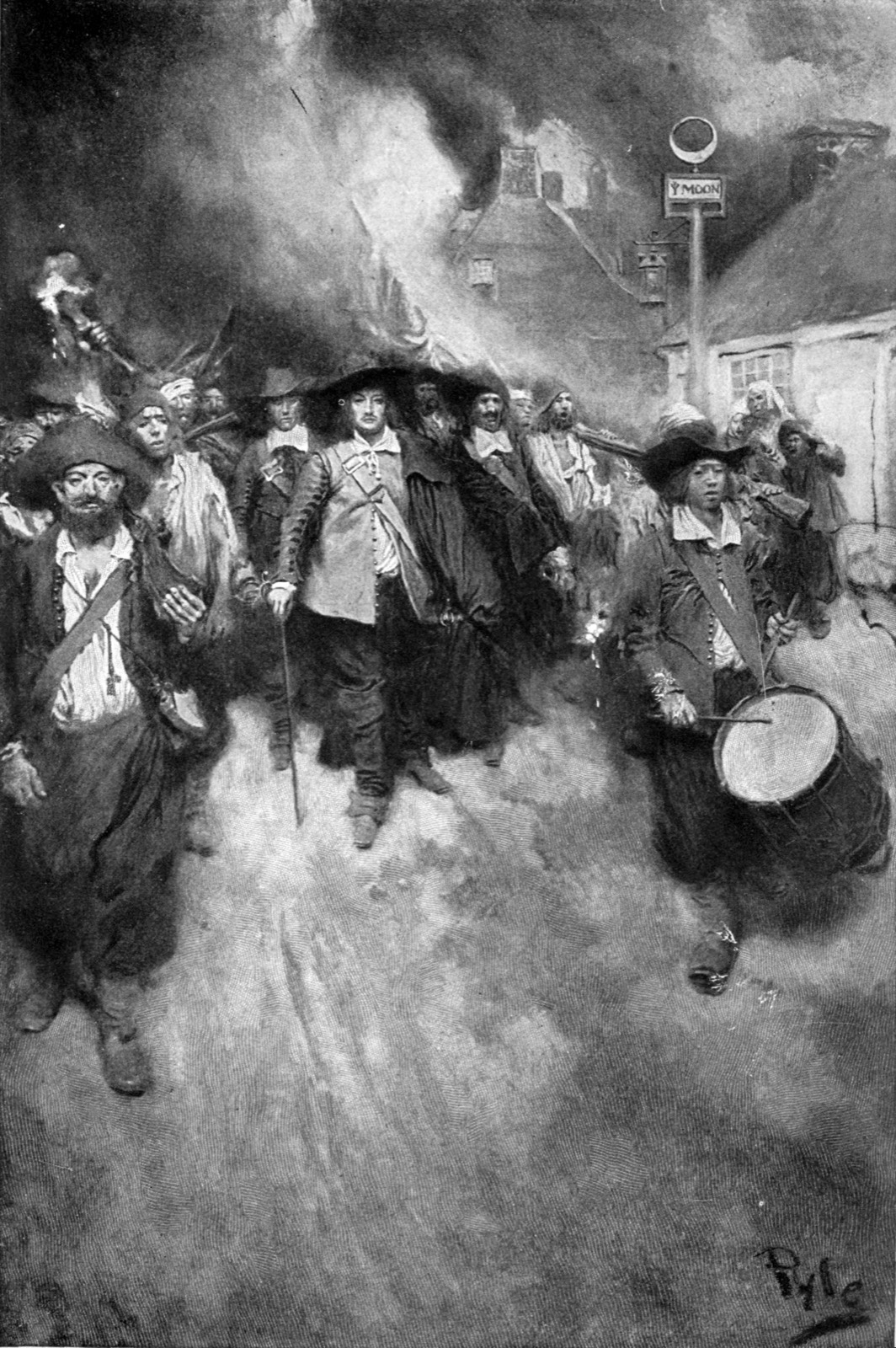
Howard Pyle, The Burning of Jamestown, an early-twentieth-century illustration, not an eyewitness view. Public domain.
In March 1933 every bank was closed by presidential order, and a household could not withdraw its own money until officials decided which banks could reopen.
A stretched household with the rent in a checking account had to get through the days on whatever cash was in the house.
A household with a salary coming, and a grocer willing to wait, could endure the holiday if its bank was on the list to reopen.
A banker whose books were judged sound was allowed to open again, and a banker whose books were not was left shut.
Franklin Roosevelt proclaimed a national bank holiday on March 6, and on March 9 Congress passed the Emergency Banking Act, giving the administration power to reopen sound banks and to reorganize the others.
Banks opened in stages over the following days, and not all of them opened.
The act did not replace lost jobs, but it stopped a national run by making closure a policy instead of a rumor.
Emergency Banking Act, 48 Stat. 1 (1933)