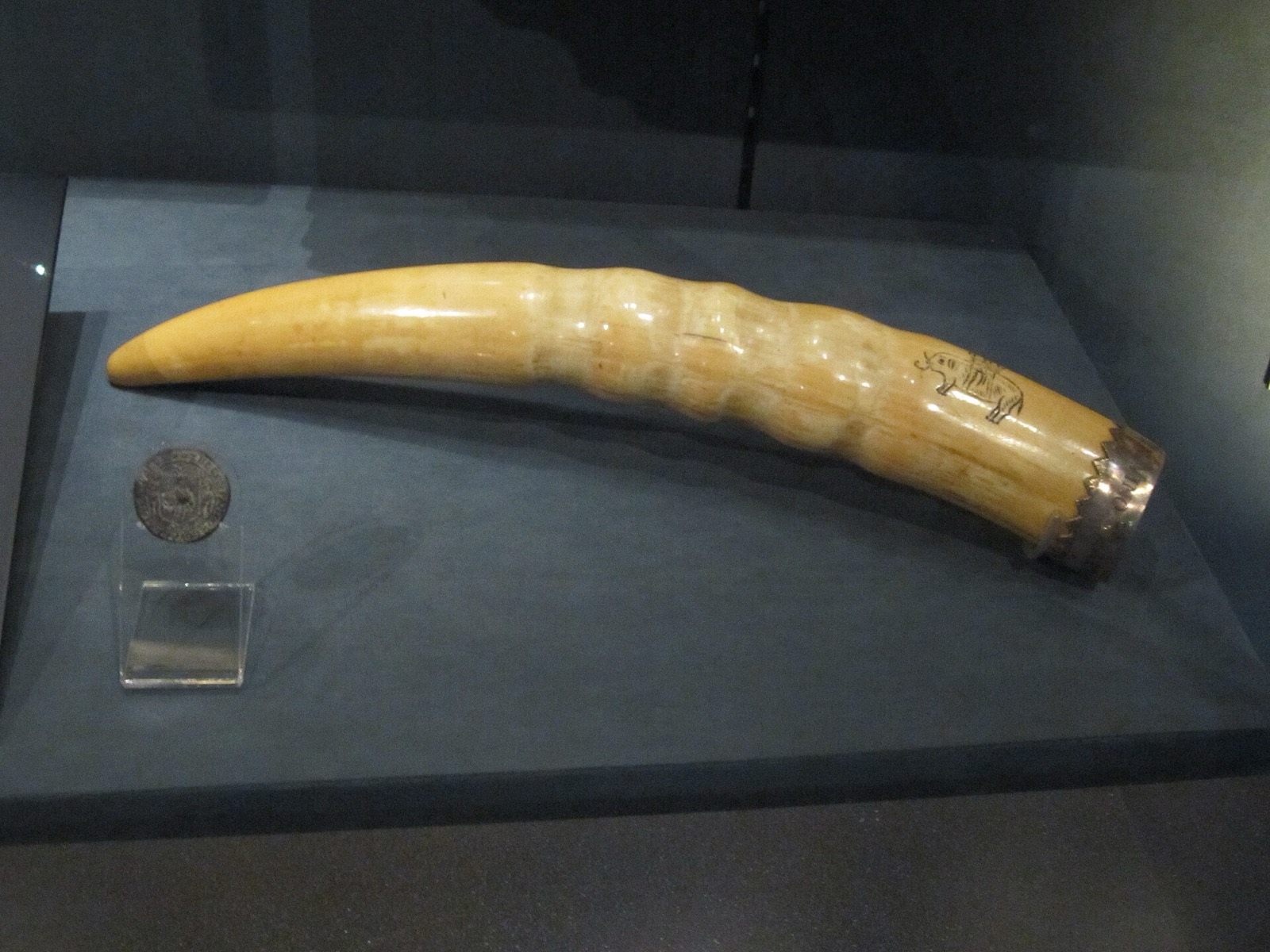
Ivory marked by the Royal African Company. International Slavery Museum, Liverpool. Wikimedia Commons.
In 1933 the government required Americans to turn in most gold coin, gold bullion, and gold certificates and take paper dollars instead.
A stretched household that had never held a gold coin lost nothing in the order and went on using the paper it already used.
A household that had kept gold coins in a box as savings had to exchange them for currency, and the private hoard stopped being a legal way to hold wealth.
A holder of a large amount of gold, beyond jewelry and the small personal sum the order allowed, had to surrender it, while a business that needed gold for industry could apply to keep using it.
Executive Order 6102, issued in April 1933, required delivery of monetary gold to the Federal Reserve.
The Gold Reserve Act of 1934 then placed the nation’s monetary gold with the Treasury and raised the official dollar price of gold.
A household could no longer sit on coin as a private way out of the paper dollar.
Executive Order 6102 (1933); Gold Reserve Act of 1934