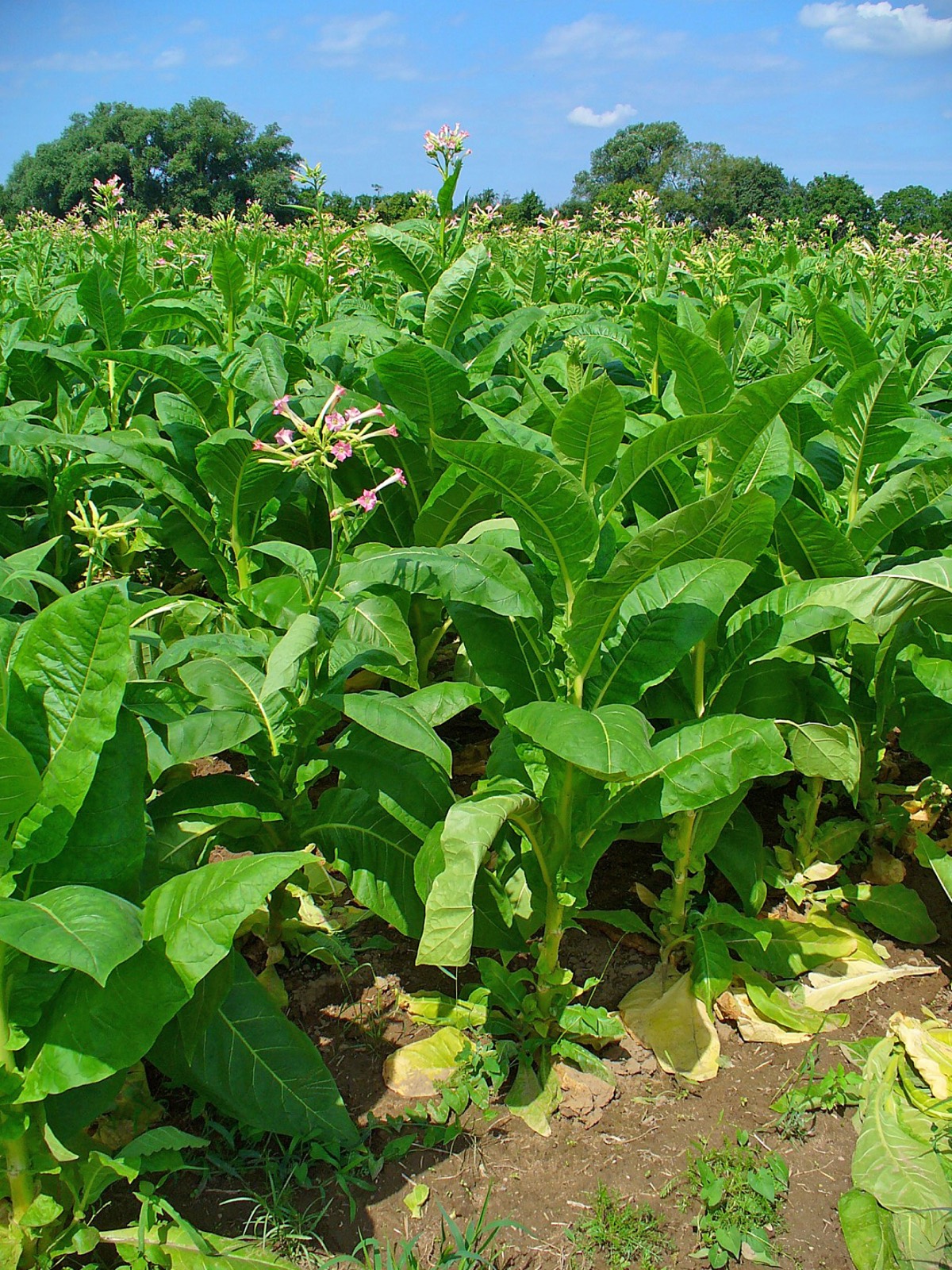
The tobacco plant, Nicotiana tabacum. Public-domain photograph.
The Agricultural Adjustment Act paid landowners to produce less, in order to lift prices, and the tenant who had worked the acre often did not get the check.
A sharecropper household could lose the plot when the owner took the acre out of cotton, and could miss the government payment, which was written to the person who controlled the land.
An owner who farmed his own place and received the payment could cut some acres, keep the rest, and gain if prices rose.
A landowner with many tenants could collect on reduced acreage and employ fewer people, which made the program a sensible business step and a disaster for the household let go.
The act taxed processors and used the money to pay for cutting cotton, wheat, hogs, and other staples.
In 1936 the Supreme Court struck down that processing tax in the Butler case.
The pattern was already plain: a price policy for a crop is not the same thing as an income for the people who pick it.
Agricultural Adjustment Act of 1933; United States v. Butler, 297 U.S. 1 (1936)