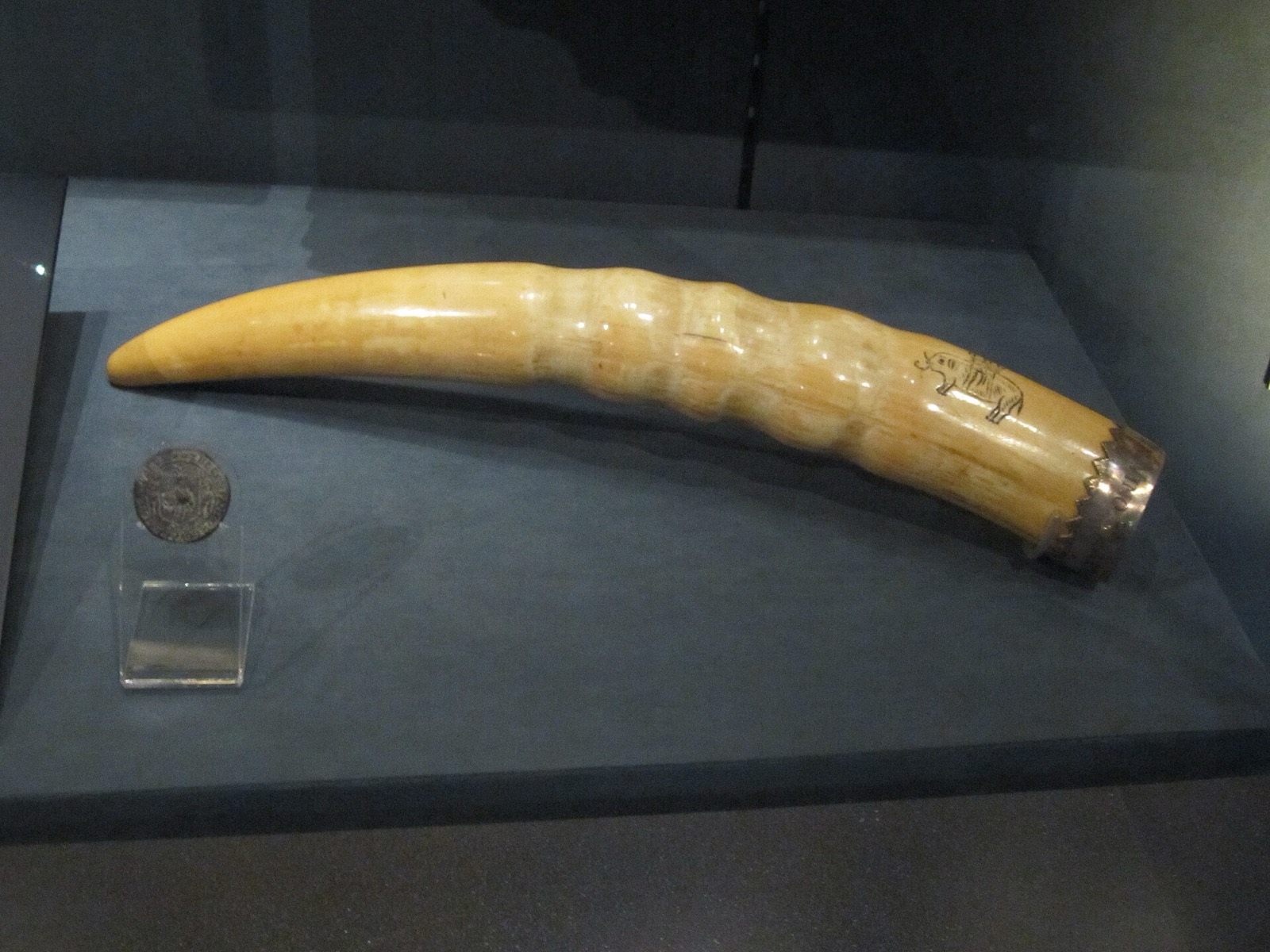
Ivory marked by the Royal African Company. International Slavery Museum, Liverpool. Wikimedia Commons.
The Social Security Act of 1935 taxed wages to fund old-age insurance and pushed states to set up unemployment insurance, and it left out large groups of the poorest workers.
A household in farm labor or domestic service was outside the old-age insurance at the start, so the payroll tax did not buy that household a benefit.
A household in a covered factory job saw a deduction on the wage and a promise of a retirement benefit later, not a check that month.
An employer in a covered trade owed the employer’s share of the tax, and an owner who was not himself a covered employee was not given a retirement benefit by the fact of owning the shop.
The act also offered federal money so states could aid needy older people, blind people, and dependent children, which was help only after a test of need, separate from the contributory pension.
Monthly retirement checks under the insurance did not begin until 1940.
Unemployment pay depended on state laws built under the federal tax, so a later layoff was a different event from 1930 only for the workers a state plan actually covered.
Social Security Act, 49 Stat. 620 (1935)