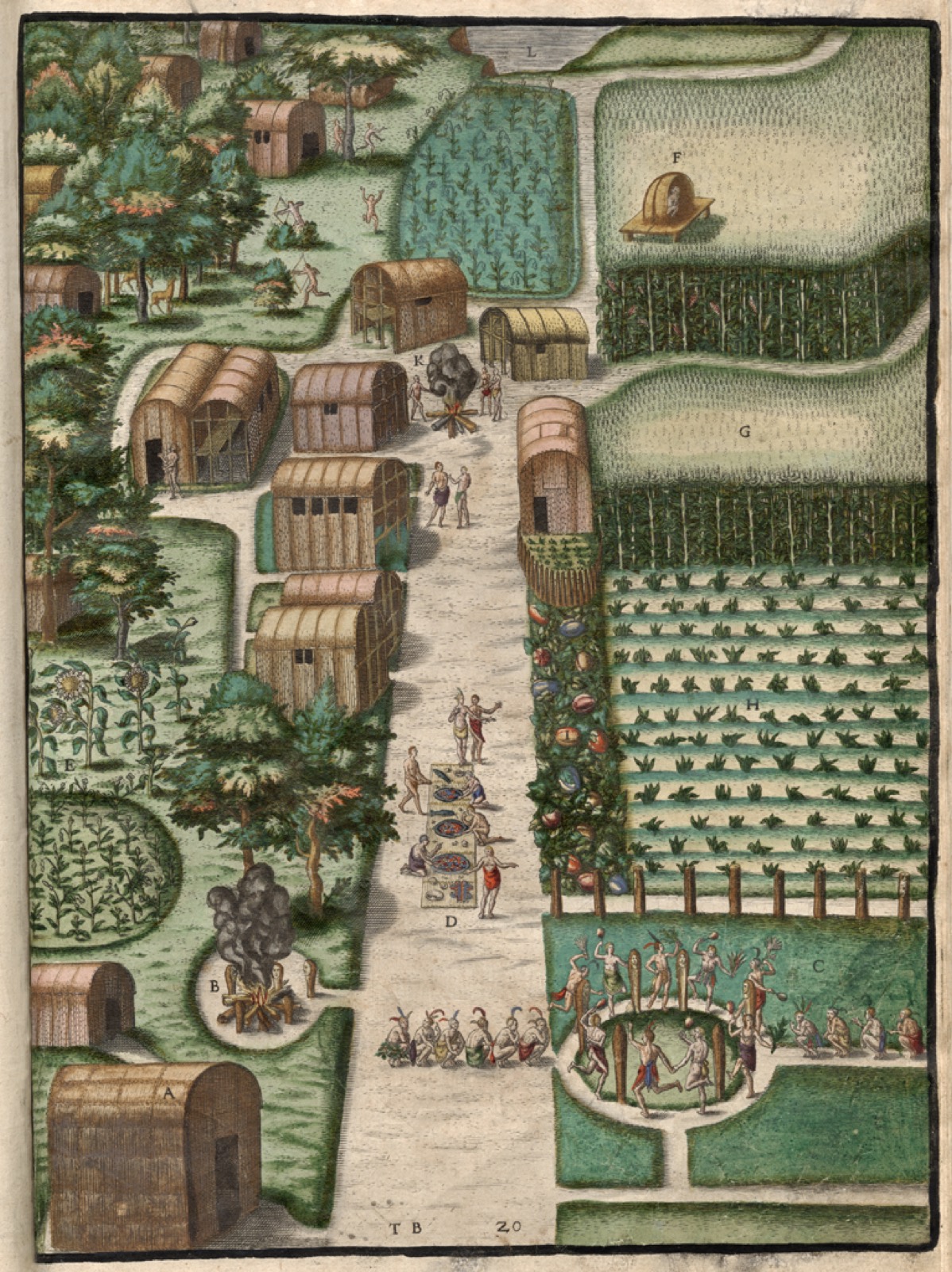
Theodor de Bry’s 1590 engraving of Secoton, from John White’s watercolors. Public domain.
The National Labor Relations Act of 1935 gave covered workers the right to organize and required employers to bargain with a union the employees had chosen.
A household in farm labor or domestic work was outside the act, so the new right did not apply to the job it actually had.
A household in a factory could join a union without being legally fired for it, and could bargain over the wage that paid the rent.
An employer in a covered industry could no longer treat a company union as the only voice, and had to deal with a certified union or face the National Labor Relations Board.
The Wagner Act, named for Senator Robert Wagner, made punishment for organizing an unfair labor practice and set up a board to hold elections and hear cases.
It did not set a wage by itself.
It changed who had the power to negotiate the wage, and it left agricultural workers, domestic workers, and government employees outside that change.
National Labor Relations Act, 49 Stat. 449 (1935)