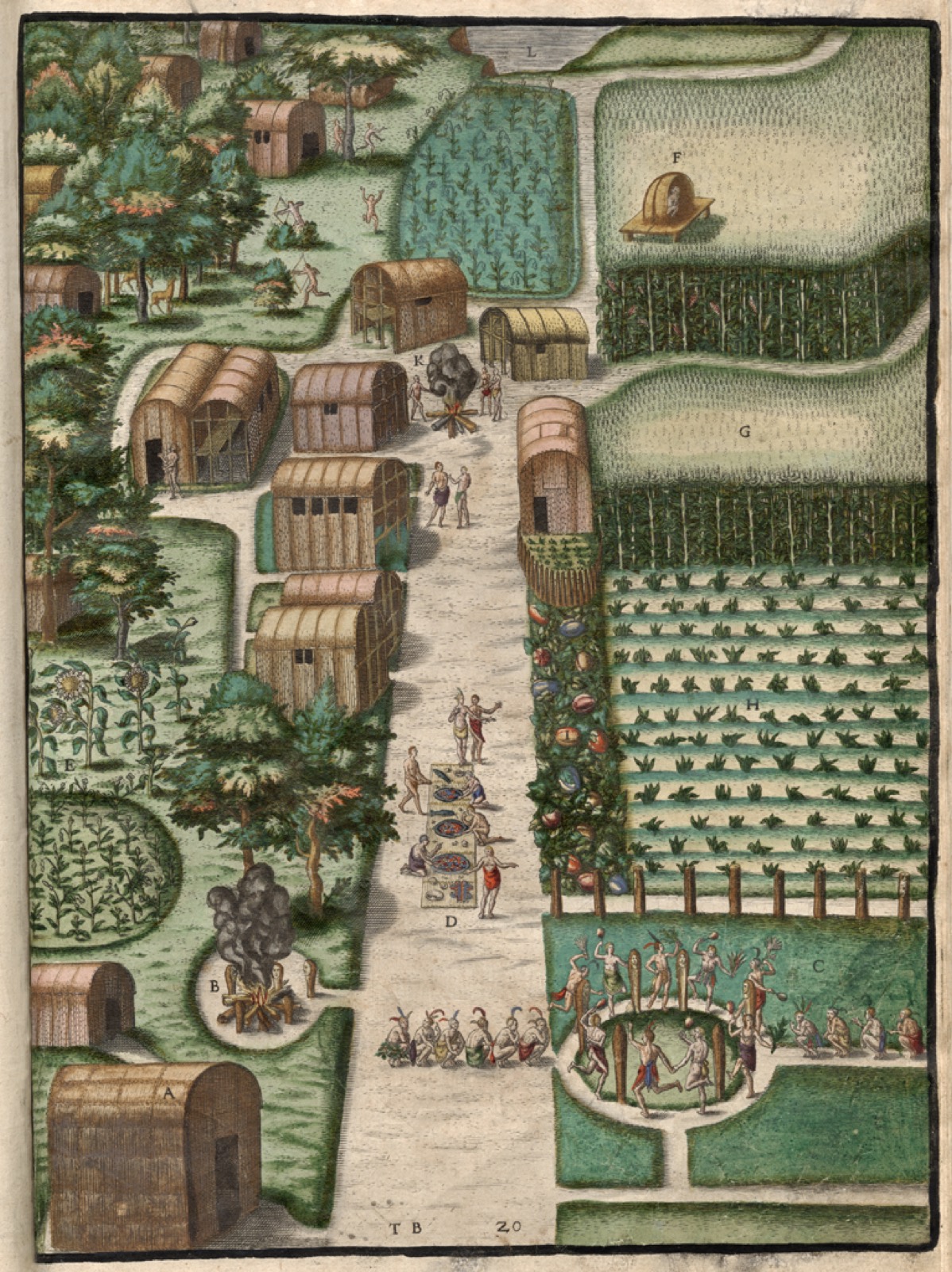
Theodor de Bry’s 1590 engraving of Secoton, from John White’s watercolors. Public domain.
The Works Progress Administration hired unemployed people onto public projects and paid a wage meant to be livable and still below the local private wage.
A stretched household that got a place could pay the rent again, and a stretched household that did not get a place stayed on relief or on nothing, because there were never slots for everyone.
A household that still had private work was not who the agency was hiring, and the rules did not want people to quit a private job for a project wage.
A city that sponsored a project got labor for a road, a school, or a sewer, and private employers were shielded, on paper, by a wage set not to pull their workers away.
The Emergency Relief Appropriation Act of 1935 funded the agency that became the main federal work program of the decade.
Projects included construction and also sewing rooms, school lunches, and arts programs, because the aim was to pay the unemployed, not only to pour concrete.
A project job was work for a check, and it was not a career and it was not the old form of charity.
Emergency Relief Appropriation Act of 1935