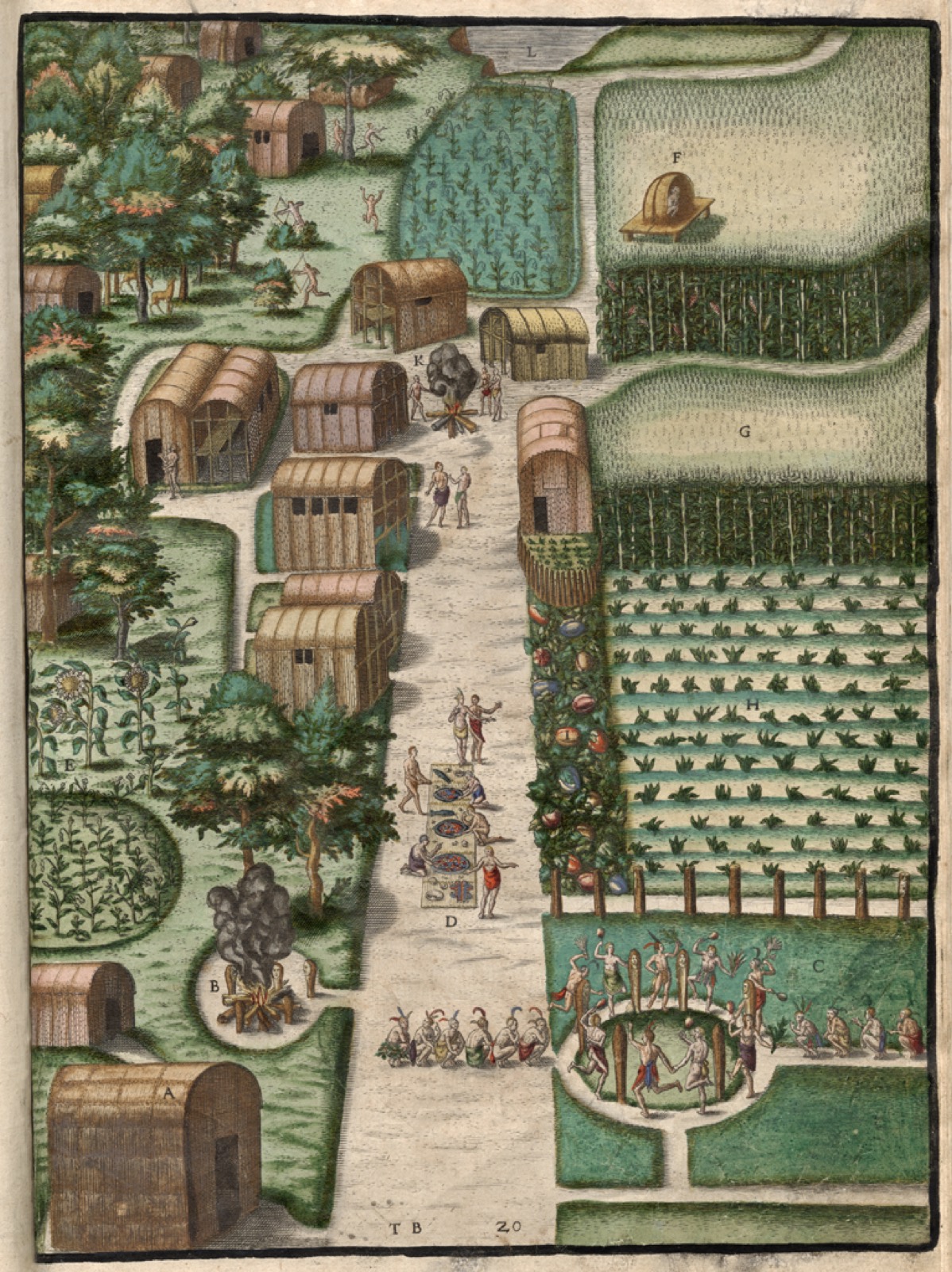
Theodor de Bry’s 1590 engraving of Secoton, from John White’s watercolors. Public domain.
The Fair Labor Standards Act of 1938 set a federal minimum wage, required extra pay after forty hours in a week, and restricted child labor on goods made for interstate commerce.
A stretched household in a covered job gained a legal floor under the hourly wage, and a household in excluded farm work often did not.
A household already paid above the minimum felt the law mainly in the overtime rule, which made a long week cost the employer more and pay the worker more.
An employer in interstate commerce had to meet the floor and the overtime or cut the hours, and a small local employer outside the act did not face the same federal rule.
Congress wrote a floor, not a comfortable living, and set it to rise on a schedule rather than to jump in one year.
Many of the poorest jobs, especially in agriculture, were left outside.
Whether a household was protected depended on the work it did, not on the fact of being poor.
Fair Labor Standards Act, 52 Stat. 1060 (1938)